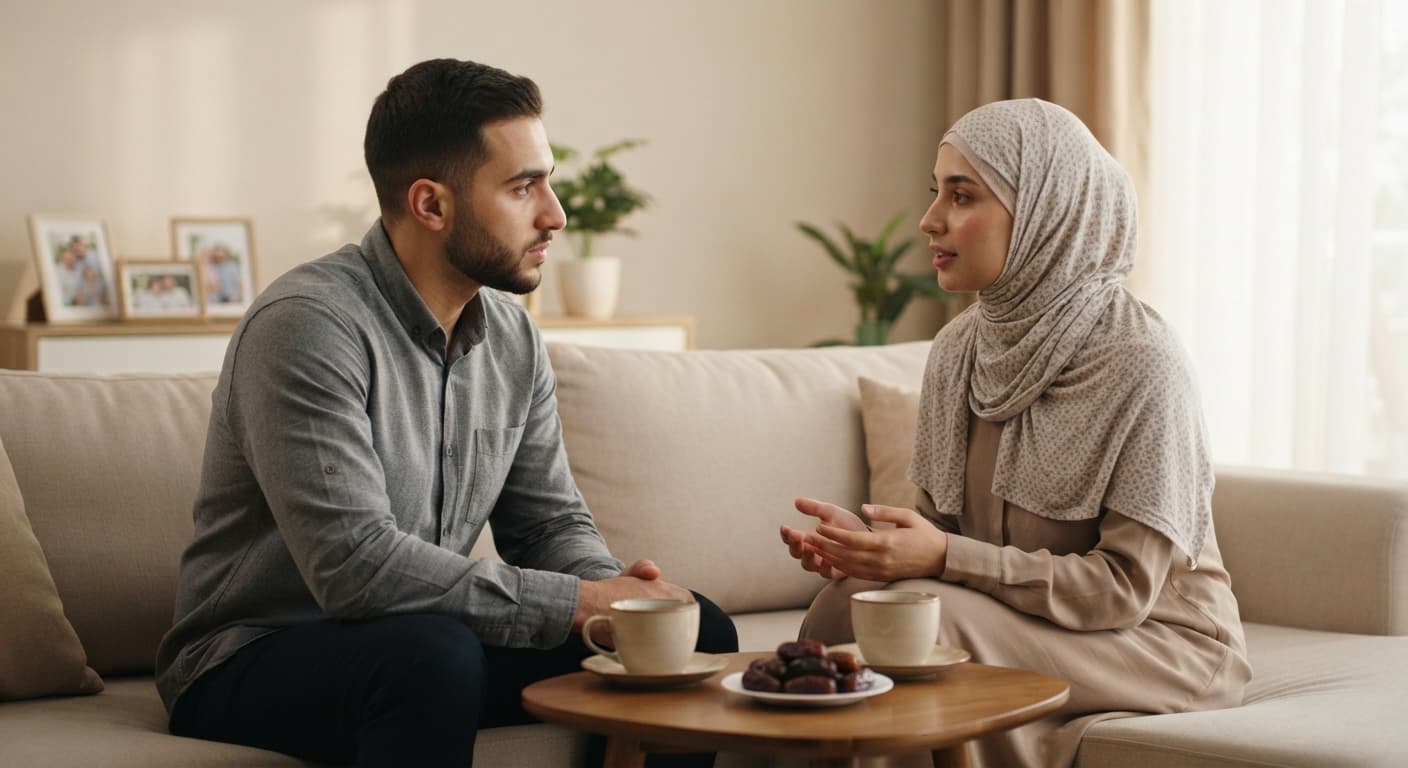
A young man agrees to propose to a woman his mother introduced him to, after seeing only her photo on her phone. His close friend asks him before he formally goes to ask for her hand: "so, did you do the Islamic viewing?" The young man hesitates before answering: "I mean, I saw her photo, isn't that enough?" That simple hesitation reveals a very common confusion between seeing a photo, a passing encounter at a family gathering, and what's meant by the term "Islamic viewing" (ru'ya shar'iyyah) in Islamic jurisprudence. Many people hear this term and use it, but few know its precise definition or the wisdom behind its permissibility in the first place.
The Islamic viewing isn't just a socially accepted procedure — it's a clear jurisprudential allowance with its own basis and purpose, meant to solve a real problem: how can two people move toward a decision as big as marriage without ever having seen each other? So what exactly is the precise definition of this viewing, what's its wisdom, and what's permitted within it and what isn't?
Why wasn't a photo or a family description ever considered enough?
In many societies throughout history, it was considered sufficient for family members or intermediaries to describe the bride's or groom's qualities, without either party ever seeing the other before the marriage contract. Islam didn't settle for this arrangement — it came with an explicit directive permitting someone who wants to marry to look at the person they intend to propose to, before taking any formal step. The wisdom behind this is clear and practical: genuine contentment and harmony between spouses starts with real knowledge of the other person's appearance and presence, not with a secondhand description that might be exaggerated or inaccurate. This prophetic guidance was, for its time, a remarkably progressive step in protecting both parties' right to make a decision based on real observation, not solely on other people's descriptions.
The precise definition of the Islamic viewing
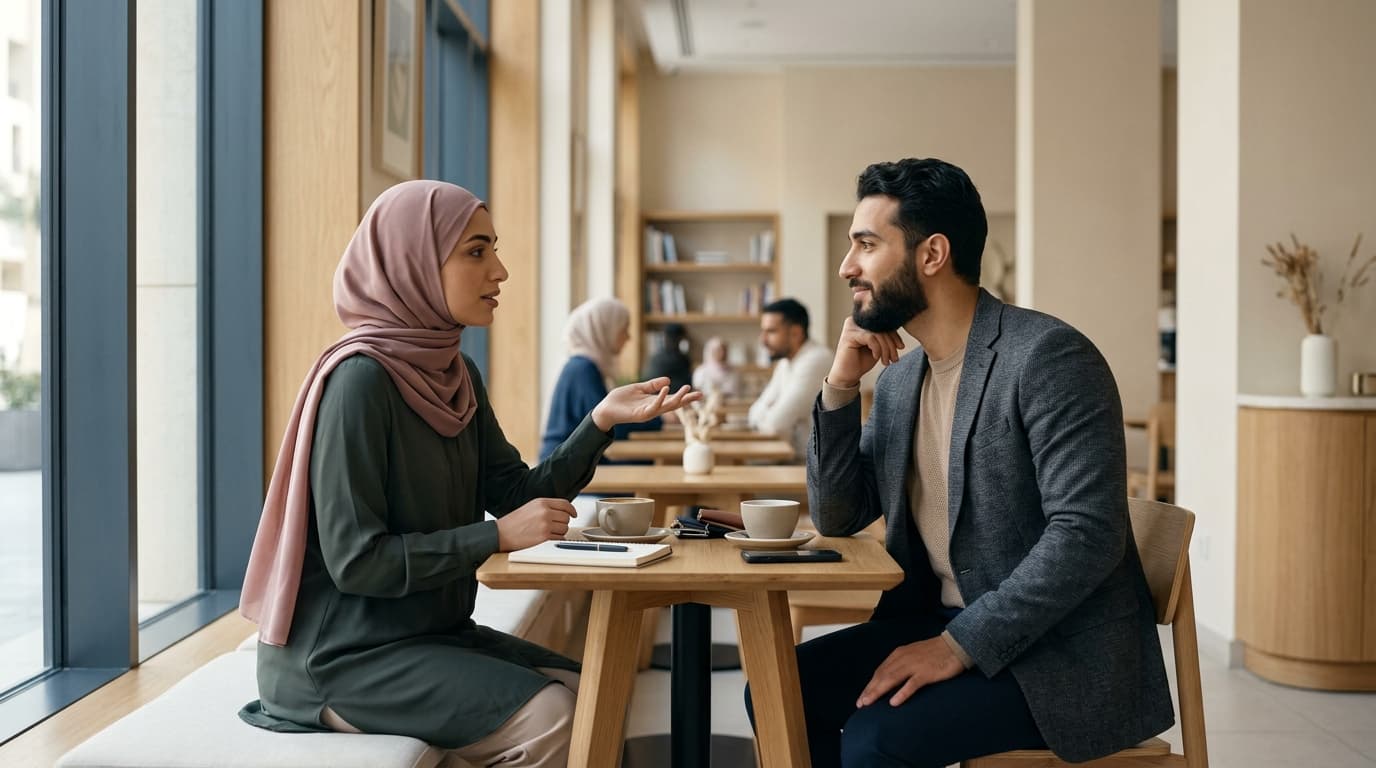
The Islamic viewing is when a man who wants to propose to a woman looks at her face and hands, in a lawful meeting with no seclusion involved, for one clear, defined purpose: to confirm his comfort with her as a potential life partner before taking the formal step of asking for her hand. This definition clarifies three essential elements: first, that the purpose of the viewing is to make the marriage decision, not mere curiosity or general acquaintance; second, that what's permissible to see is limited to the face and hands according to the most well-known juristic opinion, not the entire body; and third, that the meeting itself must involve no seclusion — meaning a mahram of the woman is present, or it takes place somewhere the two are never fully alone. This definition differs fundamentally from simply seeing a photo, because a photo doesn't convey real presence, manner of speaking, or many details a person only discovers in a direct meeting.
What is actually permissible to see?
The most widely held juristic opinion restricts the viewing to the face and hands, considering them sufficient to know the person's general features and presence without crossing any boundary of modesty. This doesn't mean the meeting is limited to silent looking; it usually extends to include a brief, direct conversation that lets each side notice the other's manner of speaking, tone, and some initial personality traits — a natural and acceptable part of this meeting as long as it stays within its guidelines. The point isn't a cold, formal inspection, but a genuine opportunity for an initial observation that precedes the decision, not a replacement for the deeper getting-to-know-each-other that comes later during the engagement period itself.
Does it require the other person's knowledge or consent?
A common mistake is believing the Islamic viewing can happen secretly, without the other person's knowledge, on the assumption that looking alone is what the allowance is about. This is an incomplete understanding; the Islamic viewing intended here is a meeting known to both parties, agreed to by the woman or her guardian — not covert observation from a distance without her knowledge. Even though some older juristic narrations reference the permissibility of looking without prior knowledge under certain circumstances, the practice recognized today, and the one most respectful of both parties' dignity, is a clear, announced meeting agreed to by everyone — not an attempt at secret observation that, if the woman later learned of it, could leave her feeling disrespected.
Is one viewing enough, or can it be repeated?
There's no religious text that precisely specifies how many times the viewing can happen, and jurists have permitted repeating it if needed, as long as it stays within the same guidelines each time. Some people are satisfied with one brief meeting that gives them enough of an impression to make a decision, while others prefer a second or third meeting before feeling comfortable enough. There's no religious issue with either choice, and the practical standard is whether both parties feel they've gathered enough information to make a conscious decision — not adherence to some specific number just because it's the most socially common.
The difference between the Islamic viewing and the extended getting-to-know-you period after it
Many people confuse the Islamic viewing, which is a limited meeting or meetings before the decision to propose, with the longer getting-to-know-you period that follows initial agreement from both sides. The Islamic viewing precedes the initial decision: should I propose to her at all or not? The extended getting-to-know-you period comes after this initial decision, and aims for deeper knowledge preceding the final marriage decision, with its own separate guidelines we've covered in a dedicated article on the Islamic boundaries of getting to know your fiancé(e). Confusing the two stages leads some to think the first viewing meeting is enough to build the entire marriage decision on, when in reality it's a limited first step with a narrow purpose, followed by a deeper getting-to-know-you stage if both sides decide to move forward.
Common mistakes around the Islamic viewing
A recurring mistake is settling for a photograph instead of a real meeting, assuming the photo makes the direct viewing unnecessary. A photo might give an initial impression, but it doesn't convey the person's real presence, manner of speaking, or natural interaction — all essential elements in forming a genuine impression. Another common mistake is treating the viewing meeting with excessive rigidity, like a cold formal exam with no natural conversation at all, which prevents both sides from forming a real sense of each other's personality. A third mistake is stretching the viewing meeting until it effectively turns into an extended getting-to-know-you period, without clarity of purpose or clear guidelines agreed on beforehand between both parties and their families.
Why does this specific meeting deserve so much juristic attention?
It might seem to some that all this precise detail around a relatively short meeting is excessive, but the wisdom lies in the fact that this meeting is often the pivotal moment on which a decision as consequential as marriage gets built. Islamic jurisprudence didn't leave this moment random or vague — it set a clear framework balancing both parties' need for genuine knowledge before the decision with maintaining modesty and mutual respect throughout the process. That very balance is what makes the Islamic viewing a successful middle ground between two extremes: marriage with zero viewing at all, or an open-ended acquaintance with no guidelines whatsoever — both carrying real risks far greater than their expected benefits.
What if you're not comfortable making the request, even though it's fully permitted?
Some young men and women feel embarrassed explicitly requesting the Islamic viewing, fearing the request might be read as doubting or distrusting the family's description. This embarrassment is socially understandable, but it doesn't change the fact that this request is a fully legitimate right, not an exception that needs justifying. It's better to approach it simply and clearly: requesting to see the other person before any decision is a natural, expected part of a serious marriage process, not a negative signal in any way. Some platforms dedicated to getting to know people for the purpose of marriage, such as Wanees, help make this step easier and more organized and comfortable for both sides, instead of leaving it hostage to a social awkwardness that might stop one side from claiming their legitimate right to a clear viewing before a decision this significant.
Does the meeting require another person's presence?
The meeting must take place in the presence of a mahram of the woman, such as her father, brother, or another relative, so that no seclusion occurs between a man and woman who aren't religiously permitted to be alone together — this condition isn't unnecessary added complexity, it protects both parties from any situation that could later be misread. Many families arrange this meeting at the woman's own family home, or in a suitable public place, with a family member present. Is it acceptable for a third person to be present if one side feels more comfortable that way? Yes — a mahram or family member's presence doesn't conflict with the purpose of the Islamic viewing; it can actually make both people more comfortable and allow for a more natural conversation, away from the nervousness of a first one-on-one meeting. What matters is that the core purpose stays intact despite the third person's presence: a real opportunity for direct viewing and conversation between the two people, not a meeting that turns into a full family gathering where the direct exchange the viewing was meant to enable disappears entirely. This condition also protects both parties' social standing, leaving no room for later doubt about the meeting's nature or circumstances. This is why it's always advisable to coordinate the meeting's place and time with family in advance, rather than leaving it to the last minute amid unnecessary social pressure or awkwardness.
In the end
The Islamic viewing isn't an empty formality, nor is it simply seeing a photo on a phone — it's a clear jurisprudential allowance with a defined purpose: for each person to base their marriage decision on real knowledge of the other person's presence, not on a secondhand description or a still photo that doesn't reflect who they are. Whoever understands this allowance with its precise definition and guidelines, and uses it as it was intended, gives themselves a far more conscious start to a journey that may end in a decision they'll live with for the rest of their life.
Put your standards in a real profile
Create your free account in the browser and let matching work on your criteria, not on photos.