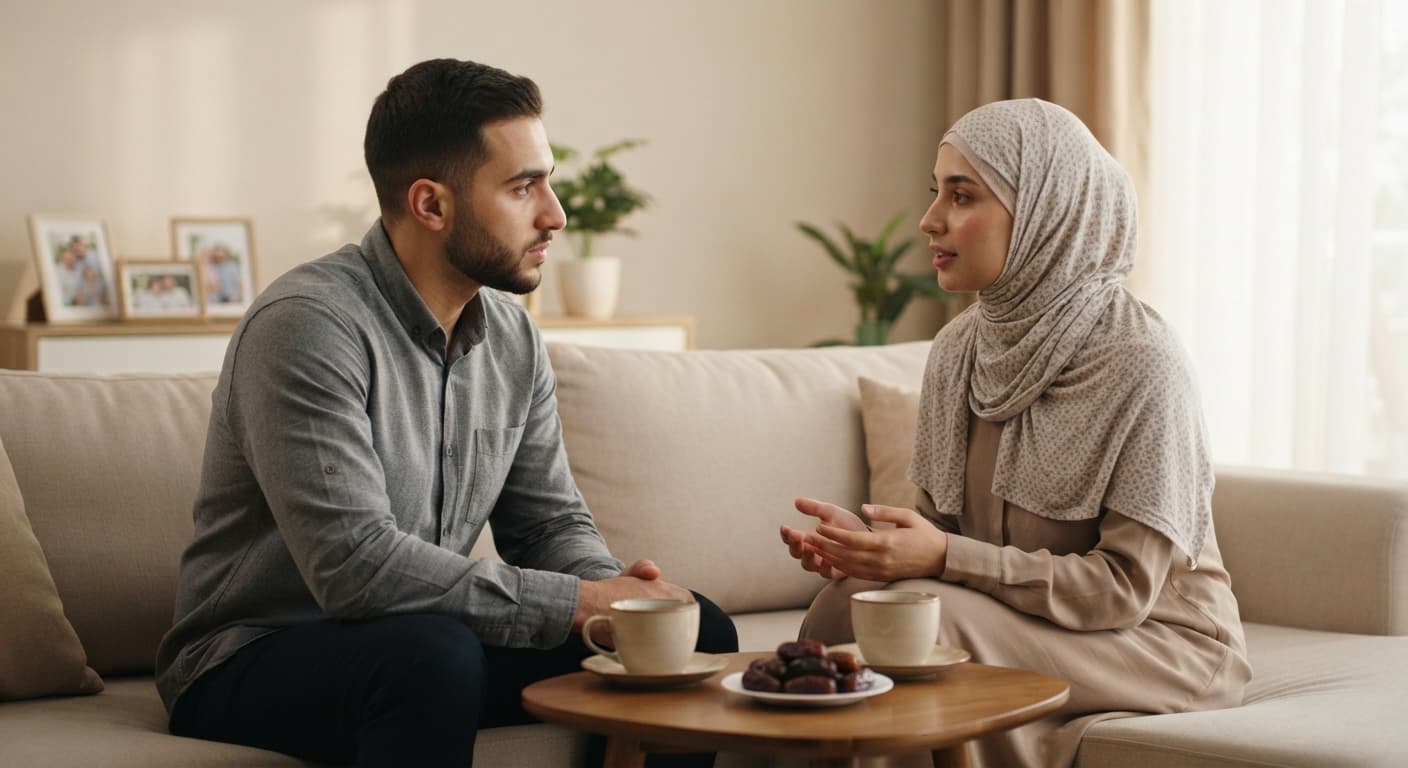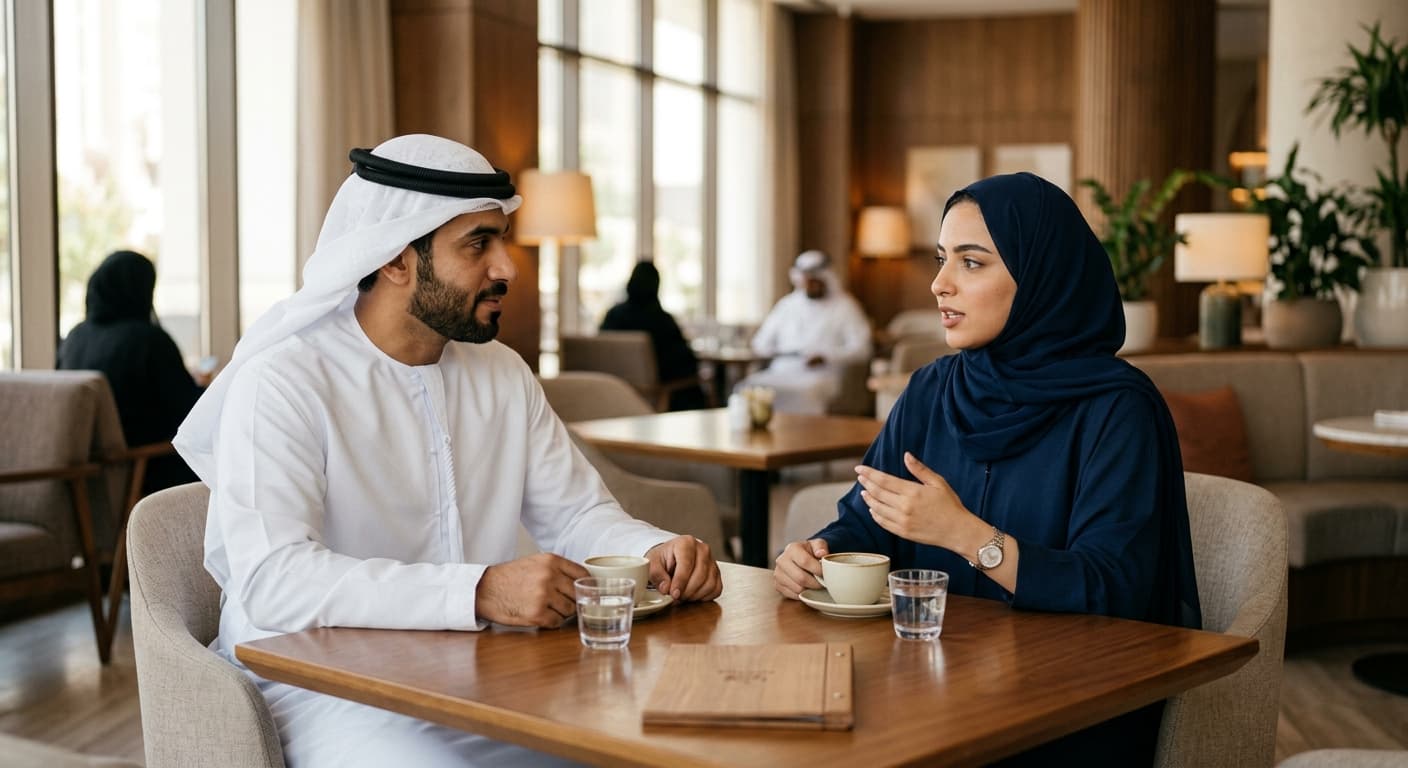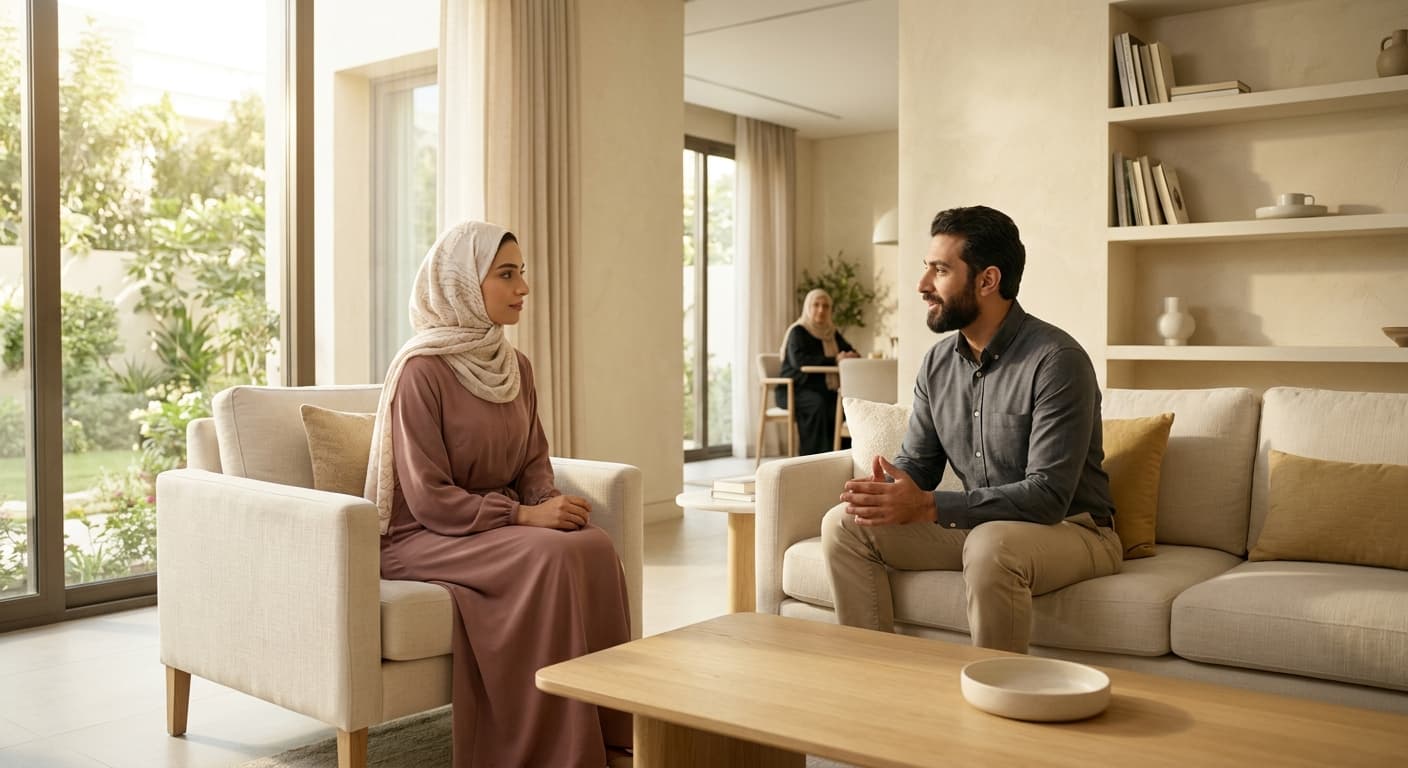
Picture this: you've started a real conversation with someone you're seriously considering marrying — what's usually called the talking stage, or Islamic courtship. The messages are flowing well, there's mutual comfort, and maybe you've even had a short phone call to get more of a sense of each other. Then, at some point, a simple but nagging question crosses your mind: is what we're doing right now actually okay? Or have we started crossing lines without noticing?
Almost everyone going through this stage asks themselves this at some point, yet few find an answer that's both reassuring and clear. You usually run into one of two extremes: a strictness that makes any communication before marriage feel like a problem, or a complete looseness with no framework at all. The truth is there's a well-defined middle ground, and understanding it will put you more at ease than you'd expect.
Why does this getting-to-know phase even exist?
Before getting into the boundaries, it's worth pausing on the reason: why is this stage allowed at all, instead of going straight to the marriage contract?
The answer is simple: marriage is a very long commitment, and everyone has the right to know something about the character of the person they're about to share their life with before deciding. That's the real wisdom behind this stage existing — and it's exactly what draws its boundaries too. As long as the purpose of every message or call is to reach a clearer decision, you're within the right framework. But once this stage turns into something you both enjoy for its own sake, with no real movement toward a decision, it's drifted away from the purpose it exists for — even if both of you still call it "serious getting to know each other."
That subtle difference — between "communicating in order to decide" and "communicating for its own sake" — is the key that explains everything else.
So what does that actually mean in your day-to-day conversations?
From that exact idea come the rules almost everyone agrees on. The first is that you shouldn't be completely alone together with no third party present or aware — and this isn't limited to physically meeting. It also covers what could be called "digital seclusion": very long, frequent, private video calls that start resembling actual seclusion even though they happen through a screen.
The second is keeping the tone of conversation away from flirtation and direct romance. This is exactly where a lot of people get confused: they assume the problem is the communication itself, when the real issue is its nature. A message asking his opinion on raising children is one thing; a message telling him you missed him all day is something else entirely, even if both were sent in the same "serious" conversation.
And whenever you ask yourself, "are we still talking to get to know each other for the sake of marriage, or have we started building something parallel to that goal?" — you're actually applying the third and final rule: keeping the purpose present, instead of letting it get lost somewhere in the days and weeks.
Does everyone agree on every detail, though?
The general picture above enjoys wide agreement, but once you get into the finer details, there's a real difference among scholars worth knowing about instead of being caught off guard by later.
Some hold that in the earliest phase — before the formal engagement itself, while you're still at the stage of initial consideration — communication should be limited strictly to what serves the core decision, and should ideally go through family or happen in their presence as much as possible. Others hold that the formal engagement stage itself, once the intention to marry has been announced and families have agreed in principle, allows for relatively broader direct communication between the two people, since it's a direct lead-up to a contract that's expected soon — as long as the general boundaries above are still respected.
Don't let this difference unsettle you — it isn't a sign of ambiguity in the religion, but a natural result of differing scholarly judgment on a matter that has no single decisive text covering every detail. Practically speaking, what matters for you is asking yourself honestly what genuinely puts your own heart at ease, and consulting someone whose knowledge you trust if real hesitation comes up in a specific situation, rather than relying on a vague impression you picked up somewhere.
Then comes the question of photos
One question that simply didn't come up in this form before dating and marriage apps: is it okay to exchange personal photos at this stage?
There's no single answer that fits every situation — it has more to do with how serious the stage genuinely is than with a quick urge for surface-level reassurance. But interestingly, some marriage platforms, like Wanees, haven't left this to chance: photos are protected by default and don't automatically show to anyone. Making yours visible to a specific person requires your own explicit approval, given individually. That doesn't answer the religious question for you, but it at least keeps you from ending up in a situation where anyone who starts a conversation with you can see your photo automatically — exactly what happens on general dating apps that have nothing to do with a marriage context to begin with.
Now suppose the other person asks for more than you're comfortable with
This happens far more often than you'd think: you're two weeks into a serious getting-to-know phase, and the other person asks for a video call every night, or conversation stretching late into the night, even though you're just not comfortable with that pace. What do you do?
The worst option is staying silent and going along with it reluctantly so you don't seem "too strict" or "uninterested." The second-worst option is cutting things off suddenly with no explanation. The right move is calmly explaining that you prefer a certain kind of communication at a certain pace, and that this doesn't mean you're any less serious about it. And honestly, how the other person reacts to that tells you something far more important than the topic itself: are they someone who respects your boundaries once you state them clearly, or someone who pushes back against them? That's exactly the information you'll need about them later, inside the marriage itself — not just during this getting-to-know phase.
And when does family come into the picture?
There's no single timing that works for everyone, but there's a useful practical signal: the moment things shift from "initial exploration" to "seriously considering moving forward," bringing family in becomes a natural step that protects you, not an unwelcome intrusion. That doesn't necessarily mean direct communication between the two of you has to stop right away — it means the decision is no longer yours alone to carry.
If you want a fuller look at the family's role specifically at this stage, we've dedicated a full article to it: the role of family and the wali in the Islamic marriage journey. And if you're still at an earlier point, wondering exactly when to move from the screen to actually meeting with family present, our guide on moving from online conversation to meeting in person answers that specific question. If you want to know the etiquette of the engagement stage itself once you're past this point, the Islamic etiquette of engagement picks up right where this one leaves off.
In the end
Go back to the moment we started with: you're talking to someone you're seriously considering marrying, wondering if you're doing this right. The answer, as you've seen, isn't as complicated as it looks: as long as the purpose of every conversation stays reaching a clearer decision, you steer clear of seclusion and direct romantic tone, and you bring family in once things get genuinely serious — you're within the right framework, even if the finer details differ from one scholar to another. And if you ever feel you've drifted slightly outside that framework, correcting course isn't admitting to some grave mistake — it's a natural, healthy part of navigating this important stage of your life consciously.
Put your standards in a real profile
Create your free account in the browser and let matching work on your criteria, not on photos.