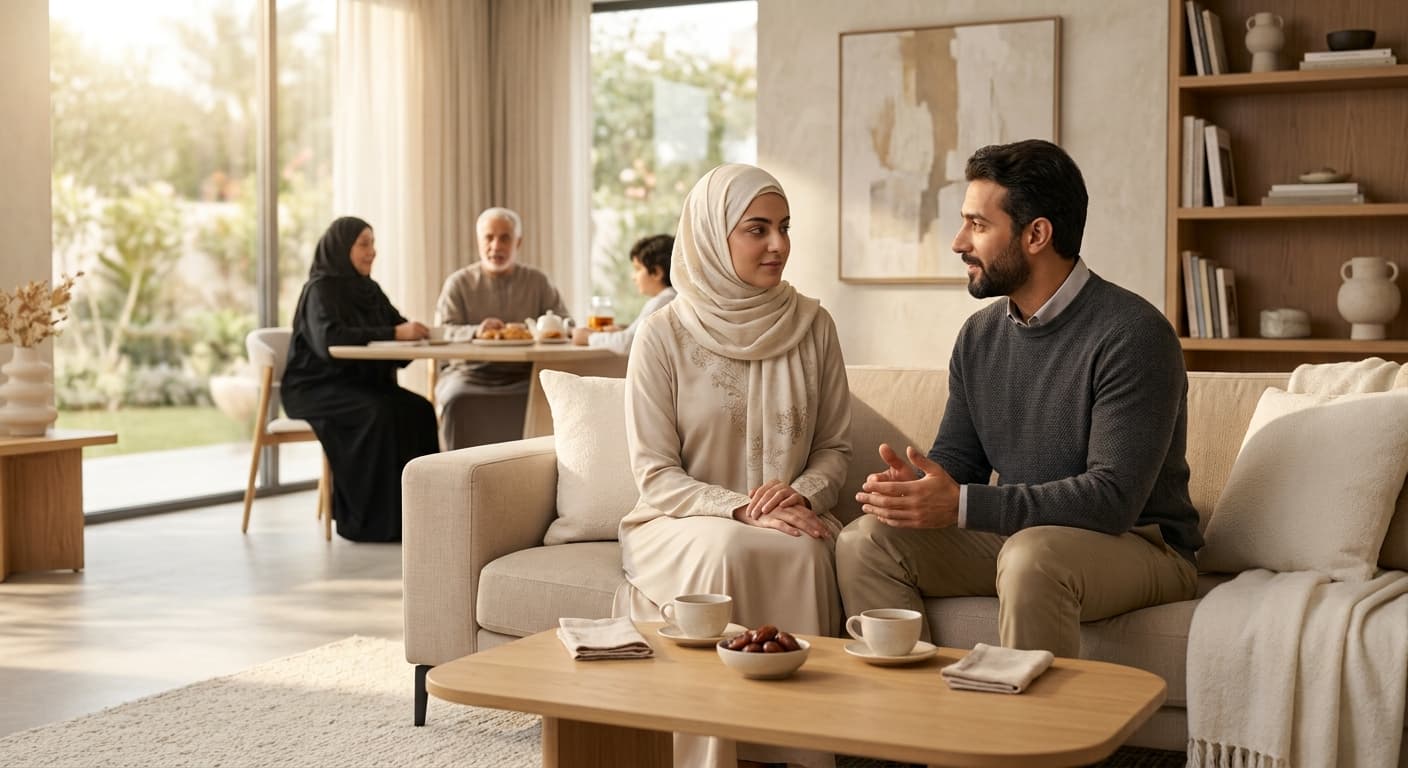
The moment an engagement is announced, everything around the couple changes — except the religious reality itself. Friends congratulate them, family starts talking about the details of the upcoming wedding, and one of them might start inviting the other to family occasions as their "fiancé" in front of everyone. Amid all this celebration, the two of them can start acting as though the marriage has already happened, when in reality the marriage contract hasn't been written yet, and all that's actually changed is a publicly announced intention to marry — not a completed religious bond.
That gap between the social feeling and the religious reality is exactly what makes engagement a sensitive stage, and exactly why a set of guidelines exists to protect both people — not because anyone doubts their intentions, but because clear boundaries protect any human relationship, whether it ends in marriage or not.
Why isn't "good intentions" enough on its own?
Someone might say: "We genuinely intend to marry, so why hold ourselves to boundaries as if we were strangers?" That sounds reasonable on the surface, but it overlooks something important: intention alone doesn't create a contract, and it doesn't grant rights that haven't been established yet. However genuine the intention is, the two of you remain — both religiously and legally — strangers to each other until the contract is complete. That's exactly why certain boundaries continue through this stage, despite how clear the intention is.
So what actually changes after engagement, and what doesn't?
What changes is the nature of your meetings and conversations: it becomes socially acceptable to meet more regularly, and to discuss practical details of the life ahead. What doesn't change is the underlying principle: being completely alone together still isn't permitted, because the contract hasn't happened yet. That might sound strict to someone caught up in the excitement of celebrating an engagement, but it's actually protecting both of you from a situation you can't easily walk back from if circumstances change.
That's why meeting in public places, or with a mahram present, isn't a statement of distrust — it's the natural continuation of the same logic that governed the getting-to-know stage before engagement, just with a bit more room for conversation and joint planning.
What about honesty at this specific stage?
There's a side to engagement etiquette that often gets overlooked: complete honesty about anything significant that could affect the final decision — a health condition, a financial commitment, a complicated family situation. Engagement is the last real opportunity for this kind of disclosure before backing out becomes socially and emotionally much harder. Someone who hides something like this, hoping to "sort it out later after marriage," puts the other person in an unfair position, and puts themselves in a harder one once it inevitably surfaces later.
And what if the engagement drags on longer than it should?
The longer the stretch between engagement and the marriage contract, the more likely the couple finds themselves in situations they never planned for — not out of bad intent, but because natural familiarity grows over time and gradually loosens the care given to the boundaries they started with. That's why it's always advisable not to let an engagement drag on without a genuine reason, especially once both people are actually ready for marriage.
And where does family fit into all this?
Family being aware of how the engagement is unfolding isn't unwelcome interference — it's a continuation of the same protection described above. Family here aren't guards suspicious of the couple; they're part of a framework that keeps the engagement a clear, structured stage, rather than an isolated individual experience that could drift off course without anyone noticing. For a fuller look at the family's role, see the role of family and the wali in the Islamic marriage journey.
In the end
Engagement isn't a miniature marriage, and it isn't an emotional trial period with no rules. It's a genuine in-between stage — one with its own legitimate social celebration, and, at the same time, its own religious boundaries that don't shift just because an intention has been announced. Anyone who navigates this stage consciously — with honesty, clear boundaries, and no rush to move past them — builds the start of their marriage on solid ground, even before the contract itself is ever written.
Further reading
Put your standards in a real profile
Create your free account in the browser and let matching work on your criteria, not on photos.