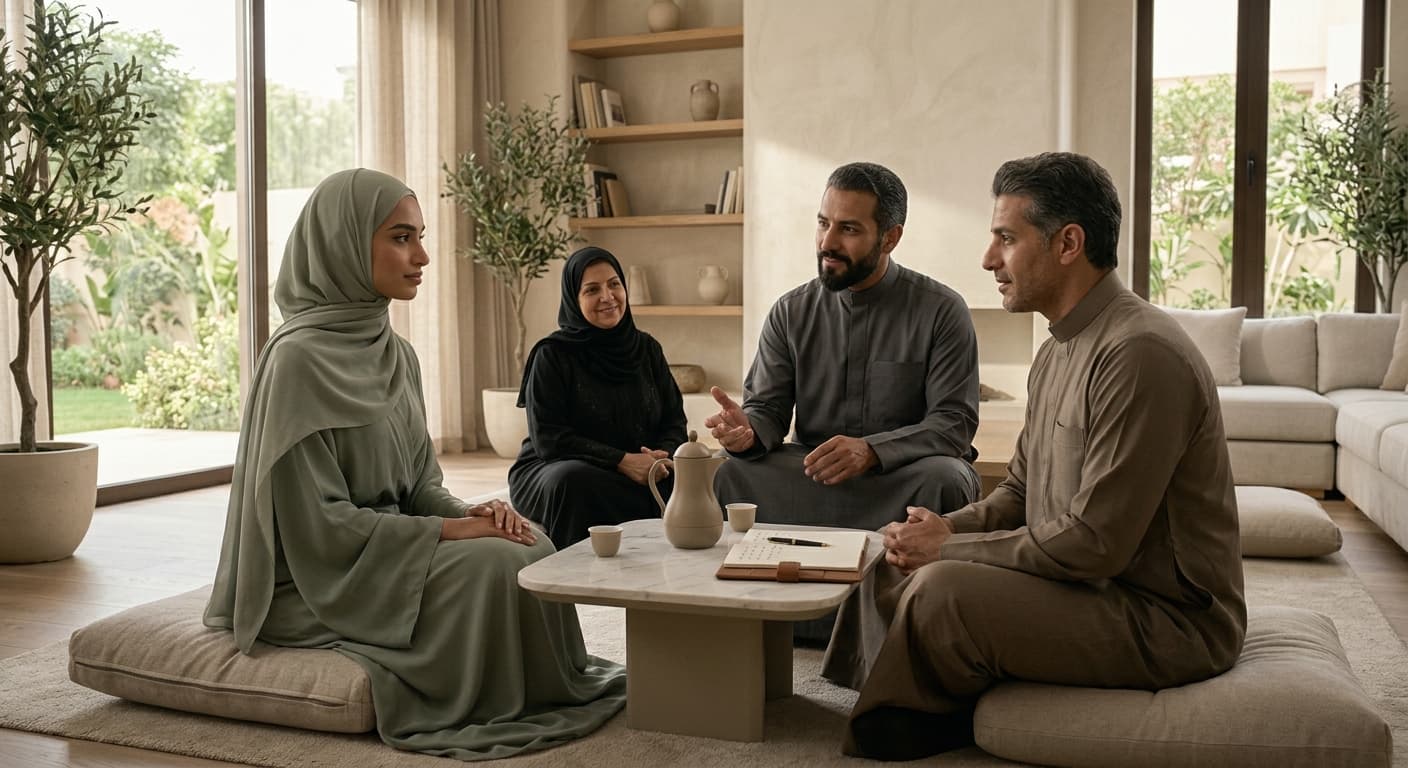
Over the past few years, getting to know a potential spouse has moved into new online spaces — but that shift in how people meet hasn't changed a basic fact: in its Islamic sense, marriage is as much a family decision as it is a personal one. Family involvement, and specifically the role of the wali (guardian), isn't a formality handled at the very end — it's part of the decision-making journey itself, from the moment both sides' intentions become serious.
Many young people today face a simple, practical question: how and when do you bring your family into a story that started with a conversation or a match on a platform, without either rushing them into a decision that hasn't matured yet, or waiting so long that the eventual news feels like more of a surprise than it should be?
Why Family Still Matters, Even as How We Meet Has Changed
The way people get to know each other has changed, but what hasn't changed is that family often sees things neither person can see clearly while caught up in first impressions and rising feelings. A parent's or older sibling's opinion isn't necessarily an objection — it's often another angle: about stability, about seriousness, about things that are hard to judge from inside the relationship itself.
There's also a practical role that can't really be skipped: from the formal steps of a proposal and engagement, to the moments where both families need to know each other before the relationship becomes an actual marriage.
When Is the Right Time to Involve Your Family?
There's no single right moment that fits everyone, but there's a useful signal: once getting to know each other moves past the early stage into one where both sides are seriously considering marriage, involving family becomes a natural next step, not an exceptional one.
Waiting too long under the excuse of "making sure first" can make the conversation with your family feel like announcing a decision already made, rather than genuinely involving them in making it — while moving too fast, before the relationship's shape is even clear, can hand your family details that haven't matured yet either.
How to Start the Conversation With Your Family
You don't need a formal speech or a big "announcement" — what you need is clarity: who the other person is, what stage things have actually reached, and what you're really looking for from their involvement at this point — an opinion, more information, or practical next steps.
Choose a calm moment, away from the noise of a regular day.
Be clear about the real stage of the relationship — neither overstated nor downplayed.
Listen to their questions without assuming they mean rejection or doubt in you.
Leave room for practical questions — family, circumstances, and next steps.
The Wali's Role, Specifically, in the Marriage Journey
For the side that needs a wali, this role isn't limited to giving "approval" at the last moment. It extends to accompanying important meetings, asking questions the other person may not feel comfortable asking themselves, and following through on the formal steps that turn getting to know each other into a relationship both families clearly recognize.
This presence isn't interference in a personal choice so much as a framework that gives the decision extra seriousness, and gives both sides a sense that what they're building is acknowledged from the start — not only after a long stretch of time has already passed.
This role doesn't conflict with getting to know each other starting online. The real difference is timing: a wali doesn't need to be involved from the very first message, but does need to come in before the conversation turns into actual promises or arrangements — not after.
What to Do When Your Family Disagrees With Your Choice
Disagreement doesn't necessarily mean the decision is wrong, and it doesn't mean your family's opinion has to override yours. What matters is understanding the actual reason behind their hesitation: is it a practical concern that can be discussed, or a first impression that might change with time and deeper acquaintance?
A calm conversation built on real information, not assumptions, usually closes the distance better than insistence or confrontation. And even when the disagreement continues, mutual respect is what keeps your relationship with your family intact, regardless of how the decision turns out.
When the Journey Itself Starts Closer to Your Family's Values
Much of the tension around "when and how to tell your family" comes from the nature of the spaces people meet in to begin with — general platforms built around quick browsing and photos, where it's hard for family to feel reassured about an environment they know nothing about.
On a platform like Wanees, the first questions family usually asks — who is this person? what do they want from marriage? is their religious commitment genuine or just stated? — already have clear answers before the family conversation even starts, because that's the exact starting point the whole introduction was built on. This doesn't replace your family's own questions and involvement, but it shifts their role closer to reviewing and confirming a clear path, instead of starting from zero to evaluate an environment they know nothing about.
In the end, involving family and the wali isn't extra weight on the marriage journey — it's a genuine part of it, one that gives it a stability that's hard to make up for later. The earlier and clearer this involvement starts, the closer the journey to marriage gets to being the shared decision its seriousness deserves.
Further reading
Put your standards in a real profile
Create your free account in the browser and let matching work on your criteria, not on photos.