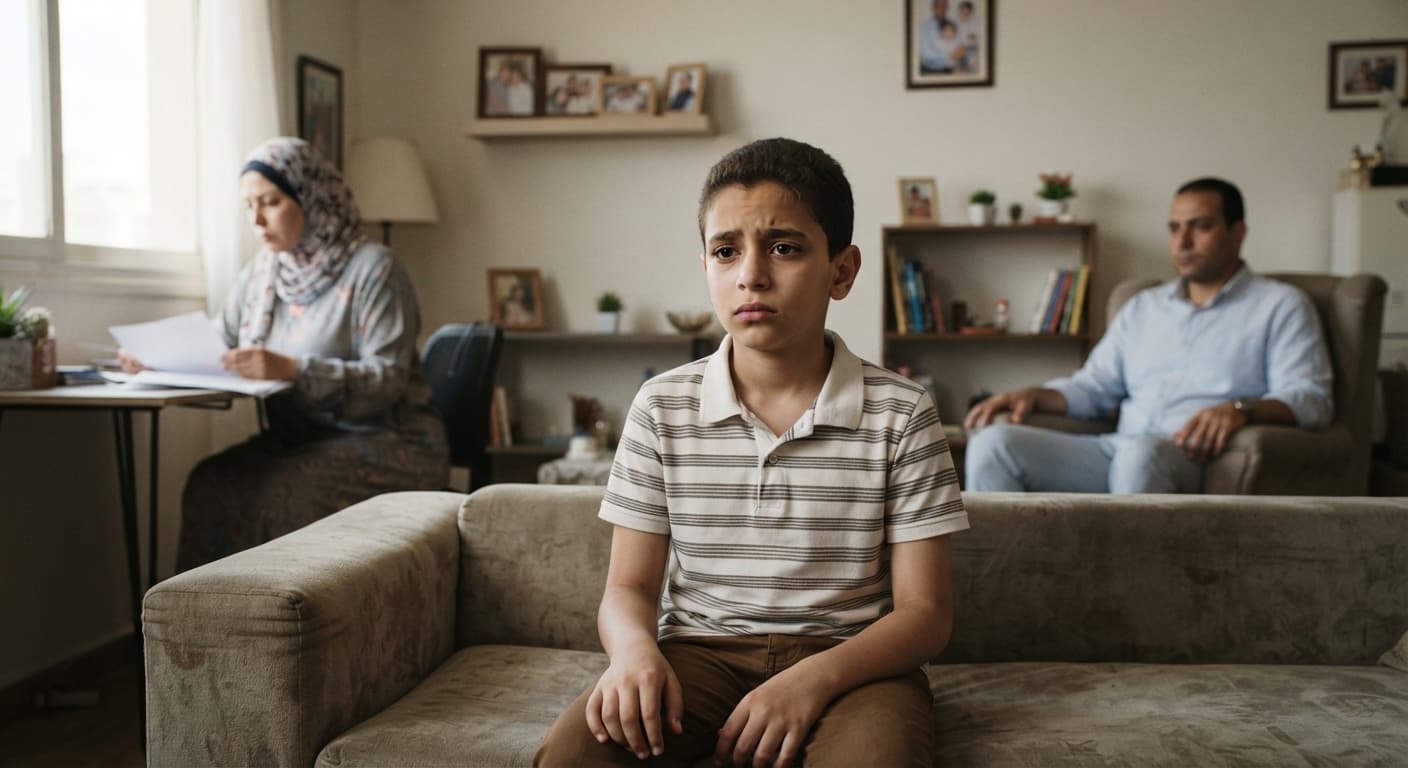
Your child asked for something simple. One of you said "no" clearly, and before the sentence was even finished, the other said yes right in front of them. The child didn't miss it, and a few days later, you may have noticed they'd started directing their requests to whichever parent says yes more often, and avoiding the other entirely when they want something specific. That child didn't learn something wrong on their own — they simply learned exactly what you unintentionally taught them.
Spouses disagreeing on parenting style is completely normal, and no marriage exists without this kind of difference. The real problem isn't that it exists — it's that it shows up in front of the child as ongoing conflict instead of turning into one unified approach behind the scenes.
Where does this difference actually come from?
Every spouse brings a different parenting background, shaped by how they themselves were raised, complete with beliefs they sometimes picked up without fully realizing where they came from. There's no single "correct" parenting style everyone agrees on, and admitting that from the start — instead of defending your own approach as the absolute truth — is what makes any later discussion calmer and more productive.
So why does it specifically hurt for the disagreement to show up in front of the child, rather than just existing?
When a child sees a clear disagreement between their parents over a decision that affects them, they don't just learn there are two different opinions — they learn something far more consequential: that they can exploit that gap to get what they want. As this repeats, it stops being just a parenting issue and becomes genuine confusion for the child about who's actually in charge, and a pressure tactic they wield with more cleverness than their age would suggest.
So how do parents reach agreement without erasing their natural difference?
The first step, simple as it sounds, is often skipped: any parenting disagreement should be discussed between the two of you privately, entirely away from the child — either before the situation or after it, never in the moment itself. That sometimes means one parent temporarily going along with the other's decision in front of the child, then discussing the disagreement privately afterward, rather than losing the far more important battle: presenting a united front to your kids.
What makes reaching real agreement easier?
Agreeing on the big values — honesty, respect, faith, responsibility — is usually much easier than agreeing on small details like bedtimes or screen time. Starting from those shared values builds common ground that makes negotiating the smaller details easier later, instead of trying to agree on everything all at once.
Does every disagreement deserve a firm stance?
No, and this is exactly what a lot of couples don't realize. Distinguishing between what's genuinely fixed and important — like moral and religious values — and what's fully open to flexibility — like reward style or how time is organized — significantly reduces the intensity of everyday disagreements that don't actually deserve all that tension.
When is it better to review your overall approach?
The moment of disagreement itself is the worst time to review your overall parenting approach, since both of you are on the defensive. Setting aside calm time, away from any tense moment, to review the general direction of your parenting gives you far more room for genuine understanding.
In the end
Go back to that moment when one of you said yes right after the other said no, and imagine how different it could have looked if you'd discussed it away from the child first. Your disagreement over parenting isn't solved by one style winning out — it's solved by building a third, shared approach that takes the best of both. And when parents present a united front to their children, even if they worked it out behind closed doors, they give their kids the one thing parenting actually needs most: stability.
Put your standards in a real profile
Create your free account in the browser and let matching work on your criteria, not on photos.