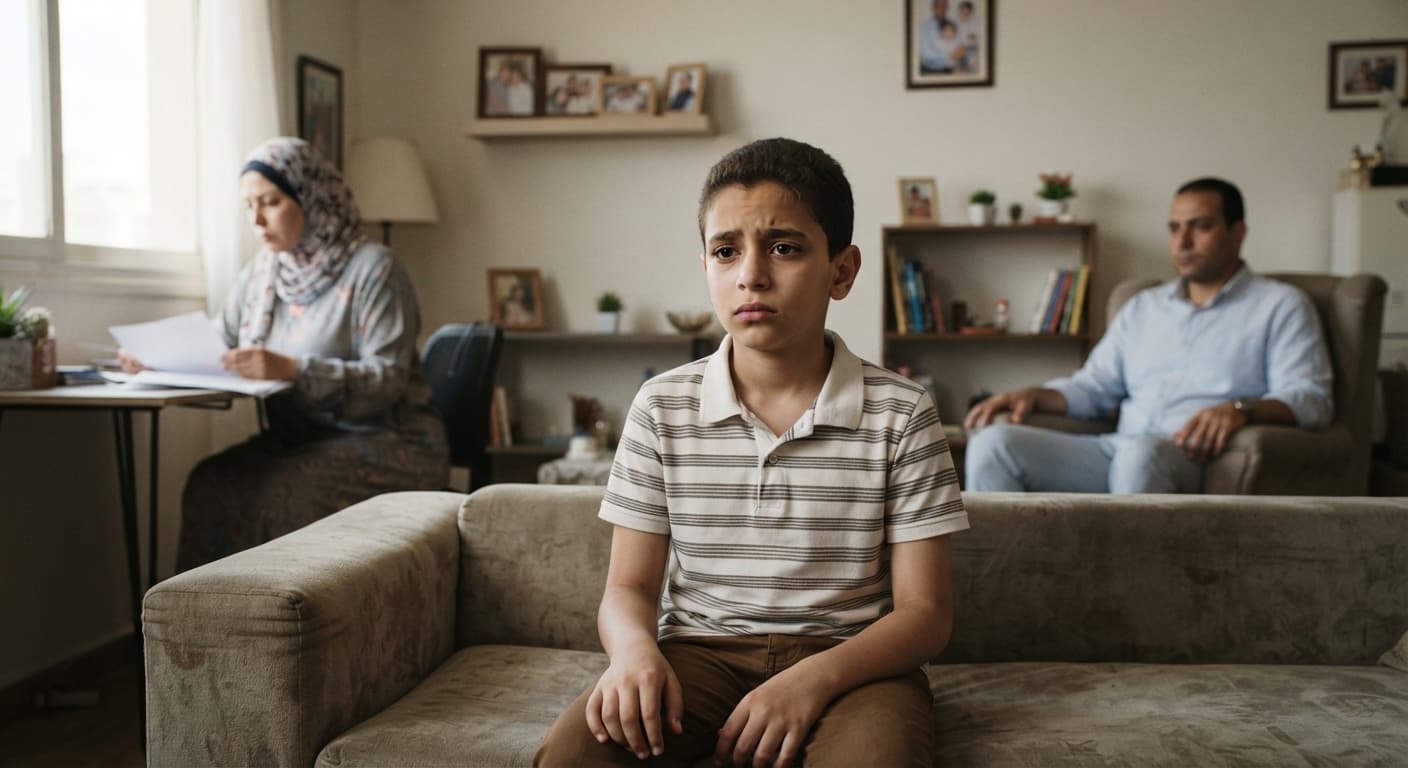
You finally sat down after a long day, the baby's asleep, and you have a rare quiet stretch of time ahead of you. But instead of talking about anything spontaneous, you found yourselves discussing feeding schedules, then the next doctor's appointment, then something else about the baby too. And when you tried to remember the last time you talked about something completely different — about yourselves, an ordinary day, anything unrelated to parenthood — neither of you could pin down exactly when that was.
This scene is so common that a lot of people consider it completely normal, and to some extent, it is. But when this pattern continues unnoticed, it gradually shifts from a "temporary phase" into the permanent shape of the relationship — and that's exactly the point worth pausing on.
Why does this shift happen so fast?
A baby genuinely needs all this attention, and that's not an exaggeration. But the problem isn't the amount of attention the baby deserves — it's that this attention absorbs, without either of you intending it, all the energy and time that used to go toward the marriage itself. No conscious decision was made to neglect the relationship — a gradual slide happened that no one noticed until it became a stable reality.
Does this mean you should pay less attention to the baby?
Of course not, and the idea here isn't comparing or competing between the two kinds of attention. The idea is that your role as a couple didn't end just because a new role as parents was added — the two need to coexist. And honestly, the baby benefits from a stable marriage far more than from two exhausted parents living only for the baby, with no space left for themselves.
So how do you reclaim space for yourselves amid all this busyness?
It doesn't take an elaborate plan or hours you don't actually have. Even half an hour a day of uninterrupted conversation — after the baby's asleep, for example — makes a real difference, if you actually commit to it instead of leaving it to "whenever there's a chance," because that chance rarely shows up on its own at this stage.
What about the exhaustion that makes even that time feel hard?
Physical and emotional exhaustion at this stage is real for both of you, and hiding or downplaying it doesn't make it disappear — it just builds up silent tension. Being direct about needing rest or help — instead of waiting for your partner to automatically read it from a look or a sigh — is far more effective, and far less likely to cause misunderstanding.
Does agreeing on how to split responsibilities help with any of this?
Usually, yes. A large part of the tension at this stage doesn't come from the sheer number of tasks — it comes from feeling the split is unbalanced, that one partner is silently carrying the bigger load while the other doesn't notice. A clear understanding, even an unwritten one, about who does what, noticeably reduces this friction.
In the end
Go back to that rare quiet sitting, and try this time to talk about anything other than the baby, even for just a few minutes. That simple exercise is exactly what reminds you the marriage hasn't disappeared — it just needed someone to pay attention to it amid the busyness. When a couple stays intentional about each other through all of it, the baby becomes a natural extension of their strong relationship, not the reason it faded.
Put your standards in a real profile
Create your free account in the browser and let matching work on your criteria, not on photos.