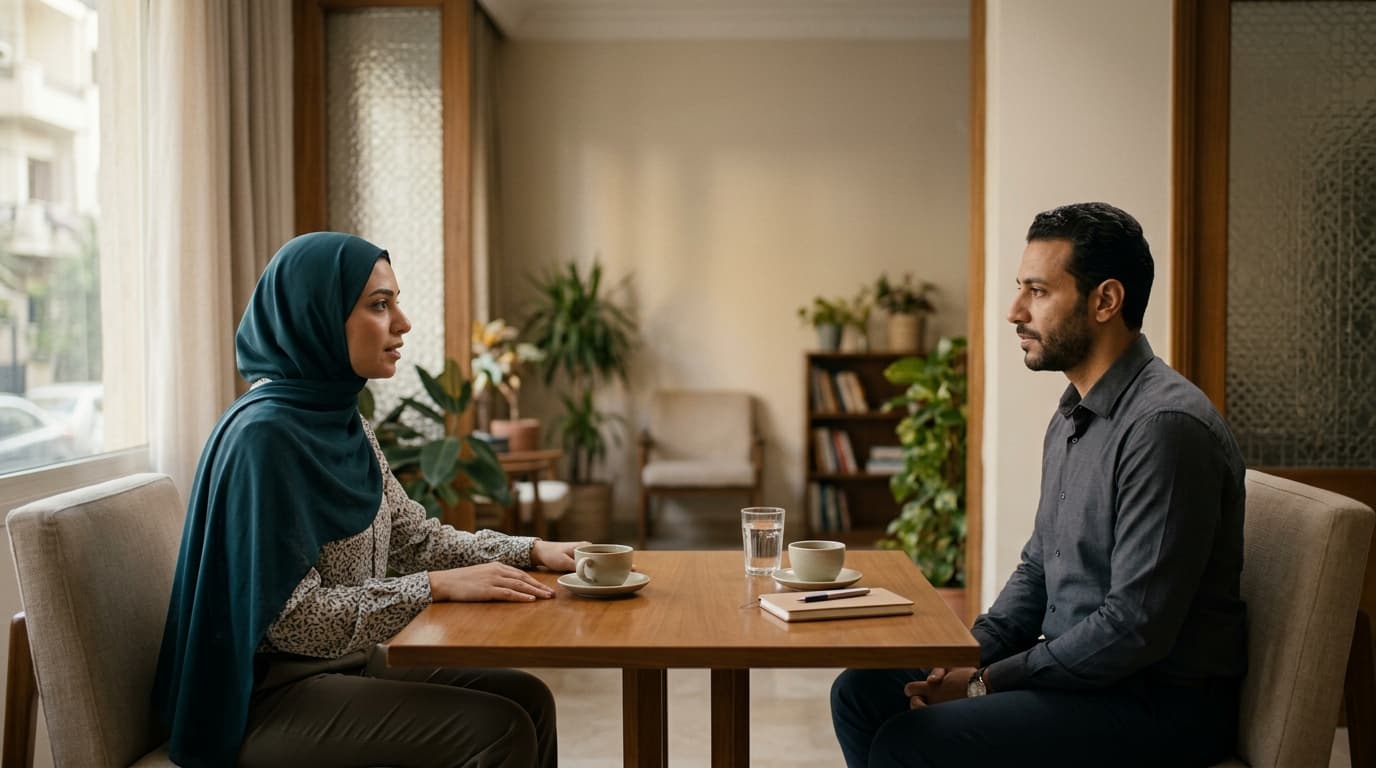
The talking stage before marriage is meant to let both people get to know each other clearly and calmly, and discover how well-suited the other is in personality, values, way of thinking, and expectations.
But getting to know someone doesn't necessarily mean the relationship will end in marriage.
At some point, one person may become convinced that continuing isn't right — whether because of differing values, a personality mismatch, differing expectations, or simply because the feeling of acceptance and comfort never fully came together.
This is where it matters to know how to end things respectfully, clearly, and safely.
Withdrawing from a getting-to-know-you relationship that isn't right isn't a mistake, and declining to continue doesn't require insulting the other person or getting into a long conflict.
First: Be Sure of Your Decision
Before ending things, try to tell the difference between genuine incompatibility and a temporary issue that can be discussed.
Ask yourself:
- Is there a fundamental difference in values?
- Do our expectations of marriage differ in a way that's hard to reconcile?
- Do I feel consistently uncomfortable?
- Is there a problem with trust or respect?
- Am I only continuing out of fear of upsetting the other person?
- Do I genuinely see this relationship turning into a good marriage?
If you reach a clear conviction that continuing isn't right, it's better to be upfront instead of staying in a relationship you don't see a future in.
Don't Continue Just Because You Fear Rejecting Someone
Sometimes a person feels guilty for not wanting to continue.
They might tell themselves:
"They're a respectable person, so I should keep going."
But respecting the other person doesn't necessarily mean they're right for you.
A person can be good and respectable, and there still isn't enough compatibility for marriage.
Marriage is a long-term decision, so it's better to end things early once you're genuinely convinced it's not right, instead of continuing out of politeness and facing a harder decision later.
Be Clear, and Don't Leave the Door Open Without Reason
If you've decided not to continue, it's better for the message to be clear.
Don't use phrases that leave the other person waiting, like:
"Let's see how it goes later."
or:
"Maybe we can talk about it after some time."
If your decision is final, say so respectfully.
The message can be simple:
"After thinking it over, I've become convinced that our differences mean I don't see this leading to a suitable marriage, so I'd rather we end things here. I wish you all the best."
Clarity is more respectful than leaving the other person waiting and guessing.
You Don't Need to List Every Flaw
There's no need to give a long list of reasons.
If your decision is based on incompatibility, it's enough to explain that without going into details that could hurt the other person.
Instead of:
"You're too short-tempered, your personality is difficult, and I don't like the way you talk."
you could say:
"I feel there's a difference in how we think and interact that makes me not see us as suited for marriage."
The goal is to explain the decision, not to evaluate the other person's character.
Don't Turn the Ending Into a Trial
When someone tells the other person they want to end things, the other person may start asking:
"Why?"
"What did I do?"
"Just give me a chance."
They have a right to understand the reason in general terms, but the conversation shouldn't turn into a session for proving who's right and who's wrong.
You can explain your position calmly, then close the conversation once the decision is clear.
Choose the Right Way to Communicate
If the relationship is still at a simple getting-to-know-you stage, a clear, respectful message may be enough.
But if things have become serious and the two families have started communicating, it's better to account for that stage and handle it in a more formal, clearer way that preserves everyone's respect.
There's no single approach that fits every situation.
What matters is that the approach matches how far the relationship has gone, and that you don't suddenly disappear without reason if there was a clear commitment between you.
Don't Use Disappearing as a Way to Withdraw
Suddenly disappearing without any explanation can be painful and confusing, especially if there's been ongoing contact for a while.
If there's no safety concern, it's better to send a short, clear message instead of leaving the other person wondering what happened.
But if there's fear, a threat, or unsafe behavior, safety comes first — not politeness.
Safety Matters More Than Politeness
Not every case of ending things is the same.
If the other person is pressuring you, threatening you, blackmailing you, or refusing to respect your decision, you shouldn't feel obligated to keep talking just to be "polite."
In that case:
- Reduce contact.
- Don't get drawn into long arguments.
- Keep evidence if there are threats or blackmail.
- Use blocking and reporting tools when needed.
- Tell someone you trust if you feel the situation could turn dangerous.
Respect doesn't mean putting yourself at risk.
Don't Share Private Details After the Relationship Ends
Once things end, the other person's privacy should still be respected.
Don't post private conversations.
Don't share photos or personal information.
Don't use what you learned during that period to embarrass the other person.
Even if things ended badly, privacy remains a moral responsibility.
Don't Use Vulnerabilities as a Weapon
During this period, a person may talk about their fears, experiences, or personal circumstances.
That information was shared in a context of trust — it's not a tool to use in a conflict.
Ending the relationship doesn't give either person the right to exploit what they learned about the other.
If the Reason Is Simply Not Feeling Enough Acceptance
Sometimes there's no clear problem.
The other person may be respectable and right in many ways, yet one of you just doesn't feel the sense of acceptance needed to be ready for marriage.
You don't need to invent a big reason to justify the decision.
You can simply say:
"After thinking it over, I didn't feel enough acceptance and compatibility to move forward toward marriage, so I'd rather we stop here respectfully."
That's a sufficient answer.
Don't Start a New Relationship Before Clearly Ending the Current One
If you're getting to know someone with marriage in mind, it's better to clearly end the current relationship before starting a new one.
That protects everyone from overlap and confusion, and preserves trust and respect.
What If the Other Person Tries to Convince You Otherwise?
You can listen once if you feel it's needed, but the decision shouldn't turn into endless negotiation.
If your decision is based on a fundamental difference, you can calmly repeat your position:
"I appreciate that you want to continue, but after thinking it over, my decision is not to continue, and I hope you'll respect that."
You don't need to give dozens of justifications.
What If Families Are Already Involved?
Once things have reached a stage where the two families know each other, ending it becomes more sensitive.
In that case, it's best to handle it with clarity and respect, informing the people involved in an appropriate way instead of leaving things vague.
The calmer and more respectful the handling, the less likely the separation is to turn into a conflict between families.
Don't Turn a Decline Into a Personal Insult
Declining doesn't mean the other person is bad.
The reason may simply be that the two of you aren't right for each other.
There's a difference between:
"You're a bad person."
and:
"You're a respectable person, but I don't see us as compatible for marriage."
This difference matters a lot, because it preserves both people's dignity.
How Do You Handle Your Own Feelings After Ending Things?
Even if you were the one who decided to withdraw, you may still feel sad, hesitant, or guilty.
That's normal.
Making a rational decision doesn't mean you won't feel anything.
But don't let temporary sadness push you back into a relationship you were convinced wasn't right, especially if the reason was tied to fundamental issues.
Take your time, calmly review the reasons behind the decision, and avoid rushing into anything under the influence of an emotional moment.
When Is Ending Things Necessary?
Withdrawing may be the right decision when fundamental issues appear, such as:
- A lack of mutual respect.
- A fundamental difference in values.
- Incompatible goals for marriage.
- Repeated lying.
- Manipulation or pressure.
- Not respecting personal boundaries.
- Abusive or demeaning behavior.
- A clear refusal of basic responsibilities.
- A persistent feeling of unsafety or discomfort.
- Fundamental differences neither person can live with.
These things shouldn't be ignored just because the relationship has already begun.
A Successful Getting-to-Know-You Period Doesn't Always End in Marriage
It's important to drop the idea that a successful getting-to-know-you period necessarily means reaching marriage.
Sometimes success means both people discover early on that they're not right for each other, and stop respectfully before entering a more complicated commitment.
The goal is to reach a conscious decision, not to force the relationship to run its course.
In the End
Ending things isn't always easy, but it can be done in a way that preserves both people's dignity.
Be clear, be respectful, and don't make promises you don't intend to keep. Don't use flaws or secrets you learned against the other person, and don't get into endless arguments trying to prove who's at fault.
At the same time, if you feel the situation is unsafe or the other person isn't respecting your decision, don't put politeness above your own safety.
The best way to end things is one where the decision is clear, the words are respectful, privacy is preserved, and both people can move on without insult or retaliation.
Put your standards in a real profile
Create your free account in the browser and let matching work on your criteria, not on photos.