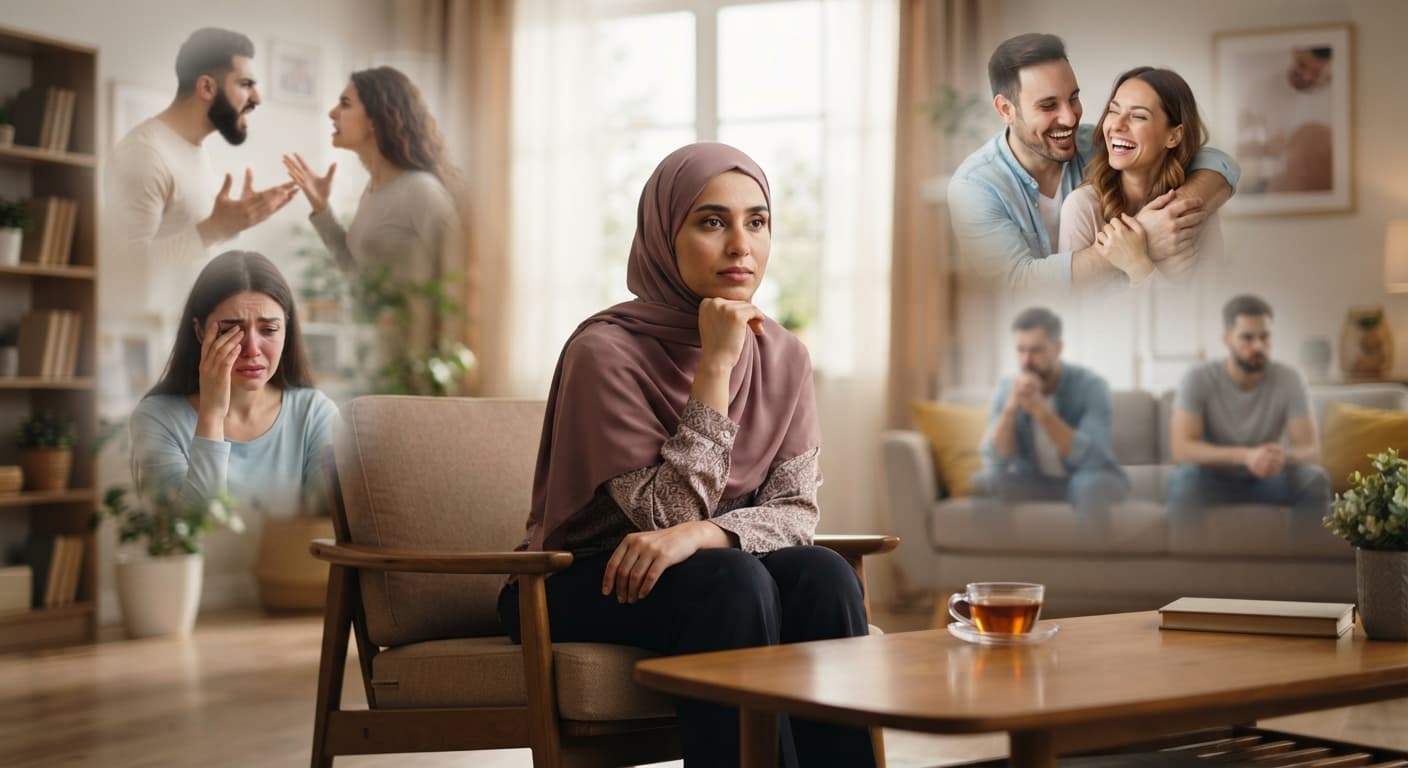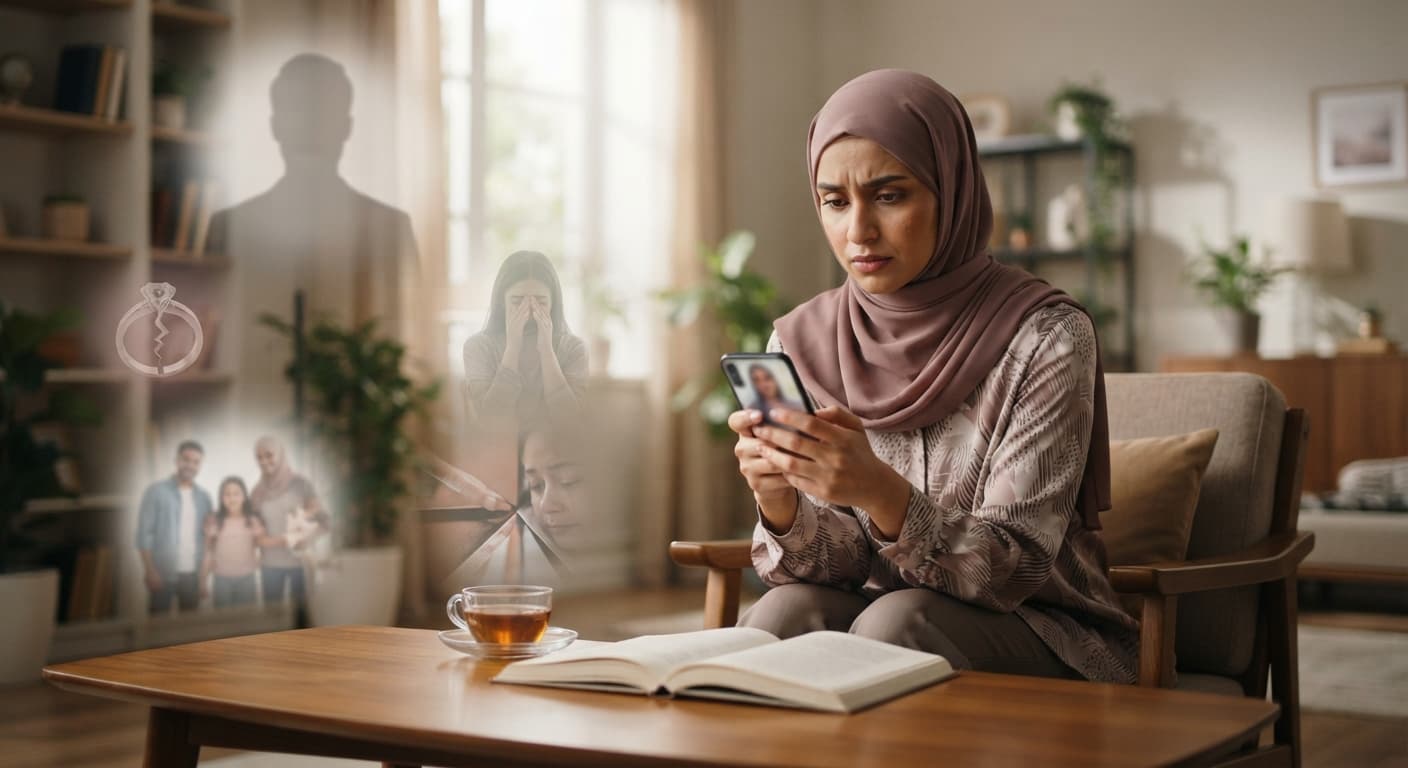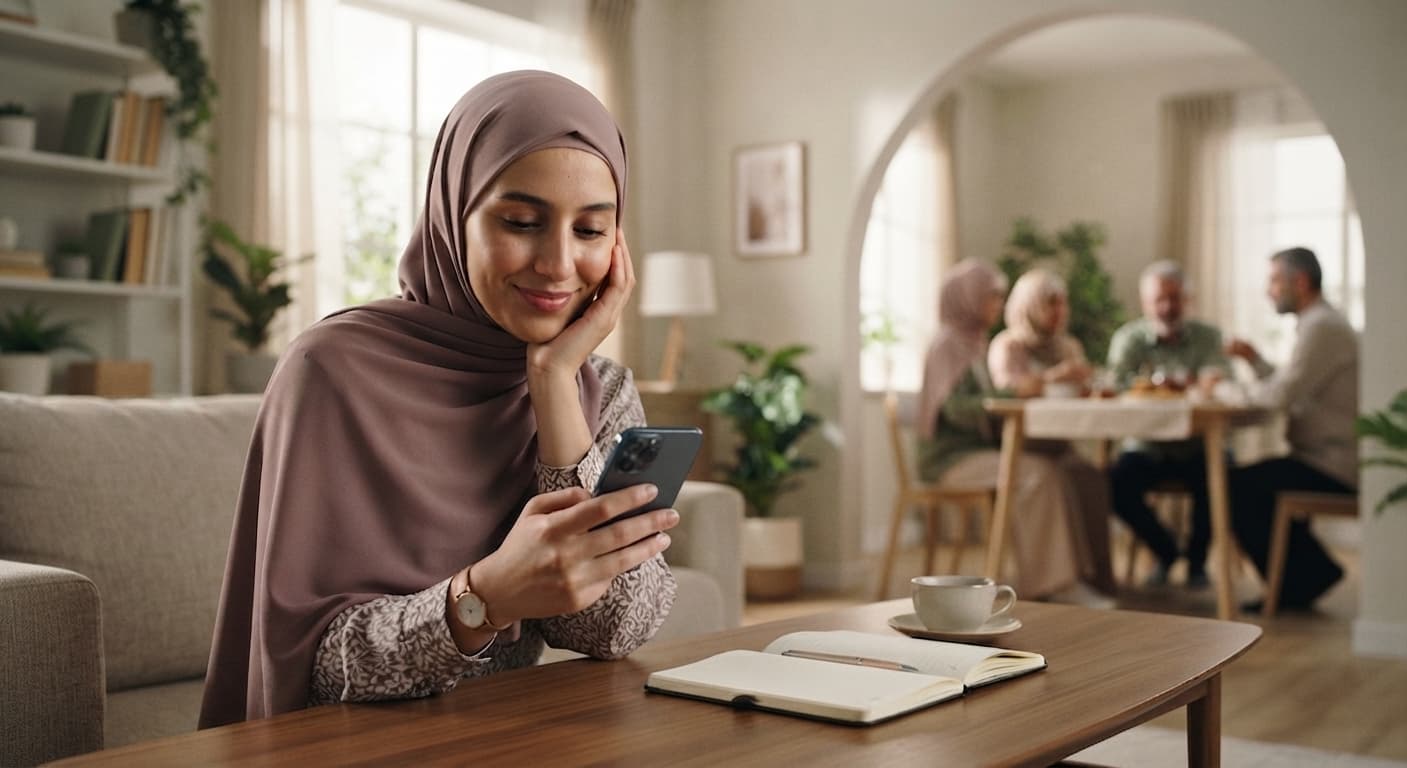
A skeptical uncle asks the groom, with obvious curiosity, at his own wedding: "so how exactly did you two meet?" The groom answers simply and with complete confidence: "through an app dedicated to serious getting-to-know for marriage." A flicker of disappointment, but a clearly visible one, crosses the uncle's face, as if he'd been hoping for a more "traditional" or "romantic" story in the usual sense. But the truth is these two, a year into their marriage, are among the most visibly stable and happy couples he knows, with genuine compatibility showing in every small detail of how they treat each other daily.
This scene repeats often in many communities: lingering social doubt about a relationship that started digitally being able to turn into a successful, stable marriage, despite plenty of evidence to the exact contrary. So what determines any marriage's success, and does a digital starting point affect its later chances of succeeding?
The common doubt: can a relationship that started digitally be "real" enough?
Lingering social doubt toward digital matchmaking often stems from an implicit assumption, rarely stated clearly, that "real" relationships must start in some spontaneous or traditional way to be genuine and capable of succeeding. This assumption, despite its wide social spread, rests on no real logical basis; honesty, compatibility, and seriousness are traits related to the people themselves and how they build the relationship, not to the technical means that first brought them together in their lives.
What actually determines a marriage's success: the starting point, or what's built afterward?
Specialized research on marriage success and stability consistently indicates that the factors decisive to any marriage's success are communication skills, compatibility in core values, and genuine mutual commitment to working on the relationship after marriage — not the method or means by which the two people first met. A marriage that started with a random meeting at a social occasion, but later lacked these core factors, is less likely to succeed than a marriage that started through a matchmaking app but was later built on a solid foundation of these exact same factors.
Real examples: many successful marriages started this way
With the very rapidly growing spread of digital matchmaking for marriage over recent years, a significant, real proportion of successful, stable marriages have started this way, even though many of these stories aren't told with the same enthusiasm or openness as traditional getting-to-know stories, because of the lingering social doubt mentioned above. This growing spread itself is strong practical evidence that digital matchmaking, when handled seriously, is no less capable than any other getting-to-know method of producing successful, stable marriages.
Why does doubt persist despite so many successful examples?
Lingering social doubt, despite plenty of evidence to the contrary, persists partly because general social norms change more slowly than the actual reality changes, and partly because of a media and cultural tendency to spotlight failed stories or the risks of digital matchmaking more than quiet success stories that don't carry the same media excitement. This doesn't mean the risks aren't real, but it does mean the commonly held social image doesn't accurately reflect the actual success rate of this kind of getting-to-know when handled with awareness.
What does digital matchmaking specifically need to succeed later?
Like any relationship starting through any means, digital matchmaking needs the same basic elements necessary for any relationship's success: genuine honesty from the start, clear evaluation standards, involving family at a suitable time, and a serious transition to direct reality after a sufficient period of getting to know each other through the digital medium. A relationship that achieves these elements, regardless of its digital starting point, carries the same chances of success found in any relationship that started traditionally and achieves these exact same elements.
A serious transition to reality: a decisive turning point
Among the most important factors distinguishing a digital relationship that will later succeed from one that will stay superficial with no real progress is a serious, relatively early transition to direct, face-to-face interaction, with appropriate presence and following the usual religious and social guidelines. For a closer look at the right timing and practical mechanics of this transition, we've dedicated a separate article worth reading at this specific stage. A relationship that stays trapped in digital communication for a very long time with no actual transition to reality carries far greater risks than a relationship that moved seriously and at a reasonable pace to a stage of genuine direct interaction.
The difference between a relationship built seriously and one that stayed digitally superficial
A serious digital relationship involves deep questions, an honest discussion of a shared future, and gradually sharing real details about life, values, and goals — not just enjoyable superficial conversations that never develop into real depth. Distinguishing between the two types early helps you know whether the relationship is heading in a direction worth serious investment, or whether it'll stay just enjoyable digital communication with no real enough foundation to later build a successful marriage on.
Are there additional challenges specific to marriages that started digitally?
Some challenges, like the need for extra verification of seriousness and honesty in early stages, or dealing with lingering social doubt from a certain circle, might be more prominent in marriages that started digitally. But these challenges, while real, aren't insurmountable barriers — they're additional challenges deserving awareness and conscious handling, just as any other getting-to-know method carries its own different set of challenges.
How do you turn a digital start into a genuinely solid foundation?
Useful practical steps include: setting clear standards from the start, moving to voice or video calls after an initial period of text-based getting to know each other, involving family relatively early rather than late, and moving to a direct meeting with appropriate presence once mutual seriousness becomes clear. Following these steps consciously turns an ordinary digital start into a solid foundation capable of carrying a successful, stable marriage for many years to come.
The role of time: why can't anyone predict success from the first meeting alone?
No one can judge the fate of a relationship, digital or traditional, from just a first impression or even the first few weeks of getting to know each other; real success only becomes clear with enough time passing and the relationship being tested by real, varied situations that reveal actual compatibility between the two people. This applies just as much to relationships that started digitally — their fate of success or failure shouldn't be judged from their starting point alone, but from the whole journey they go through together afterward, with all its details.
How do you deal with social doubt from those around you without letting it affect your decision?
When one person faces doubt from family or friends toward a relationship that started digitally, it's worth honestly reminding yourself that the decision to marry is fundamentally personal, and should be built on an actual evaluation of the person and the relationship itself, not on an outside opinion built on deeply rooted cultural bias toward the getting-to-know method alone. Sharing real, positive details about the seriousness and actual depth of the process, instead of constantly defending the mere idea of digital matchmaking in general, often gradually eases this doubt over time as people see the relationship's actual stability with their own eyes.
Verifying seriousness in early stages: an extra step worth the effort
Since digital matchmaking partly lacks the direct social reference available in traditional getting-to-know, it's worth taking extra verification steps in its early stages: directly asking about the other person's serious intention, noticing how consistent their words are with their actions over time. Doesn't meeting online lack something important an in-person meeting offers, like reading body language? That's partly true, but it doesn't mean this gap is a final obstacle — it just means that element gets added later rather than immediately; a successful marriage that started online shares the same real fundamentals with any other: alignment in values, honesty in communication, and a decision built on real knowledge, regardless of the channel it started through. A couple who started with simple text messages, moved to regular voice calls within a few weeks, then to an actual meeting with family present once seriousness became clear, show that the platform was just a starting point for a relationship that developed through the same traditional steps afterward. This shows the more accurate question isn't where the relationship started, but how it developed afterward, a question that applies to any relationship regardless of its starting point. It also helps to watch for any unjustified hesitation when it's time to move to a more serious stage; these extra steps, while requiring more awareness than traditional getting-to-know backed by a ready-made social reference might, aren't an exaggerated burden — they're a reasonable investment in the seriousness of any relationship meant to succeed later. The channel a relationship starts through doesn't determine its fate — the conscious effort put in afterward is what actually decides the outcome. Whoever enters this experience aware of both its limits and its real potential gives themselves a genuine chance, no less serious than any other path to getting to know someone.
In the end
Yes; a relationship that starts over the internet can end in a successful, stable marriage, because what determines any marriage's success isn't its starting point — it's the quality of what's built on it afterward: honesty, genuine compatibility, and healthy communication skills. Whoever judges a relationship's chances of success based solely on how it started misses the far more important real picture: what both people did with that start, and how they built on it a solid foundation deserving to last for decades to come.
Put your standards in a real profile
Create your free account in the browser and let matching work on your criteria, not on photos.