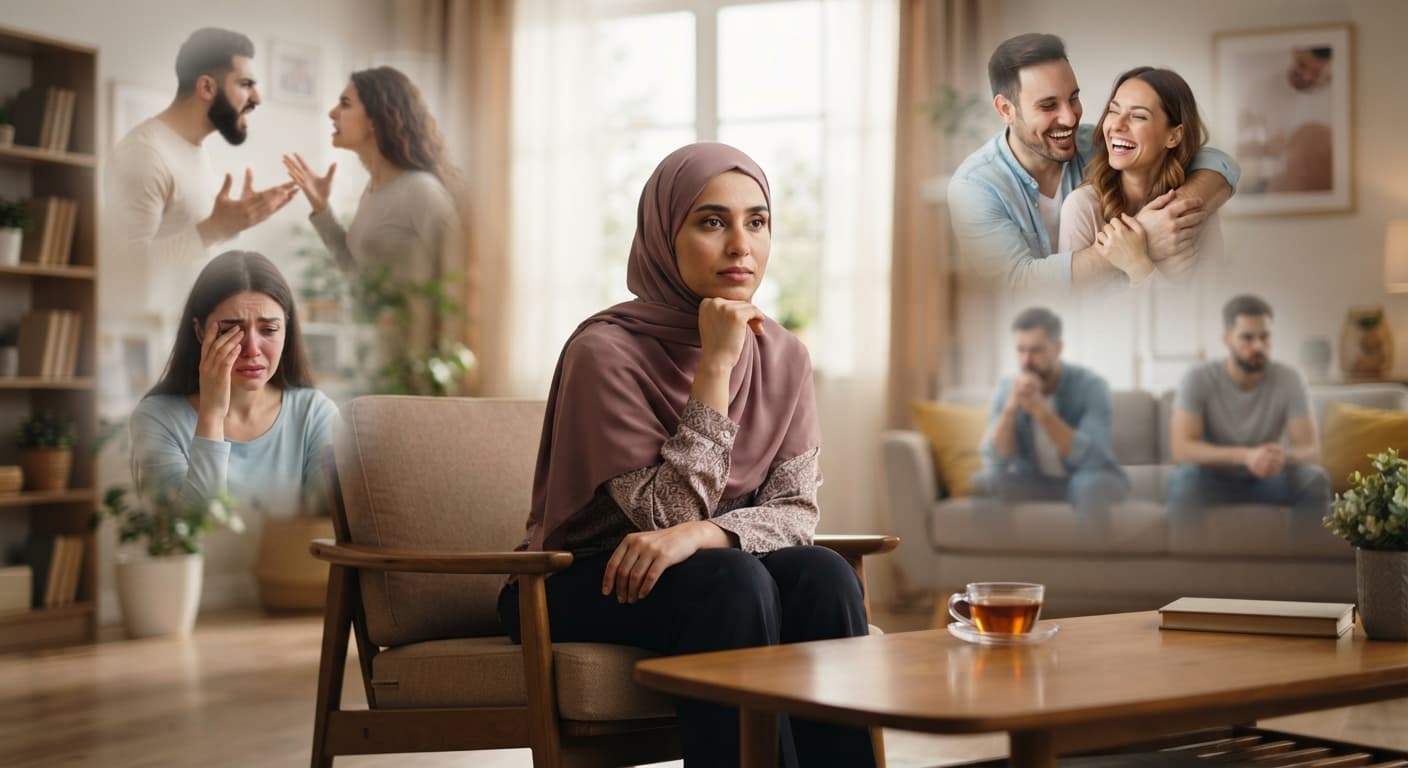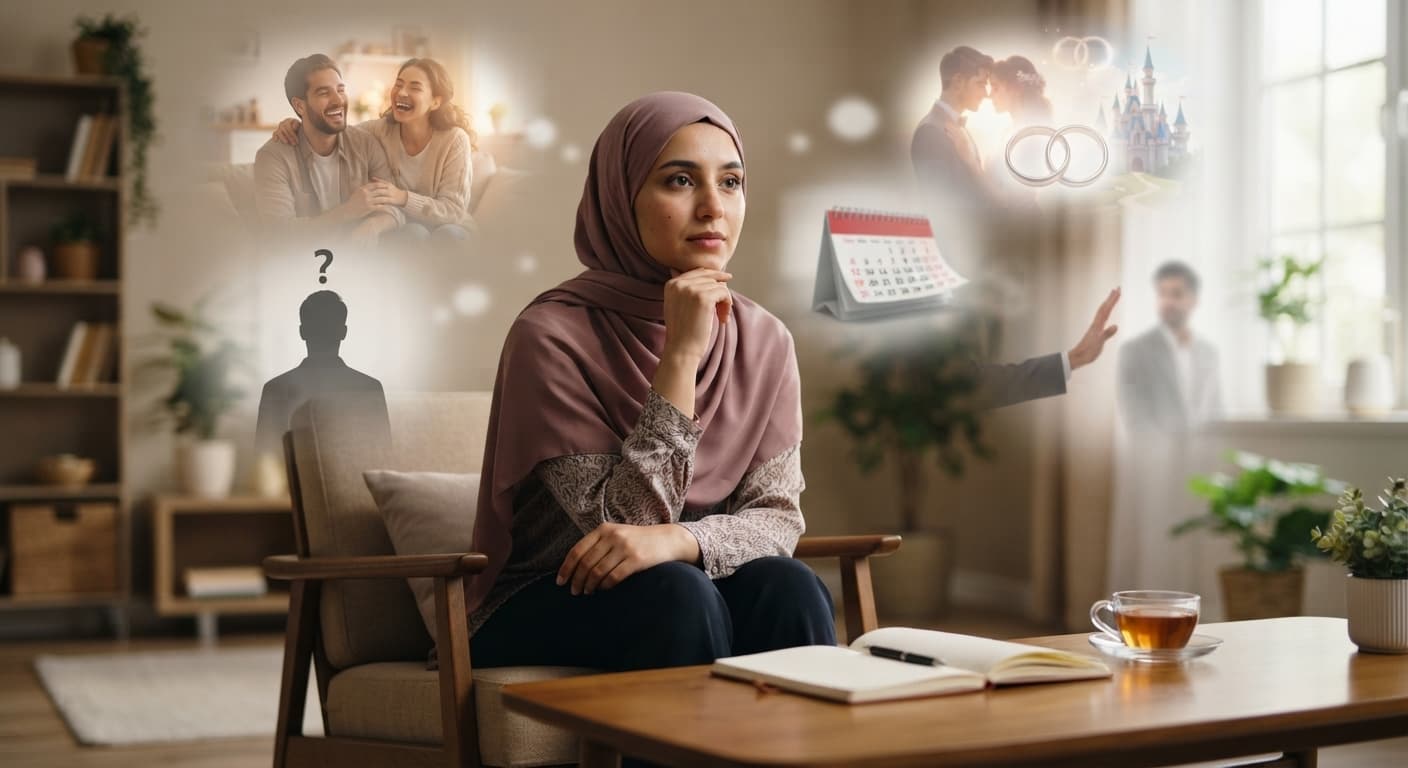
At a routine family gathering, her aunt asks, in a friendly tone but for the tenth time this year alone, the same familiar question: "so, still not engaged? When are we waiting for the happy occasion?" She answers with an automatic polite smile that's become well-practiced through repetition: "not yet, God willing it'll be easy," then quickly moves the conversation along, as usual. But as she steps away from the topic, she thinks about the real answer, one far more complicated than any short reply that fits a passing family chat: a mix of financial circumstances, selection criteria she's consciously developed over years, and other people's experiences around her that have affected her boldness in making this decision — not one simple reason, as the repeated question itself assumes.
Delayed marriage is a real, noticeable social phenomenon in many communities, but the reasons behind it are far more complicated than the common, simple explanation often reduced to "being spoiled" or "being too picky." So what are the real, multiple reasons behind this phenomenon, ones that deserve deeper understanding instead of quick, oversimplified judgments?
The common assumption: delay is always a personal choice or "being spoiled"
The common social assumption, especially from older generations, is that delayed marriage usually results from personal spoiling or exaggerated standards that don't deserve all this delay. This assumption, despite its wide spread, ignores many real objective factors that play a far bigger role than usually acknowledged, and places full responsibility on the individual for a phenomenon shaped by the intersection of complex economic, social, and cultural factors that go far beyond their personal choice alone.
First reason: rising years of education and career stability before serious thought
With the rising average years of education required to enter the job market at a competitive level, especially in fields requiring graduate studies or extended professional training, many young people postpone seriously thinking about marriage until achieving reasonable initial career stability, not out of a personal preference for delay, but because the objective circumstances themselves didn't allow for serious thought before that. This factor alone explains a large part of the rise in the average marriage age compared to previous generations who lived through fundamentally different educational and career circumstances.
Second reason: the difficulty of financial independence amid economic circumstances
Rising housing costs, and the cost of marriage itself in some cultural contexts, makes achieving enough financial independence to start a stable married life a genuine challenge that takes far longer than it did for previous generations, especially amid ongoing economic inflation not matched by a similar rise in average income. This purely economic factor, apart from any personal standards or exaggerated wishes, explains a real, objective part of why many delay taking the step of marriage until achieving the basic financial stability that makes them feel capable of handling this major responsibility.
Third reason: more conscious selection criteria, not necessarily more complicated ones
Reaching a greater stage of personal maturity, paired with a deeper awareness of what a person wants from a life partner, makes many reject opportunities they would have accepted at a younger age without enough thought. This isn't necessarily unjustified "pickiness" — it's a natural result of intellectual and emotional maturity that makes a person more aware of what they need for a successful, long-term relationship, even if that means turning down relatively good opportunities that aren't compatible with their real, deeper standards.
Fourth reason: a lack of real opportunities for serious getting-to-know in certain environments
In some social or geographic contexts, the actual opportunities for serious getting-to-know aimed at marriage might be limited, whether due to the nature of the work or study environment, a limited immediate social circle, or even relocating geographically to a new city or country far from the usual social network that traditionally makes getting to know people easier. This factor, despite being discussed less commonly, plays a real role in delaying many people from finding a suitable opportunity despite their sincere, serious desire to marry.
Fifth reason: past experiences, or experiences of people around them, affecting their boldness in deciding
Witnessing failed marriages up close, whether of relatives or close friends, or going through a previous getting-to-know experience that ended in deep disappointment, can sometimes create exaggerated caution toward the idea of marriage itself, even if the person wants it. This caution, while fully understandable psychologically, can sometimes turn into an actual obstacle preventing them from seizing good opportunities, out of exaggerated fear of repeating a past negative experience that, in many cases, wasn't even their own personal experience.
Sixth reason: a changing view of what "stability" itself means across generations
Many young people's view of what "being ready for marriage" means has changed compared to previous generations: while basic financial stability used to be enough, many today require a deeper kind of psychological, professional, and personal stability before taking this step, believing marriage is a decision that deserves more comprehensive preparation than just financial readiness alone. This evolution in the concept, while positive in terms of taking marriage preparation seriously, also contributes to lengthening the period a person spends before feeling fully ready for this step.
Seventh reason: genuine responsibility caring for a parent or other family duties
Some people postpone seriously thinking about marriage because of a real responsibility toward an ill parent, or a commitment to caring for younger siblings in certain family circumstances, without this being a preferred personal choice as a family duty they feel deserves priority at a certain stage of their life. This kind of reason, while less visible in common social discussions about delayed marriage, is real and more common than usually acknowledged, and deserves special understanding instead of being subjected to the same judgment standards applied to other reasons for delay.
Eighth reason: anxiety about repeating a family pattern seen up close
Someone who grew up in a home that witnessed ongoing marital conflict or a painful divorce between their parents might carry deep anxiety, even if not explicitly stated, about repeating the same pattern in their own life, so they unconsciously avoid any serious step toward marriage, even while wanting it on a conscious level. This anxiety deserves conscious attention, perhaps with specialized help, because it's often far deeper than mere "reasonable caution," and needs understanding its real roots instead of letting it control major life decisions without honestly confronting it.
Is delay always a problem that needs solving?
Not every delay in marriage is a problem deserving concern or an urgent solution; for some people, delay is a natural result of reasonable, understandable life circumstances, not a sign of a real flaw needing intervention. But when delay results from unjustified fear, unrealistic standards, or a complete avoidance of any serious attempt despite genuine desire, it's worth honestly reflecting on the real reason behind it, instead of continuing to postpone with no clear end or real justification deserving all this postponement.
How do you deal with recurring questions from those around you without constant discomfort?
Recurring "so when?" questions, despite usually being well-intentioned, create accumulated psychological pressure for many people going through a genuine delay in marriage; a useful reaction is preparing a short, polite, consistent answer in advance, one that ends the topic quickly without going into personal details, while reminding yourself that these questions often reflect a deeply rooted social habit more than an actual judgment of a person's worth. Take someone who finished a specialized degree at thirty, then moved to a new city for a job opportunity, while also caring for a sick parent — there's no single reason behind the delay; education, relocation, and family responsibility all overlap. Does delaying marriage past a certain age significantly reduce the chances of finding a partner? The answer depends on context, but focusing too heavily on age alone distracts from the more useful question: what does this person need to feel ready, and what practical steps can they take now instead of passively waiting? This kind of overlap between education, work, and family responsibility is more common than it looks, and it's why a short one-line answer to "why not yet?" often falls short — the story is usually woven from more than one thread at once, not a single simple reason easy to explain. Understanding this complexity gives a person more compassion for their own experience, instead of self-blame from an unfair comparison to completely different life paths. Which is why the best response to these questions, internally at least, is focusing on what you can actually control instead of getting caught up in counting days or comparing yourself to those around you. That inner balance is what truly separates an exhausting wait from one managed with awareness and calm. This awareness alone is often enough to ease a great deal of unnecessary psychological pressure.
In the end
Delayed marriage is a complex phenomenon resulting from the intersection of multiple economic, social, and personal factors, not one simple reason that can be reduced to a passing sentence said at a family gathering. Understanding this real complexity, instead of accepting or believing the common oversimplified judgments about yourself, helps anyone going through this experience honestly assess their own circumstances, and distinguish between an understandable delay justified by real circumstances, and a delay that deserves honest review of the deeper personal reasons behind it.
Put your standards in a real profile
Create your free account in the browser and let matching work on your criteria, not on photos.