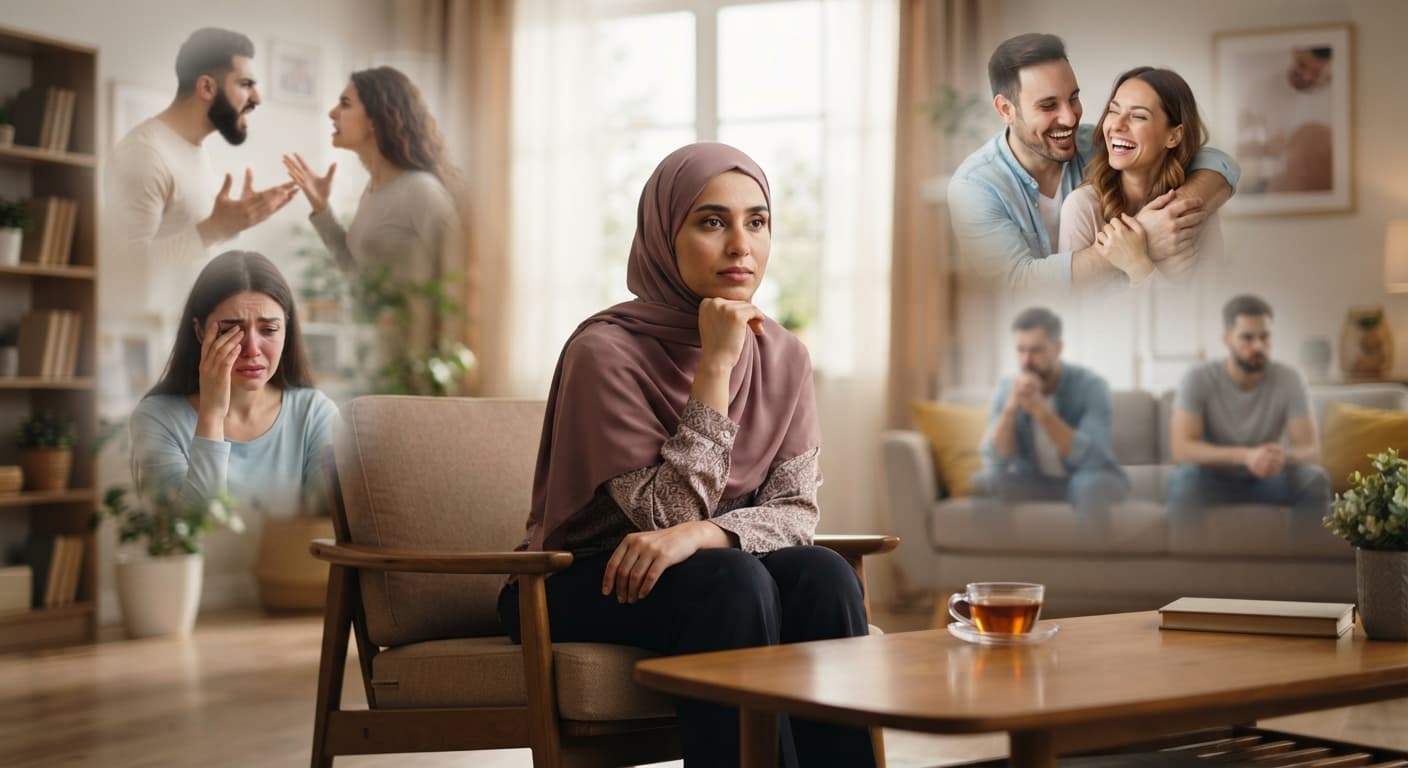
You cried in the first month of your marriage, not because of any real disagreement, but because something in your ordinary day felt like it "should" be different: you expected constant romantic attention like what you'd seen in a show, or instant understanding with no need for words, like something you'd read in an emotional post online. When none of that happened, you felt something was genuinely wrong, when the real problem was never your marriage — it was the source of those expectations to begin with.
A lot of inaccurate expectations about marriage come from movies, shows, and social media, not from the actual reality of any real relationship. That gap between expectation and reality is exactly what causes early disappointment for a lot of newly married couples, exactly as it did for you in that first month.
Does marriage really end loneliness completely?
Marriage significantly and genuinely reduces emotional loneliness, but it doesn't erase it entirely as a general human experience. Everyone occasionally needs moments of personal reflection, even within the happiest marriages, and that doesn't mean the marriage has failed at its "job," as you might believe in a passing moment of feeling lonely.
Does the right partner understand you without you actually saying anything?
The idea of "complete automatic understanding" is a romantic, appealing idea more than a practically realistic one. Even the most successful marriages, the ones that look ideal from the outside, need clear, ongoing communication — not passively waiting for your partner to read your mind without you ever clearly saying it.
Is every disagreement a sign the marriage is starting to fail?
Disagreement is a completely natural part of any long-term human relationship, without real exception. What determines a marriage's success isn't the total absence of disagreement, as the idealized picture suggests — it's how it's handled when it actually happens.
Does strong romantic passion always stay exactly as intense?
The intensity of early feelings naturally shifts over time into a completely different kind of closeness: deeper and more stable, though less openly thrilling than the initial getting-to-know phase. That shift is very normal and healthy, not a sign of dangerous cooling off, as it might seem to someone comparing their current feelings to the memory of the beginning.
Does the right choice mean no effort is needed afterward?
Even a relationship built on a completely right choice needs ongoing effort: communication, patience, consciously and deliberately renewing interest in each other. A good choice makes that effort much easier and more natural, but it doesn't eliminate it, as you might imagine.
In the end
Go back to that first month you cried over something that, in the end, wasn't real. Entering marriage with realistic expectations, rather than an unattainable ideal, protects the relationship from early disappointment that could have been entirely avoided. A successful marriage isn't the one free of challenges the way screens portray it — it's one built on a genuinely realistic understanding of what marriage actually means, in all its details.
Put your standards in a real profile
Create your free account in the browser and let matching work on your criteria, not on photos.