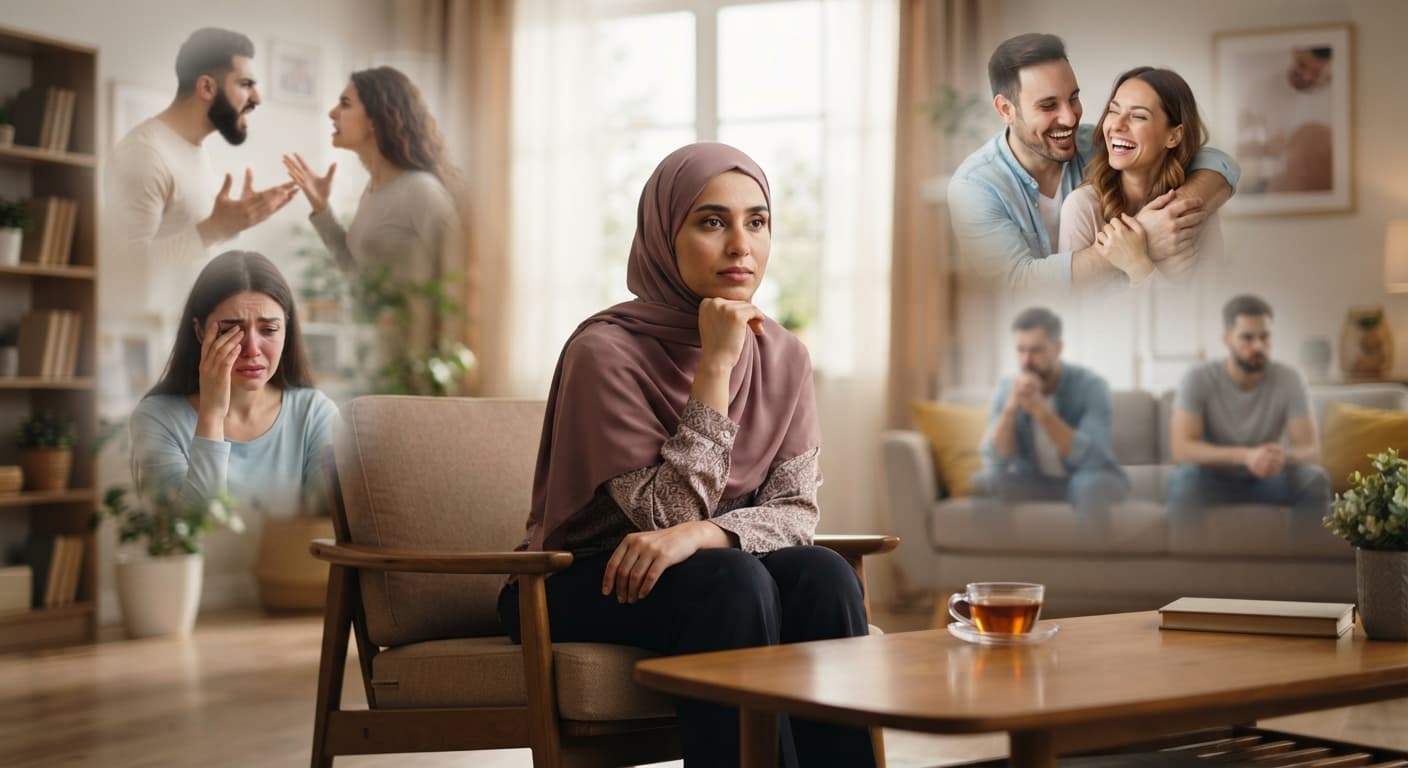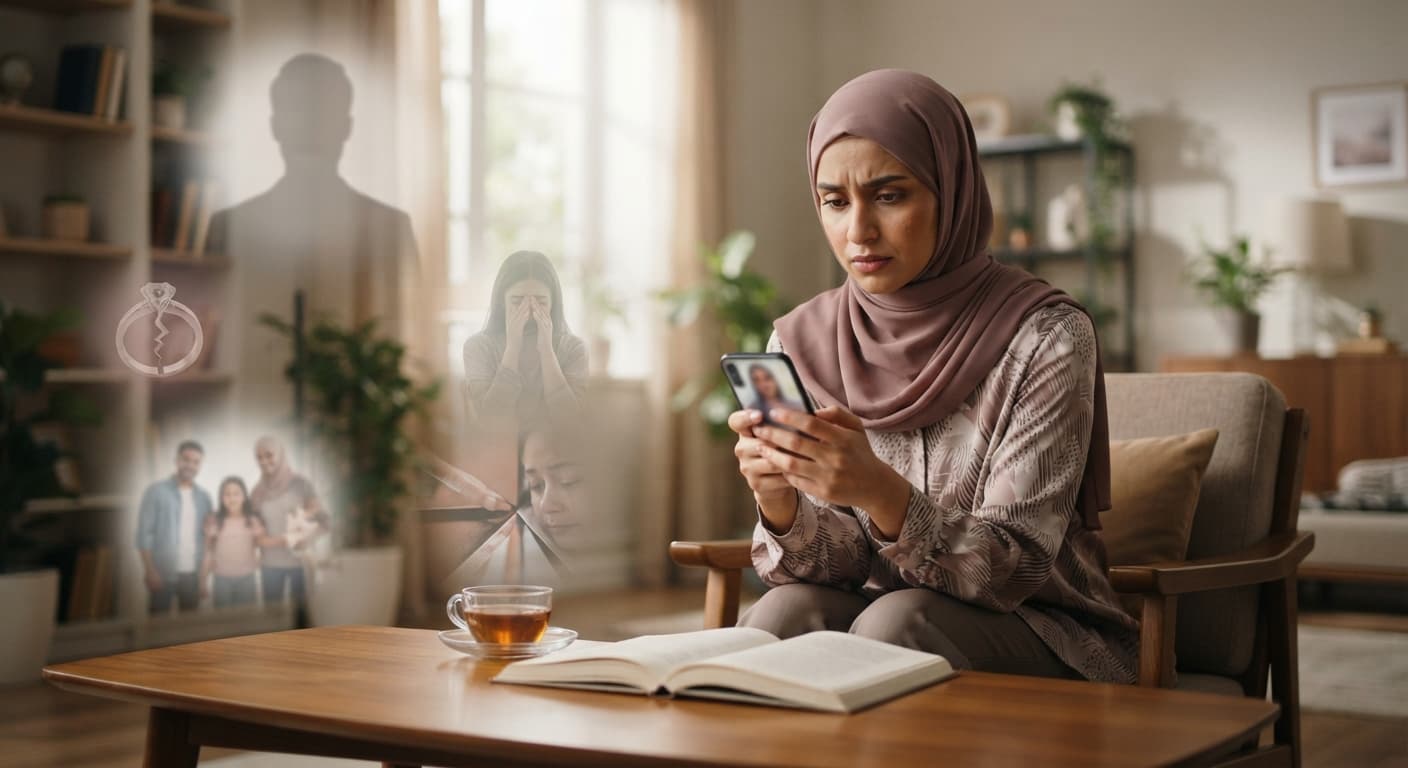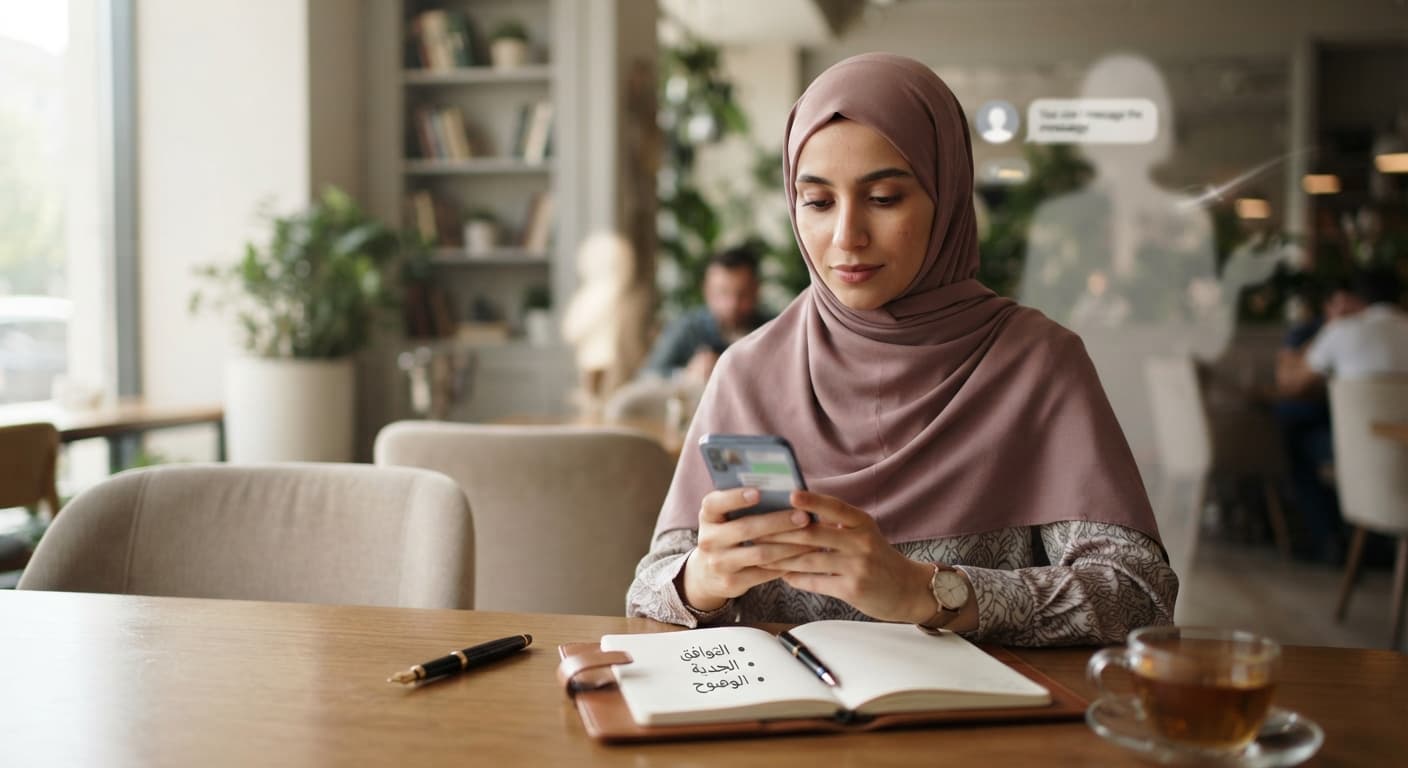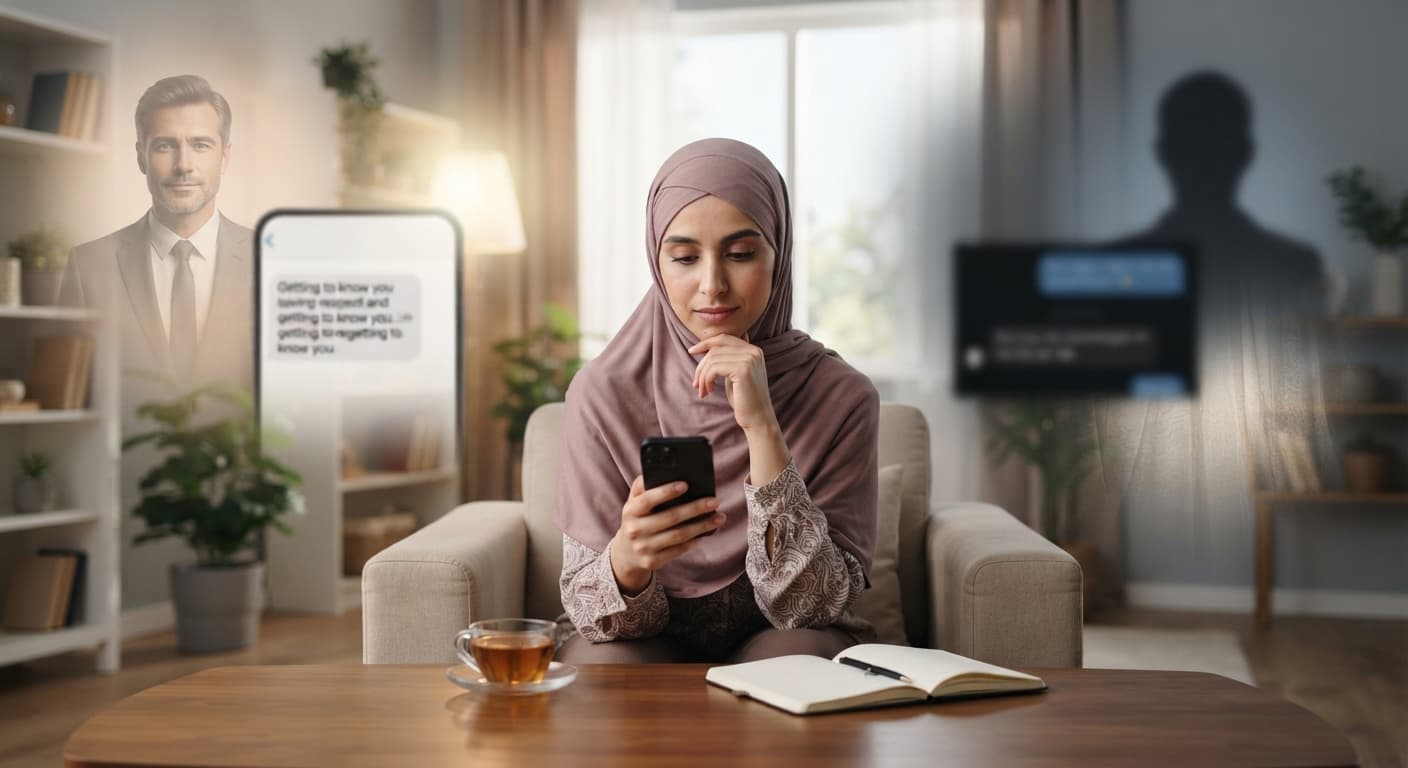
A young woman in her late twenties explains to her skeptical grandmother, with patience and calm, how she met her fiancé through a serious matrimonial platform meant for genuine marriage, not passing entertainment. Her grandmother is visibly confused at first: "so you're going to marry someone you met off the internet? Isn't that dangerous?" But she gradually settles down as her granddaughter explains in detail that this is far from "meeting an unknown stranger off the internet" as she'd imagined: there are clear standards each side sets, identity verification, and a gradual getting-to-know process that closely resembles traditional getting-to-know — it just started in a different way from how her grandmother met her grandfather decades earlier.
Digital matchmaking for marriage has become a very widespread social reality today, but it still stirs genuine debate between those who see it as a positive development opening new horizons, and those who fear its real risks. So what are the actual advantages of this kind of getting-to-know, and what risks deserve conscious caution rather than complete rejection or blind trust?
Why do some still doubt the idea of getting to know people over the internet?
Doubt about digital matchmaking, especially from older generations, often stems from a mistaken assumption that any getting-to-know over the internet necessarily means random interaction with unknown strangers with no controls or verification at all. This assumption, while true of some general, non-specialized apps, doesn't apply to the same degree to platforms designed for serious marriage, which often include verification and filtering mechanisms that make the process far closer to organized traditional getting-to-know than to unrestricted, random interaction.
First advantage: a genuinely wider range of available options
Digital matchmaking opens a range of options far wider than the traditional immediate social circle limited to family, friends, and colleagues, especially for those living in small cities or relatively limited social environments. This widening, when managed consciously with clear standards, increases the chance of finding someone compatible, instead of being limited to a narrow circle that might not contain the right person at all.
Second advantage: focusing on standards before an initial surface impression
Serious platforms dedicated to marriage often allow setting clear, detailed standards in advance, enabling an initial filtering based on genuine compatibility in values and goals, before reaching the stage of direct personal evaluation. This differs from traditional getting-to-know, which often begins with a surface-level or social first impression, and only later, sometimes after a long emotional investment, do both people discover that fundamental compatibility isn't there.
Third advantage: more room to think before responding
Communicating through written messages, unlike direct face-to-face conversation, gives more time to think through a response before sending it, which might help some people, especially those prone to shyness or nervousness in direct confrontation, express themselves with more clarity and honesty than they might manage in an early direct meeting full of natural tension.
Fourth advantage: a genuine chance for those limited by geographic or social circumstances
For those living in low-population-density areas, or very limited social environments for professional or personal reasons, or even those who've recently relocated to a new city or country far from their usual social network, digital matchmaking offers a genuine chance to reach options that wouldn't have been available through traditional channels limited by surrounding geographic or social circumstances.
First risk: difficulty verifying identity and genuine seriousness
Among the most notable real risks is the difficulty of fully verifying a person's identity and actual seriousness through a screen alone, compared to traditional getting-to-know, which often includes a direct social reference that partially spares this intensive individual verification. This risk calls for extra caution and conscious verification steps, especially before sharing sensitive personal information or moving to a deeper stage of getting to know someone.
Second risk: how easily an unrealistic image can be crafted
The ease of embellishing the personal image displayed, whether through carefully selected photos or an exaggeratedly positive self-description, creates a potential gap between the displayed image and the actual reality, one that usually only shows up after a deeper getting-to-know period or an actual in-person meeting. Awareness of this risk calls for not settling for the initial digital impression, and moving to more realistic direct interaction as soon as suitably safe.
Third risk: haste resulting from an abundance of available options
The abundance of options available across multiple platforms can sometimes create a pattern of haste or insufficient investment in any single connection, due to a constant feeling that other options are easily available, a well-known psychological phenomenon that deserves special awareness (covered in more detail in a separate article) to avoid falling into its trap during any serious digital getting-to-know experience.
How do you tell a serious platform apart from a random, unreliable one?
Serious platforms dedicated to marriage are usually distinguished by clear verification mechanisms, a focus on core standards rather than just photos, and a user community with a stated, serious intention toward marriage, not just passing entertainment. Paying attention to these differences when choosing the right platform is an important first step in reducing the risks accompanying digital matchmaking in general.
Religious and social rules don't change with a change in the getting-to-know method
No matter how the method of starting to get to know someone changes, the religious and social guidelines for any getting-to-know aimed at marriage remain fixed and unchanged: appropriate boundaries in the nature of conversation and communication, involving family at a suitable point in the journey, and moving to a direct in-person meeting with appropriate presence once there's enough seriousness. Digital matchmaking is just a different starting method — not an exception to these usual basic guidelines.
Is it worth trying despite the risks?
Like any tool, digital matchmaking is neither an absolute good nor an absolute bad; its actual value depends on how it's used: with awareness, clear standards, and reasonable caution, or with haste and uncalculated trust. For those who use it wisely, it can be a effective tool for widening the chances of finding a compatible life partner; for those who use it without enough awareness, it might carry real risks deserving more serious handling.
Fourth risk: the problem of moving from the app to reality without enough preparation
Some who successfully get to know each other digitally sometimes find it hard to smoothly transition to direct, face-to-face interaction, because the pattern of communicating through written messages differs fundamentally from the dynamics of a direct meeting: tone of voice, body language, and spontaneous, unplanned interaction. Being aware of this potential gap, and not building complete expectations on digital interaction alone without testing it in a relatively early, safe direct meeting, helps avoid potential disappointment when actual interaction differs from the prior digital impression.
The role of family, even in a journey that started digitally
Involving family at a suitable stage of a getting-to-know journey that started digitally is no less important than involving them in one that started traditionally; having a trusted family reference reviewing the details and offering a relatively neutral outside opinion remains useful regardless of the method the getting-to-know started with. Some who get excited about the ease of digital matchmaking might tend to delay involving family more than they should, and that's a mistake worth consciously avoiding from the start of any serious getting-to-know journey, digital or traditional.
Protecting privacy and personal information during digital getting-to-know
Caution in sharing sensitive personal information, like a precise address, financial details, or private photos, deserves special attention in the digital context, where it's harder to fully verify the other person's intentions in early stages. An example shows how the advantage can turn into a risk: a matchmaking platform that lets you search by clear criteria like faith and values saves significant time compared to relying on chance, a real advantage; but that same platform, if used without enough awareness, can make it easy to connect with non-serious people exploiting easy digital communication to start multiple relationships with no real commitment. The advantage and the risk aren't in the technology itself, but in the user's awareness of how to handle it: setting a clear goal from the start, and moving to direct communication within a reasonable time. A platform that asks users to state their goals clearly at sign-up measurably reduces the chance of connecting with non-serious people, compared to platforms relying only on photos with no clear commitment, and consciously balancing this advantage against its risks is what actually shapes each person's experience, far more than the platform's nature itself. Wisely graduating how much information you share, matching the actual level of trust built gradually rather than assumed in advance, protects against real risks without needing to abandon the idea of digital matchmaking altogether. Being aware of this balance from the start makes the digital matchmaking experience feel more like a tool serving you, not a constant source of anxiety following every new conversation. The technology itself is entirely neutral — the real difference always lies in whether it's used with awareness or without it. That's exactly what's worth remembering for anyone considering this path, before judging it entirely based on a single negative or positive experience.
In the end
Digital matchmaking for marriage carries real advantages: wider options, greater focus on core compatibility, and more room for thought, but it also carries real risks deserving conscious caution: difficulty of verification, the possibility of a crafted image, and the risk of haste resulting from an abundance of options. Whoever approaches it with balanced awareness, neither rejecting it out of fear of its risks nor blindly trusting it without enough caution, gives themselves a genuine chance to benefit from its real advantages while protecting themselves from its potential risks at the same time.
Put your standards in a real profile
Create your free account in the browser and let matching work on your criteria, not on photos.