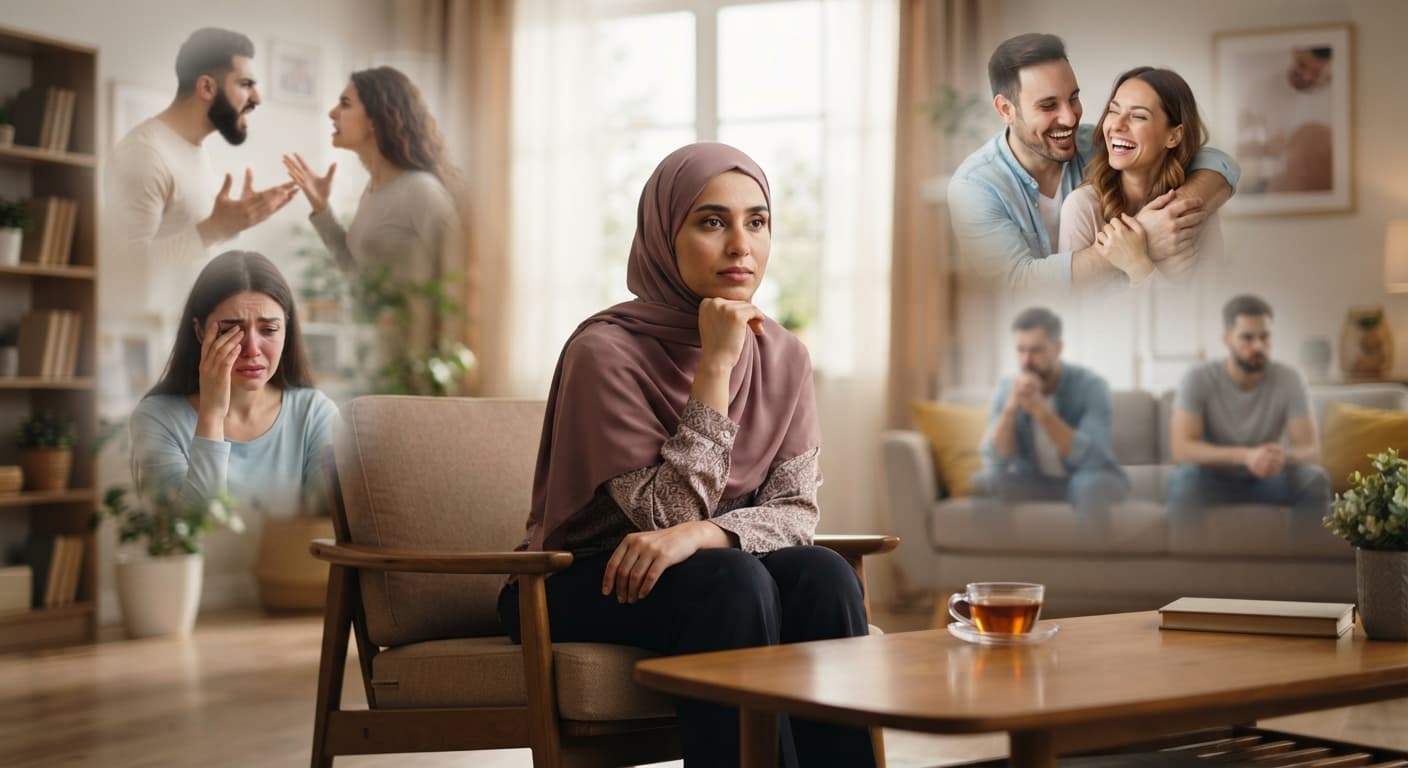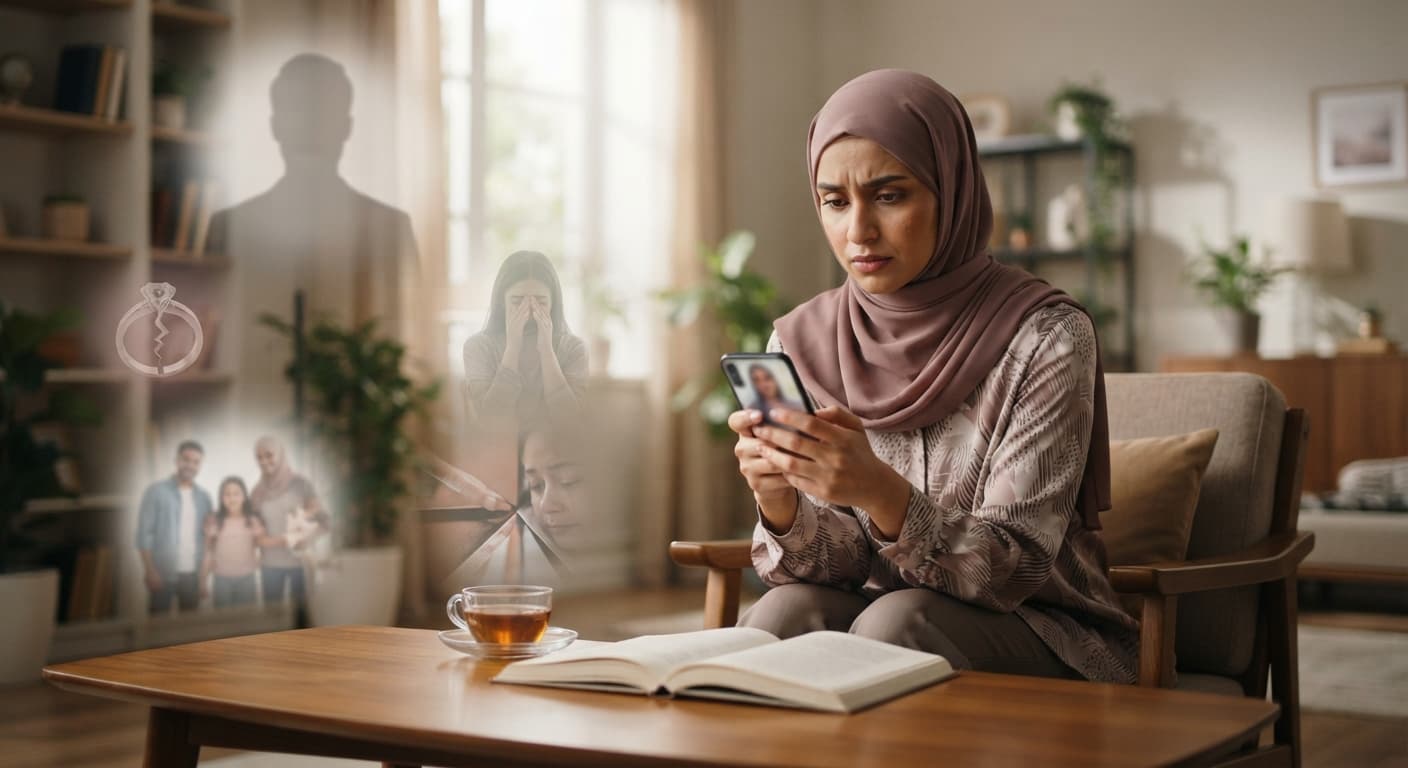
A week before her wedding, a woman writes in her personal journal: "I want a husband who understands me without me speaking, who makes every day feel like our first meeting." The line sounds romantic and beautiful, and it is. But two years into her marriage, she rereads it with a slightly sad smile, because daily life has taught her that her husband is a person who needs her to talk to him in order to understand her, and that days won't feel like the first meeting forever — nor should they, for the relationship to be successful. She honestly asks herself: where did these expectations even come from? And why did they feel so self-evident at the time?
This situation is extremely common, because a lot of our expectations about marriage don't come from observing real marriages around us, but from far less realistic sources: romantic movies that end at the wedding moment without ever showing a single day after it, social media posts that only display carefully curated perfect moments, and love stories we've heard polished by people who rarely show their real details. So how do you know whether your expectations about your upcoming marriage are realistic, and not imported from sources that were never designed to reflect life as it is?
Where do these expectations actually come from?
No one sits down and consciously plans their expectations about marriage — instead, these expectations form gradually and unnoticed, from dozens of accumulated sources going back to childhood: princess stories that always end with "happily ever after," movies where the story ends right at the declaration of love, not years afterward, and idealized photos of celebrity couples showing only the moments prepared for publishing. Even observing the marriages of parents and relatives can be misleading, because children only see the visible surface of the relationship, not the real details adults keep hidden from them given their age. The result is that many people enter marriage with expectations that were never built on any real knowledge of what marriage means day to day, but on partial, polished images that accumulated without ever being examined.
The first sign: expecting the initial passion to last forever at the same intensity
The passion and strong attraction at the start of any relationship is real, but it's tied to a psychological and chemical stage that's temporary by nature, not to the quality of the relationship itself. Someone who expects this feeling to continue at the same intensity forever feels disappointed when it gradually settles after the first few months, and sometimes interprets that settling as a sign that something's wrong with the relationship or that the love is fading. The truth is this settling is natural and expected, and mature relationships transform from burning passion into a deeper, more stable affection — and that transformation isn't a decline, it's the relationship's natural maturing, and it deserves to be understood, not feared.
The second sign: expecting your partner to understand you without you speaking
The idea that "the right person will automatically understand me" is an appealing romantic notion, but it isn't practically realistic. Even the people closest to you can't read your mind, and no matter how deep the understanding between you grows, honest communication will always remain necessary to convey your needs and feelings. Someone who expects to be understood without speaking finds themselves repeatedly frustrated when their partner doesn't notice something they considered obvious, and starts doubting how close the relationship is, because of an expectation that was never realistic to begin with. strong relationships are the ones where both people speak clearly about their needs — not ones that rely on a magical mind-reading ability that doesn't exist in reality.
The third sign: expecting every disagreement to disappear once you find the right person
Some people believe that finding the right partner means the complete end of disagreements, and that any conflict that happens after marriage proves the choice was wrong. This expectation is dangerous because it makes the person interpret every normal disagreement, no matter how small, as a major warning sign demanding a complete reconsideration of the relationship. The truth is that every marriage, no matter how compatible the two people are, will carry periodic disagreements, because two different people sharing an entire life will inevitably clash over countless details. The real measure isn't the absence of conflict — it's how it gets handled when it happens.
The fourth sign: expecting marriage to solve pre-existing personal problems
Another dangerous expectation is seeing marriage as a solution to personal problems: feelings of loneliness, low self-confidence, or even unresolved financial issues. Marriage is a partnership, not therapy, and someone who enters it with this expectation places a burden on their partner that they can't carry, because solving these problems requires personal work independent of the relationship itself. In fact, this kind of expectation can increase pressure on the relationship instead of relieving it, because the partner ends up feeling an unfair responsibility for another person's happiness that they alone don't hold the keys to.
So what do realistic expectations actually look like?
A realistic expectation isn't pessimism or a diminished view of marriage's value — it's a balanced understanding of its nature: a marriage with genuine affection, but also periodic disagreements that need effort to resolve. A marriage with deep understanding, but one that requires ongoing honest communication, not automatic mind-reading. A marriage that provides support and stability, but doesn't solve every pre-existing personal problem that existed before it. A realistic expectation accepts that married life requires ongoing effort — it isn't a permanent state of happiness that happens automatically just by finding the right person.
Does being realistic mean lowering the bar unnecessarily?
A question many people ask: doesn't adjusting your expectations toward realism amount to some kind of surrender, or settling for less than you deserve? The answer is no, and the difference is subtle but important: being realistic doesn't mean accepting a bad relationship or compromising on fundamental standards like respect, honesty, and alignment in values — it just means adjusting your expectations about the daily shape of the relationship and its human nature. You can keep very high standards when choosing the right person, while at the same time holding realistic expectations about what daily life with them will look like after marriage. These are two different things, and confusing them is what makes some people think realism means accepting less, when in reality it's a way of protecting the relationship from an expected collapse caused by the gap between fantasy and reality.
How do you actually recalibrate your expectations?
It helps to honestly ask yourself: is this expectation based on real observation of successful marriages around me, or on an image I saw in a movie or a post? Do I expect my partner to be flawless, with no weakness or bad moment ever, or do I accept that he's a complete human being, meaning he'll make mistakes sometimes just like I do? Do I tie my personal happiness to this relationship, or do I keep other sources of happiness and psychological stability in my life? Honest answers to these questions help build balanced expectations — neither overly optimistic nor overly pessimistic — and that balance itself is exactly what protects the relationship later from the shock of the gap between what was imagined and what happened.
A related common mistake: expecting the partner to change after marriage
Another common expectation is entering marriage with a quiet hope of changing certain traits in the other person later, hoping marriage itself will resolve them. But marriage rarely changes the core of someone's personality; it usually reveals that personality more clearly under the pressure of daily life, rather than reshaping it from scratch. Someone who bases their decision on hope for an uncertain future change risks facing the exact same trait that worried them before marriage, except this time inside a commitment that's far harder to walk away from. Does having realistic expectations mean settling for an ordinary relationship without real happiness? Quite the opposite — realistic expectations don't lower the ceiling of possible happiness, they redistribute it toward sources more stable than momentary passion alone, and it also helps to remember these expectations evolve as a person matures, so what feels realistic today might later turn out to have still carried an unintentional idealized picture. A couple who expect happiness built on daily understanding, mutual respect, and real partnership often end up feeling deeper satisfaction over time than a couple waiting for the same initial excitement to continue unchanged. The difference between the two isn't the amount of happiness, but its source: an expectation resting on a foundation that can be built and maintained, versus one resting on a feeling that naturally changes with time. Perhaps the most important question in the end is: did I build my expectations on the person actually in front of me, or on an image I wished for myself?
In the end
Realistic expectations about marriage aren't an enemy of marital happiness — they're its real protector. Someone who enters marriage with expectations imported from movies and social media collides with a painful gap between what they imagined and what they live, and sometimes interprets that gap as a failure of the relationship, when in reality it's a gap in the expectation itself, not in the quality of the marriage. Someone who enters marriage with a balanced understanding of its human nature, both its affection and its disagreements together, gives themselves a far better chance at genuine satisfaction with their married life, because they're measuring it against a realistic standard, not an imaginary one that was never designed to reflect life as it is. Perhaps the single most useful first step, before any marriage decision, is to ask yourself where every mental picture you carry about your future home came from, and whether you've witnessed its details in a real life, or simply borrowed it from a story that was never designed to be a guide for your own.
Put your standards in a real profile
Create your free account in the browser and let matching work on your criteria, not on photos.