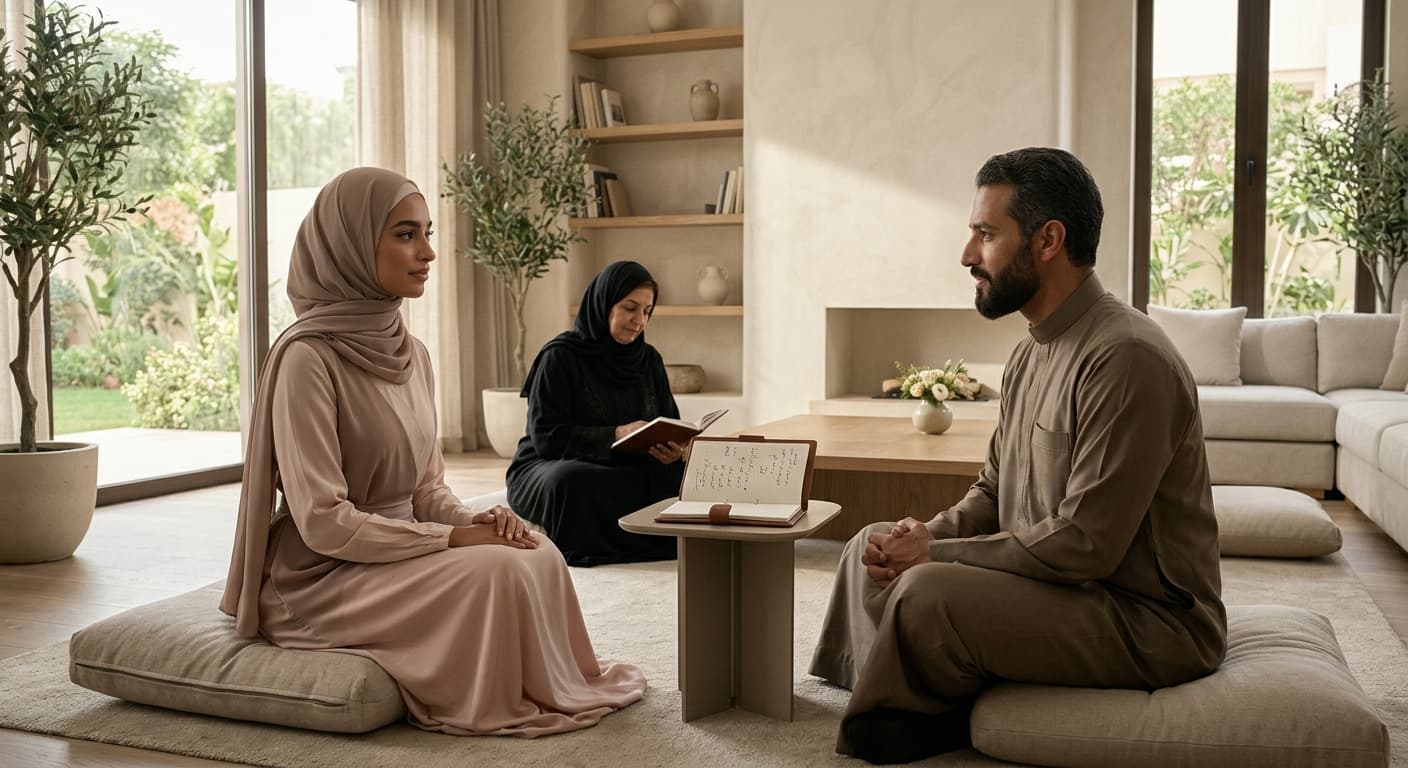
This happens a lot: an engagement gets announced, and everyone starts treating the two of them like an actual married couple — going out together without any social hesitation, sitting alone together at family gatherings, maybe even traveling together to arrange the upcoming wedding. Then, at some point, one of them is caught off guard when someone knowledgeable tells them none of that was actually permitted religiously, because the marriage contract hasn't happened yet. So how does this confusion happen, given that everyone technically knows there's a difference between engagement and marriage?
The reason is that the difference is known in theory by most people, but not understood in practice. Everyone knows "engagement isn't marriage," but few grasp what that actually means for their day-to-day details. And that specific gap is exactly what's worth pausing on.
Engagement is a promise, not a contract
Engagement is a man asking for a woman's hand in marriage, and her — or her guardian's — agreement in principle. It's the beginning of mutual understanding between two people who intend to marry, but it doesn't create any religious bond between them. In other words: it's a promise to marry, not a marriage contract, and so it isn't fully binding — either side can back out, though doing so without a valid reason is ethically discouraged, even if it isn't religiously forbidden.
So when do the two actually become spouses?
Marriage in Islam only takes effect through the marriage contract: a contract with specific pillars, including clear offer and acceptance, the presence of the woman's guardian, two witnesses, and an agreed mahr. Once that contract is complete, the two become spouses religiously, with all the marital rights and duties that come with it. For a deeper look at these pillars, we've dedicated a full article to it, worth reading before any practical step.
And here's the practical difference that usually gets missed
Since engagement is a promise, not a contract, nothing that religiously follows from the marriage contract applies to engagement — no matter how serious or genuine the couple's intentions are. Being alone together, which becomes permitted after the contract, remains impermissible during engagement. Financial support, owed by a husband after the contract, isn't owed by a fiancé to his fiancée. Inheritance, established between spouses, isn't established between fiancés if one of them passes away. Even ending the relationship differs: calling off an engagement doesn't require divorce, while ending a marriage after the contract requires divorce or khula.
Once you lay these details out clearly for yourself, you realize that the "theoretical difference" everyone technically knows actually has a very real, practical effect on what's permitted and what isn't, every single day of the engagement.
So why do people fall into this mix-up despite knowing the difference?
Usually because the social celebration around engagement creates a psychological sense that "it's basically done already," especially once both families have agreed and actual wedding preparations begin. That feeling is completely understandable on a human level, but it doesn't change the religious ruling at all. The healthier approach is for both people to treat the engagement period with full awareness that it's still a "before" stage, not an "after" one — no matter how celebratory and reassuring the atmosphere around it feels.
In the end
Engagement is the start of the road, and marriage is the destination — and the real distance between them isn't measured by feelings or family approval, but by a religious contract with its own specific pillars. Anyone who keeps that distinction clear in their mind throughout the engagement protects themselves and their partner from a religious and social confusion they might otherwise discover too late, and builds their transition from getting to know each other into married life on solid ground from day one.
Further reading
Put your standards in a real profile
Create your free account in the browser and let matching work on your criteria, not on photos.