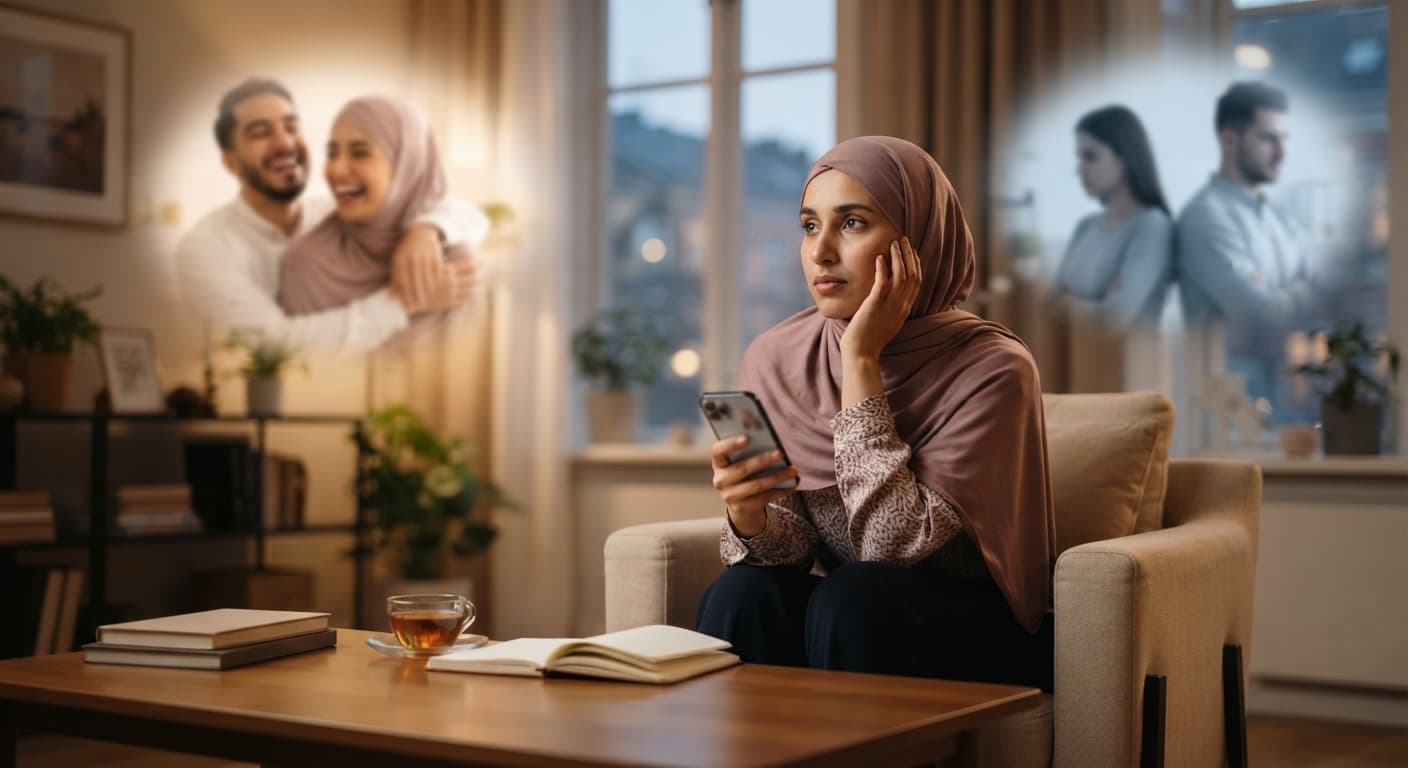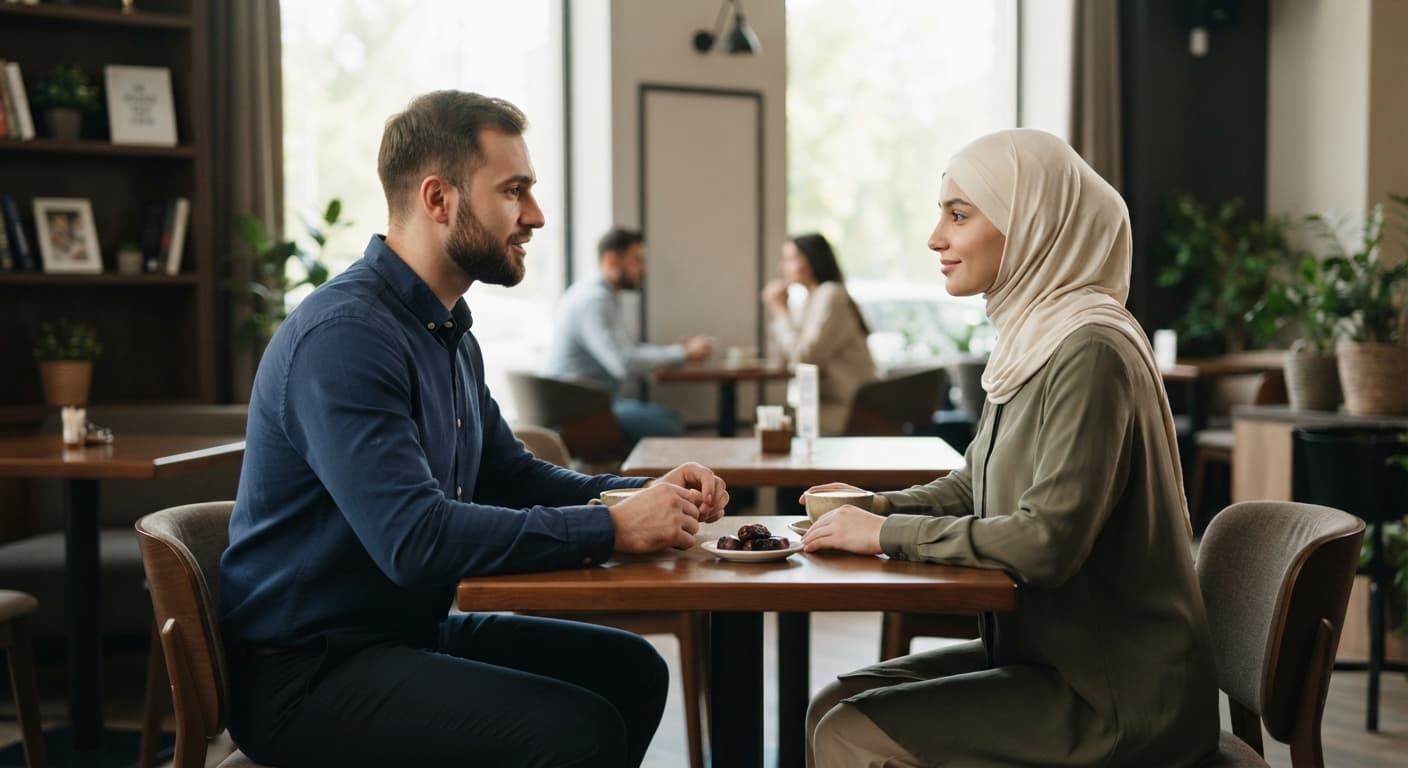
Her job is stable, her family fully approves, and the man she's getting to know checks every box on paper: religious, kind, reasonably financially stable. And yet she notices a strange pattern repeating in herself: every time the relationship gets close to becoming serious, she automatically starts creating a small problem, or picking out a minor flaw and blowing it out of proportion, or pulling away under the excuse of being busy — without understanding why she's doing it. Every external circumstance for this marriage is ready, except her, from the inside.
This pattern reveals a fundamental difference between outward readiness — a job, stability, family approval — and real psychological readiness, which doesn't show up in any of those external indicators. So what does it mean to be psychologically ready for marriage, and how do you tell apart a complete outward readiness from an inside that still isn't ready?
When every external circumstance is ready, but the inside isn't
Psychological readiness is different from financial or social readiness, because it isn't measured by external indicators others can observe. Someone can have every outward marker of success and still carry, inside, unresolved fears or patterns that make them unconsciously sabotage good opportunities. This self-sabotage usually isn't a conscious decision — it's an automatic defensive response to a real approach toward commitment, especially for someone afraid of losing their independence or carrying a past painful experience that hasn't been fully processed.
Emotional maturity: the ability to regulate your feelings, not be run by them
Emotional maturity doesn't mean not feeling anger, anxiety, or jealousy — those are normal human feelings. It means, rather, the ability to feel them without letting them fully control your actions. Someone who feels angry and goes silent for days with no explanation, or feels anxious and makes a hasty decision to end the relationship instead of facing the real source of that anxiety, reveals emotional maturity that's still lacking. The practical test of maturity here: can you say "I'm angry right now and need some time" instead of suddenly disappearing with no explanation? Can you name your feeling precisely, or does it always come out as indirect behavior like punishing silence or sharp criticism?
A simple everyday example: her partner is late to a meeting because of traffic, and she feels annoyed. Someone with sufficient emotional maturity tells him clearly that she was annoyed by the lack of a heads-up, then moves past it. Someone lacking that maturity might go silent for the rest of the evening, or act coldly with no explanation, leaving her partner trying to guess what he did wrong without knowing.
Psychological independence: being whole on your own before sharing your life
There's a big difference between entering marriage in search of a partnership that adds to an already-complete life, and entering it in search of someone to fill an inner gap you're still carrying. Someone who depends on having a partner to feel their own worth or stability enters marriage expecting the other person to solve a problem that has nothing to do with them in the first place, and that puts enormous pressure on the relationship from day one. Psychological independence doesn't mean not needing others at all — that's unrealistic and undesirable — but it means your need for a life partner comes from a desire to share, not from an inner void you need filled from outside.
The ability to trust without constantly needing proof
Someone who's been through betrayal or disappointment before, whether in a romantic relationship or even an early family relationship, may unconsciously carry an expectation that every future relationship will end the same way. That expectation shows up practically as repeatedly demanding proof of trust, closely monitoring the other person's behavior looking for any sign confirming old fears, or deliberately testing a partner to see how they'll react. This pattern, while understandable as a psychological response to a past experience, quickly drains any new relationship, because it makes the new person pay for an experience they had no part in. Psychological readiness here means reaching a point where you can extend new trust — cautious, but real — without punishing the present for the past's mistakes.
Facing the past instead of summoning it in every new disagreement
A painful past experience that hasn't been sufficiently processed doesn't just fade with time — it resurfaces in the new relationship, often at a timing and over a topic that has nothing directly to do with it. Someone who finds themselves constantly comparing their current partner to a past experience, or summoning an old fear at any small new disagreement, needs time and space, and sometimes professional help, to process that wound separately from the current relationship, instead of turning every new disagreement into an extension of an old, unresolved battle.
How do you build this readiness if you feel it's lacking?
Psychological readiness isn't a state a person acquires all at once — it's a skill built through awareness and practice. It starts simply with honestly noticing your recurring patterns: do you find yourself doing the same thing in every relationship that gets close to serious? Then naming that pattern clearly to yourself, instead of denying it or constantly justifying it. Sometimes that awareness alone is enough to start a gradual change, and sometimes it needs professional support, especially if the roots are deep and tied to difficult early experiences. What matters is that this work is ongoing, not postponed until after marriage under the excuse that "things will sort themselves out."
Is psychological readiness a prerequisite, or can it develop during the marriage itself?
The more accurate answer is that it's a mix of both. Some baseline level of readiness is necessary before marriage, especially the ability to communicate and listen, because its complete absence makes resolving any future disagreement nearly impossible. But a large part of psychological maturity deepens and develops within the relationship itself, through shared experience and facing real challenges side by side. The important difference here is between someone who enters marriage aware of their weak points and willing to work on them with their partner, and someone who enters it denying any problem exists in the first place, it's the second person who runs into real difficulty later.
The difference between psychological readiness and the absence of any negative feelings
A common mistake is thinking psychological readiness means reaching a state with zero anxiety toward a step as big as marriage. That's unrealistic and not even required; it's normal to feel some tension or inner questioning before a decision this size, and psychological readiness doesn't mean the absence of these feelings — it means the ability to hold them and keep moving despite their presence, without them turning into complete paralysis. Does natural anxiety before marriage mean readiness isn't complete? No — reasonable tension before a decision this size is a healthy sign of taking the step seriously, not a sign of lacking readiness; the real difference shows up in the nature of that anxiety: is it passing tension that fades as the date approaches and details become clearer, or persistent worry accompanied by deep doubt about the person or the idea of marriage itself? The first kind is entirely expected, while the second deserves extra time to think it through. It also helps to notice how you handle current disagreements with friends or family, since your usual way of resolving everyday tension tends to carry over into married life largely unchanged. Another practical sign of this readiness is the ability to absorb a small disappointment without it immediately turning into a major crisis that shakes confidence in the whole decision; married life is full of small moments of disappointment, and expecting them as a normal part of it makes someone far more resilient than being caught off guard every time.
In the end
Psychological readiness for marriage doesn't show up on a résumé, in family approval, or in career stability — it shows up in your ability to regulate your emotions, stand on your own psychological feet before sharing your life, and extend real trust without punishing the present for the past's mistakes. Whoever works on this honestly, rather than settling for an outward readiness that hides an inner issue they haven't faced yet, enters marriage on a foundation far sturdier than ideal circumstances on paper alone. In the end, don't wait for a perfect moment when you feel fully ready before allowing yourself to move forward in a serious relationship; start working on these aspects now, with awareness and honesty, and you'll find that much of this maturity takes shape in the middle of the experience itself, not while waiting for it from a safe distance. And in any case, ask for help when you need it without embarrassment; working on yourself psychologically before a step as big as marriage isn't a sign of weakness — it's a direct investment in the quality of the relationship ahead, and in the comfort of the person you'll be sharing your entire life with. And finally, give yourself real credit for every step you take in this direction, however small it seems, because psychological maturity is a long, cumulative path, not a single event that happens suddenly and then ends. In any case, don't compare your psychological journey to anyone else's; every person has their own wounds and their own pace of healing and growth, and comparison here only adds unnecessary pressure on yourself. And in the end, real psychological maturity doesn't mean reaching a perfect version of yourself — it means knowing yourself honestly enough to enter marriage with your eyes open, not closed under the weight of excitement or fear. And finally, know that every honest step you take toward understanding yourself, however small it seems, reflects later in the quality of every relationship you enter afterward, not just this one. A healthy relationship is always built on two people who know themselves well before they know each other. And that is exactly what deserves your time before anything else. And nothing matches its value in the long run.
Put your standards in a real profile
Create your free account in the browser and let matching work on your criteria, not on photos.