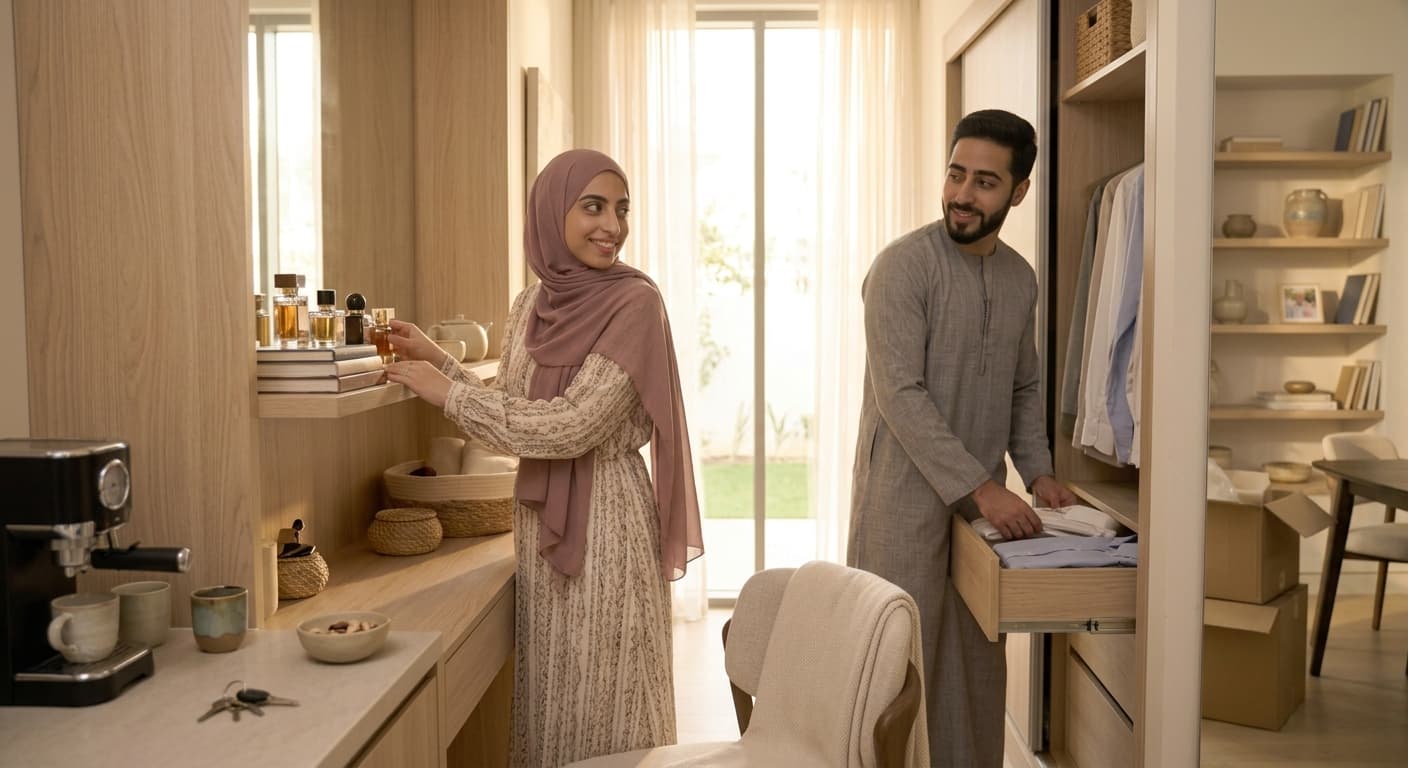
It's natural for a couple to enter shared life while being different in many details. One might be quiet while the other is outgoing; one loves planning while the other prefers spontaneity; one likes strict order while the other is more flexible; and their habits around food, sleep, spending, free time, and even how they handle problems can all differ.
These differences don't mean the marriage isn't right, and a successful marriage doesn't require the couple to become alike in everything.
The problem starts when one partner sees the other's difference as a fault that needs fixing, instead of understanding that part of married life is learning to coexist with someone who has a different personality and habits.
Difference Is Natural
Before marriage, every person lives in a way shaped over many years.
The family they grew up in, their surroundings, experiences, education, work, and friends all shape their personality and habits.
So it's unrealistic to expect to find someone who lives exactly the way you do.
You might see going to bed early as normal, while your partner sees staying up late as normal.
You might consider planning everything essential, while your partner prefers leaving some things to chance.
There isn't necessarily a "right" side and a "wrong" side in these differences.
Tell the Difference Between a Difference and a Problem
Not every different habit is a marital problem.
There's a difference between a habit you don't like and a behavior that actually affects the relationship.
For example, if one spouse likes waking up early and the other prefers sleeping in, that's a difference in habit.
But if one of them keeps neglecting their responsibilities because of that habit, then it's become tied to a shared responsibility and needs a conversation.
So before asking your partner to change something, ask yourself:
Is this actually causing real harm to the relationship, or is it just different from what I'm used to?
This question alone can prevent a lot of unnecessary conflict.
Don't Try to Change Your Partner's Entire Personality
It's natural to have some things you wish were better in the relationship.
But there's a difference between helping your partner grow in a specific behavior and trying to turn them into a copy of you.
If your partner is a quiet person, don't expect them to become outgoing the same way you are.
And if they like spending some time alone, that doesn't necessarily mean they don't love you.
Marriage doesn't erase a person's identity — it creates shared space between two different personalities.
Understand the Reason Behind a Habit Before Judging It
Sometimes we see the behavior and don't know the reason behind it.
Your partner might seem to talk little, but they may just need time before expressing their feelings.
They might seem overly focused on planning, but they may feel safe when they know what's coming.
And the other person might seem spontaneous because they grew up in an environment that didn't rely on precise planning.
Understanding the reason doesn't mean agreeing with everything, but it makes dealing with the difference calmer.
Instead of saying:
"You're so complicated."
you could ask:
"What is it that makes you feel comfortable when we plan everything?"
A question opens the door to understanding instead of confrontation.
Talk About How the Difference Affects You
If a certain habit is affecting you, talk about it instead of bottling up resentment.
But try to explain its effect on you, rather than describing your partner's character negatively.
Instead of:
"You're careless."
say:
"When we don't arrange these things ahead of time I feel stressed, and I need us to agree on them beforehand."
This way your partner understands the problem without feeling their character itself is under attack.
Don't Use the Word "Always"
When talking about habits, it's easy to fall into generalizing.
"You're always late."
"You're always messy."
"You never care."
This makes the other person focus on proving you wrong instead of thinking about the problem.
It's better to talk about a specific situation and a clear behavior.
Like:
"The last few times we agreed on a time, we were late because we hadn't set it in advance. How can we organize this better?"
The conversation then becomes about solving a real problem, not attacking someone's character.
Look for Common Ground
It's not necessary for one spouse to always pick their own way and force it on the other.
In a lot of differences, you can create a third way that suits both of you.
If one of you loves going out all the time and the other prefers staying home, you can agree on some days for going out and others for resting.
If one of you likes long-term planning and the other prefers spontaneity, you can plan the essentials and leave room for spontaneous decisions.
The solution isn't always one side winning.
Sometimes the best solution is a new way that both of you agree on.
Differences in Spending Need a Clear Agreement
One of the most common differences between spouses is how they handle money.
One might be very focused on saving, while the other sees enjoying their income as normal.
Here it's not enough for one of them to say:
"You're cheap."
or the other:
"You're a spendthrift."
It's better to turn the difference into numbers and clear agreements.
What are the essential expenses?
How much do we want to save?
How much can each person spend freely?
When do big purchases need a joint discussion?
When the rules are clear, there's less room for personal conflict.
Differences in Daily Habits
Even small details can become a source of tension if they aren't handled with flexibility.
Such as:
- Tidying the home.
- Sleep schedules.
- Food.
- Phone use.
- Having guests over.
- Going out.
- How to spend vacations.
- Time management.
Neither partner needs to change all their habits.
You can agree on the things that need a shared system, and leave personal space for things that don't affect the other person.
Differences in How You Handle Problems
One spouse might want to solve a problem immediately, while the other needs time to calm down and think.
If each person doesn't understand the other's nature, they might read it the wrong way.
The first might think the other is avoiding the problem, and the second might think the first is pressuring them.
You can agree on a simple rule:
We take time to calm down, but we set when we'll come back to talk about the problem.
This way, the partner who needs space gets it, and at the same time the other doesn't feel the problem was ignored.
Differences in How You Express Feelings
One spouse might be very expressive about their feelings, while the other talks less and expresses themselves more through actions.
The first might say:
"You never tell me you love me."
while the second sees their everyday care as the biggest proof of their love.
In this case, both need to understand the other's way, while trying to meet each other's basic needs.
It's not about becoming a completely different person — it's about learning to convey your feelings in a way your partner can also understand.
Don't Bring Parents Into Every Difference
Differences in habits can sometimes be tied to how each person was raised.
But that doesn't mean every difference needs the parents to get involved.
Phrases like:
"At my parents' house, we used to do it this way."
or:
"My family thinks your way is wrong."
can turn a simple difference into a conflict between two families.
It's better for the couple to build a system that suits their own life, respecting family customs without letting them run every detail of the marriage.
Respect Personal Space
Different temperaments mean each person has different needs.
One spouse might need quiet time alone, while the other feels happiest surrounded by people.
That doesn't mean one loves the other more.
Each person can have their own time, hobbies, and interests, as long as it doesn't conflict with the responsibilities or trust within the marriage.
Healthy personal space doesn't pull a couple apart — it can actually help each person come back to the relationship with better energy.
When Does One Partner Actually Need to Change?
There's a difference between personal habits and behaviors that harm the relationship.
It's not reasonable to ask your partner to change everything you don't like.
But some behaviors genuinely need to change when they cause ongoing harm — like repeatedly neglecting responsibilities, not respecting boundaries, lying, or actions that destroy trust.
Here, what's needed isn't just "adapting to the difference" — it's recognizing that there's a behavior that needs to be addressed and changed.
Don't Let the Compromise Always Come From One Side
Understanding doesn't mean one person always gives in while the other gets what they want.
If every difference ends with the same partner being the one to change their habits, resentment will build up over time.
A healthy relationship is built on give and take.
Sometimes you compromise, sometimes your partner does, and sometimes you look for a middle ground where neither of you has to give up something important to you.
Learn to Choose Your Battles
Married life will never be free of things that annoy you.
It can help to ask yourself before opening a new discussion:
Is this worth all this tension?
If your partner does something differently than you would but it doesn't cause a real problem, accepting the difference may be better than turning it into a recurring conflict.
But if it affects money, responsibilities, respect, or trust, it's worth discussing.
Don't Use Difference as Proof of Incompatibility
Some couples believe the right person should be just like them in everything.
But real compatibility doesn't mean being identical.
Two people who differ in temperament, hobbies, and habits can build a very successful life together if they have mutual respect, shared values, and the ability to understand each other.
On the other hand, two very similar people can still fail as a couple if their communication is weak or trust and respect are missing.
How Do You Handle Differences Practically?
You can follow a simple set of steps when a difference comes up between you:
First: identify the real problem.
Don't just say "we're different" — pin down exactly what's causing the problem.
Second: hear each other's point of view.
Each person explains why they see it this way.
Third: decide what can be accepted and what needs to change.
Not every difference needs a fix.
Fourth: look for a solution that considers both of you.
Don't make the goal one of you winning.
Fifth: try the solution for a while.
If it doesn't work, adjust it instead of going back to the same conflict.
In the End
Differences in temperament and habits between spouses aren't a flaw in themselves — they're a natural part of two people, each with their own personality, history, and way of life, coming together.
What matters is that the difference doesn't turn into a constant attempt to change the other person.
Learn to tell the difference between a difference you can accept and a behavior that harms the relationship and needs to change.
Talk to your partner clearly about the things that affect you, listen to their point of view, look for middle-ground solutions, and give each other room to be yourselves.
A successful marriage isn't built on the couple becoming one copy of each other — it's built on two different people learning how to live together with respect, cooperate despite their differences, and create a way of life that suits them.
Put your standards in a real profile
Create your free account in the browser and let matching work on your criteria, not on photos.