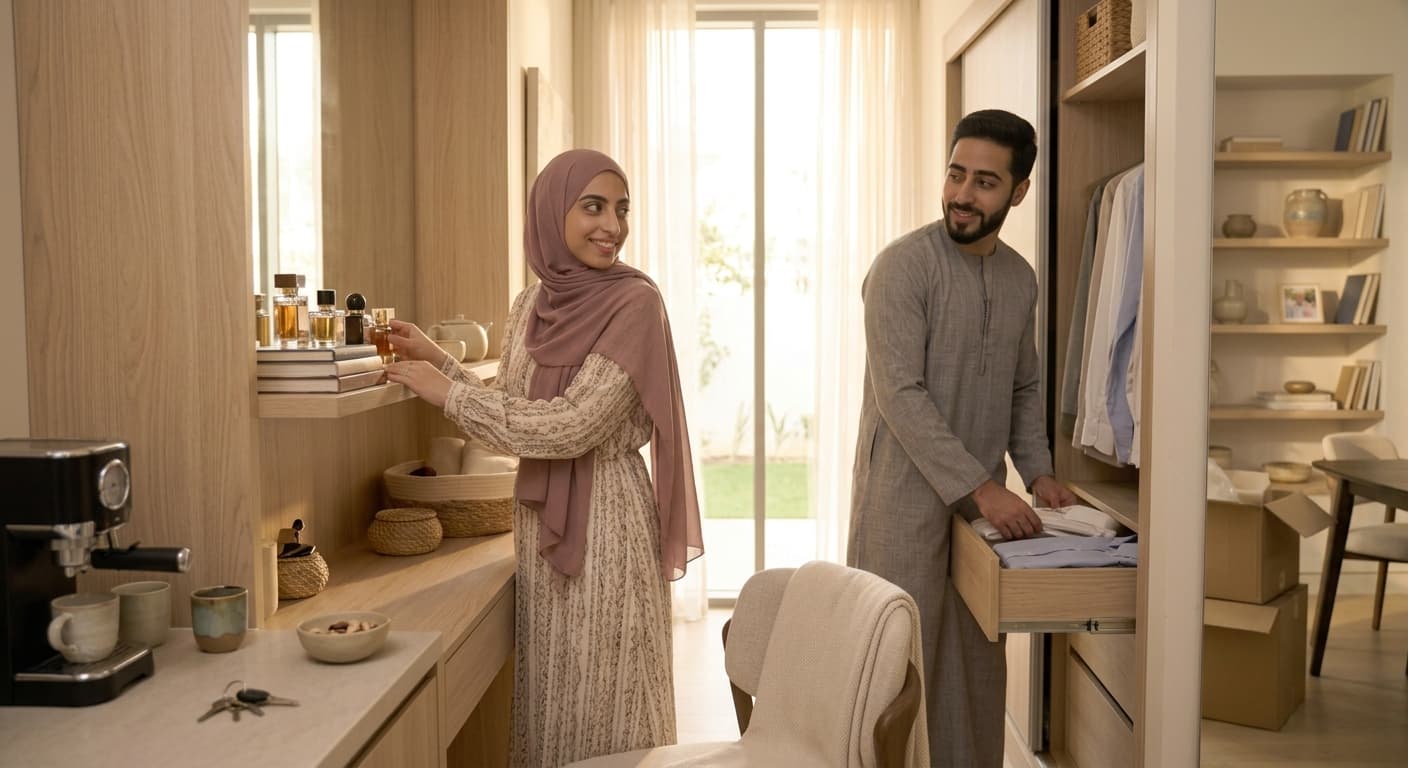
You never sat down to explicitly agree on how to manage your money after marriage. Each of you simply did what felt natural, the way it worked in your own family growing up: he spent and kept his own account the way his father did, while you expected a joint account the way it worked in your home. Neither of you discovered this mismatch until the first real friction over an expense neither of you knew the other would even object to.
There's no single "correct" way to manage money after marriage, but the absence of any clear, deliberate agreement, as happened to you, is exactly what causes most financial problems later. Knowing the different approaches that already exist helps you choose what actually fits your real circumstances, not just what each of you was used to individually before marriage.
What's the fully joint account, and who does it suit?
Both partners deposit their entire income into one account and spend from it together on everything. This approach builds a genuine sense of financial unity, but needs very high trust and full transparency from both sides, or one partner ends up feeling they've lost all personal financial independence.
What's fully separate, and why might some prefer it?
Each partner keeps their own account entirely, with a clear agreement on who covers which shared commitments, like rent or household expenses. This suits couples who prefer more financial independence, but needs very precise clarity in the details, or one partner ends up feeling the contribution is genuinely unbalanced.
What about the hybrid approach that combines both?
A joint account for agreed-upon core expenses, with each partner keeping a portion of their income for free personal use with no accounting to the other required. This combines financial unity with individual independence together, which is exactly why it's the most common approach among couples.
So which of these approaches is actually the best?
None of them is objectively better than the others. Which approach you choose matters far less than how clear each of you is about your actual income and commitments to the other. Hiding financial information, even under a system that's completely "fair" on paper, erodes trust gradually, just like any other kind of concealment in a relationship does.
What about major financial decisions specifically?
Regardless of which day-to-day approach you choose, major decisions — buying property, a large investment — should always be a joint decision between you, never one partner deciding alone and informing the other afterward as a done deal.
In the end
Go back to that moment you discovered each of you had been assuming something completely different, without ever saying so out loud. Which of these approaches you choose matters far less than whether it's a conscious choice, explicitly agreed upon between you — not a system that formed randomly out of each of your pre-marriage habits, with no real discussion at all.
Put your standards in a real profile
Create your free account in the browser and let matching work on your criteria, not on photos.