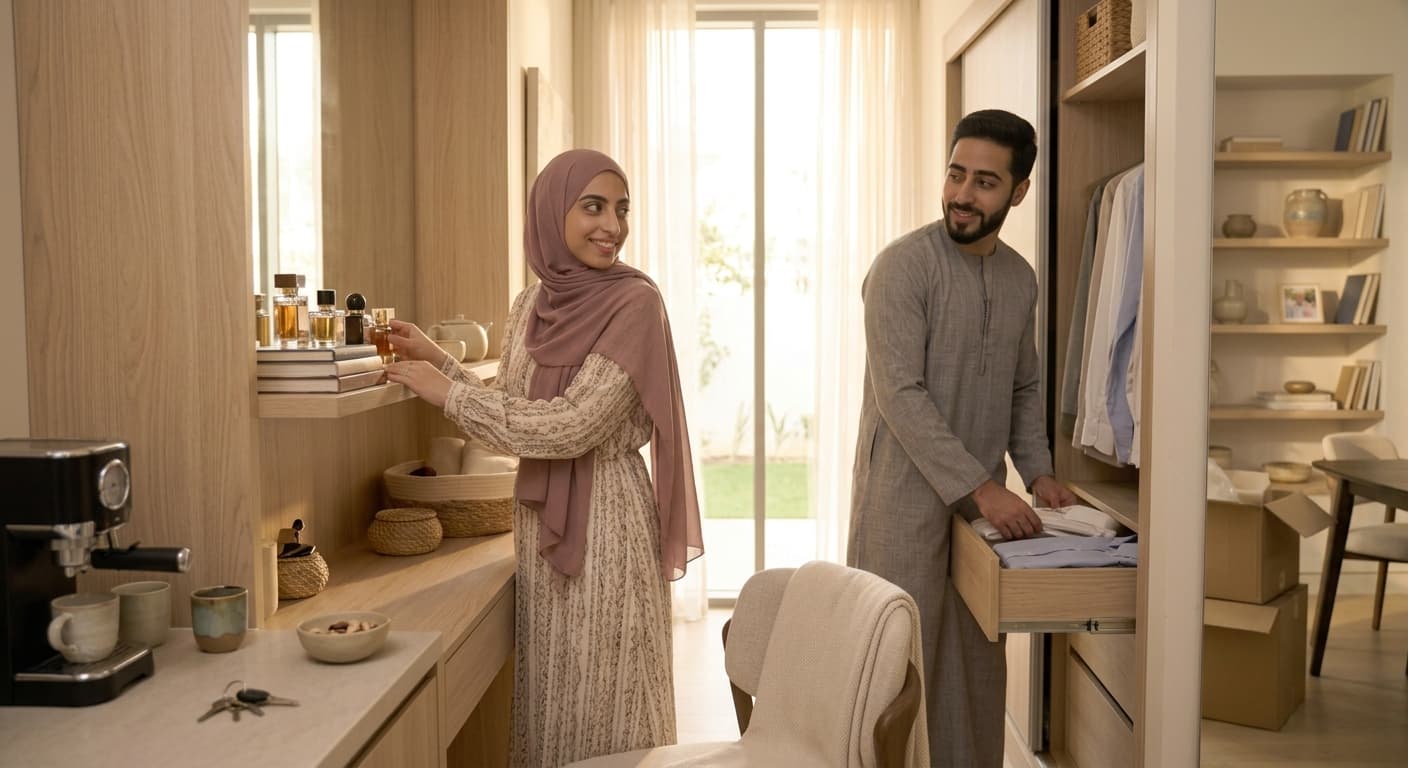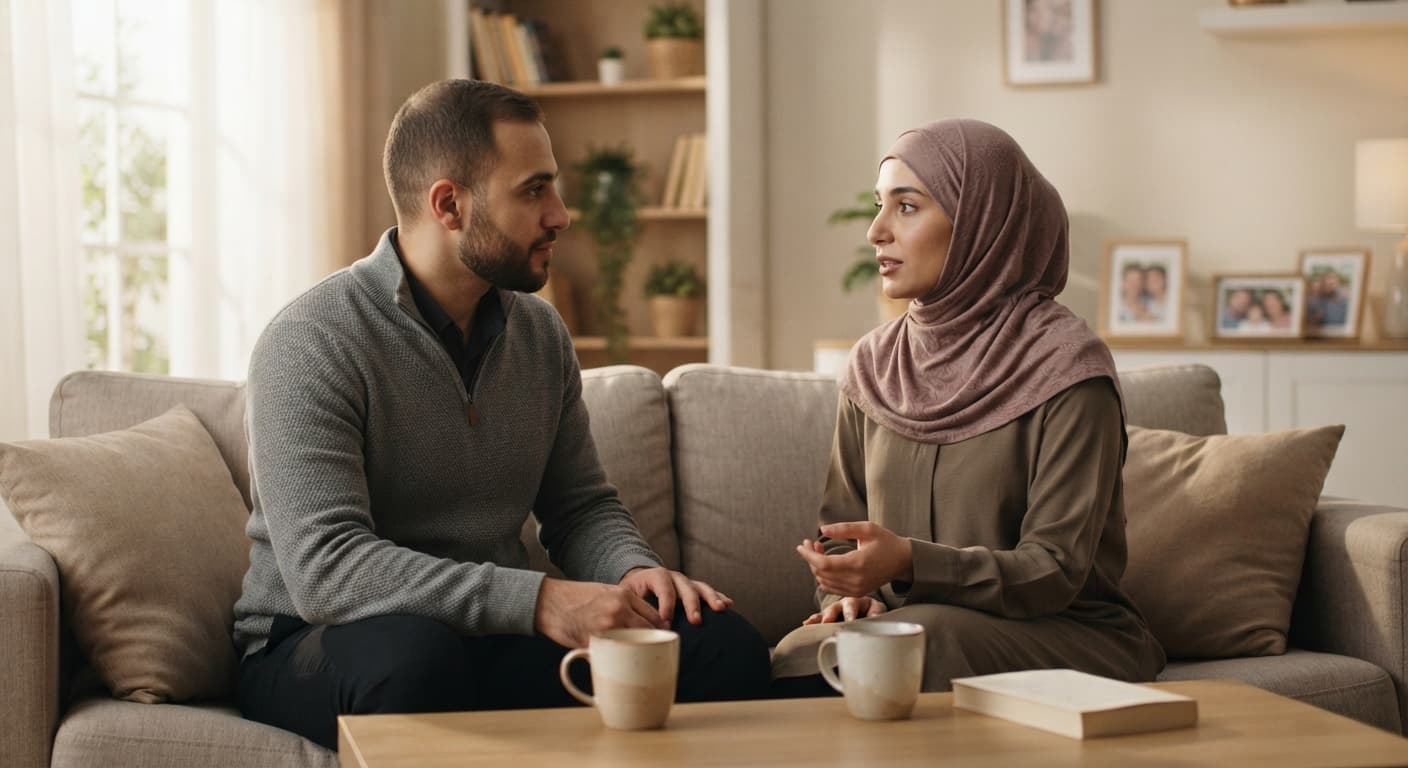
A husband is unfailingly polite with everyone outside his home: he smiles at colleagues, speaks calmly with friends even in the toughest situations, never raises his voice at any stranger no matter how provoked he is. Yet he suddenly raises his voice at his wife in a sharp tone because dinner is running a little late, with a sentence he can't imagine saying to anyone else in his life. When she confronts him about the tone later, he laughs it off as if it doesn't deserve all this fuss: "we're married, we don't need formalities with each other." But what do formalities have to do with speaking to her in a way he'd never dare use with a complete stranger?
This situation repeats in many homes, because the concept of "marital closeness" sometimes gets dangerously confused with the idea that marriage means dropping every boundary of respect a person automatically maintains with others. But genuine closeness and respect aren't opposites — they're two inseparable foundations of any healthy marriage. So how do spouses maintain genuine respect amid the closeness of daily life, which reveals every detail, the beautiful and the annoying alike?
The common confusion between closeness and losing respect
Genuine closeness means comfort in being yourself, not needing excessive social formality. But this never means marriage is a license to abandon the most basic rules of courtesy a person automatically practices with strangers. It's a painful paradox that many people treat those closest to them with the worst of their tone and patience, while reserving their best behavior for people they barely know outside the home. Healthy closeness means deep knowledge of the other person paired with respect that doesn't decline, not knowledge used as an excuse for daily treatment to decline.
Respect in everyday tone
Tone of voice alone, apart from the content of what's said, carries a very powerful message. A simple sentence can be said in a tender tone or a hurtful, sarcastic one, and both convey a different meaning despite the exact same words. Spouses who maintain a respectful tone even in moments of minor annoyance, without it escalating into shouting or hurtful sarcasm, build a home where both feel psychologically safe, while an accumulation of sharp tones, even if each seems "passing" every time, creates a buildup of a sense of disrespect that becomes hard to ignore after a long period of repetition.
Respect for personal privacy despite full closeness
Marriage grants great physical and emotional closeness, but it doesn't eliminate every person's need for their own space of privacy: personal thoughts that don't need to be fully shared, solo time without constant questioning, the right to not respond immediately to every question at every moment. Respecting this need, without interpreting it as hiding something or a lack of trust, is one of the clearest signs of deep respect between spouses. Constantly violating this privacy, like reading private messages without permission or questioning every small detail, gradually turns the relationship from a respectful partnership into suffocating surveillance.
Respect in front of others: family, friends, even children
One of the most painful forms of lost respect is one spouse criticizing or mocking the other in front of family, friends, or even children, under the excuse of "just joking" or "everyone understands I don't mean to offend." This kind of public criticism cuts far deeper than the same criticism said privately, because it adds the element of public embarrassment to the insult itself. Respectful spouses resolve their disagreements privately, and present themselves to others in a way that reflects mutual appreciation even if they're going through a real disagreement behind closed doors.
Respect in disagreement: attacking the idea, not the person
Disagreement itself doesn't eliminate respect, but how it's handled determines whether respect stays intact or erodes. Discussing an idea or decision sharply but respectfully is different from attacking the other person's character or dignity during a disagreement: "you're always like this," "there's no use in you," phrases that go beyond the subject of the disagreement to wound the person themselves. Spouses who train themselves to separate criticizing a specific idea from criticizing the person as a whole maintain mutual respect even in the hardest moments of disagreement.
Respecting your partner's time and space
Repeatedly being late for set appointments with no explanation, constantly interrupting your partner while they're speaking, or dismissing their own priorities and responsibilities are all less obvious but genuine forms of losing respect. Respecting your partner's time means treating them as a person with their own priorities that deserve appreciation, not as a resource always available purely according to your personal wishes.
Acknowledging effort and achievement instead of routine dismissal
One sign of deep respect is explicitly acknowledging the other person's daily effort, instead of taking it for granted as something not deserving any thanks or appreciation. A wife who works and manages the home together deserves explicit acknowledgment of this doubled effort, not silence implying all of it is "normal and expected" with no appreciation at all. This simple acknowledgment, when given regularly, builds a deep sense of mutual appreciation that's hard to easily erode.
A warning sign: normalizing insults under the label of joking
It's worth paying serious attention when repeated insults, even wrapped in the guise of joking, become a habitual pattern in the relationship, and the harmed party is asked to "take the joke and not overreact." Real joking makes both sides laugh together, while an insult disguised as a joke wounds one side while the other laughs alone. The difference between the two is clear to anyone willing to see it honestly: does the other person feel comfortable and laugh, or smile forcedly to avoid ruining the mood?
How do you restore respect if it declines over time?
Honestly acknowledging that the level of respect has declined, without immediate defensiveness or justification, is the necessary first step. After that, agreeing on clear basic rules (like not raising voices, not criticizing in front of others, not using certain insults even in the angriest moments) gradually rebuilds a respectful framework. What matters most is treating this process as a shared responsibility, not a repair carried out by one side alone while the other continues the same old pattern with no real change on their part.
Does respect mean the complete absence of small daily friction?
Of course not; shared daily life carries inevitable small friction between any couple, no matter how much mutual respect they hold. The fundamental difference isn't the absence of this friction, but handling it quickly and in a way that doesn't leave a hurtful mark that builds up over time. A couple who easily apologizes for a passing moment of frustration, and quickly resumes their usual respectful treatment of each other, is in a different situation than a couple who repeats the same hurtful pattern with no genuine attempt at correction or sincere apology.
Respecting independent personal decisions
Marriage is a partnership in major decisions, but it doesn't eliminate each person's right to make some small personal decisions without needing the other's approval on every detail: choosing their own clothes, how they spend their own free time, or even their opinion on a public matter that doesn't directly affect the family. A husband or wife who imposes their opinion on every small decision, and treats any small independence as a challenge to their authority, gradually suffocates their partner's personality and turns respect into control disguised as care.
The difference between constructive criticism and constant discouraging criticism
Constructive criticism aims to improve a specific situation, delivered in a way that respects the other person's dignity and ability to change. Constant criticism, in contrast, repeats on nearly every occasion around roughly the same point, leaving the other person with a persistent feeling of never being enough no matter what they do; spouses who keep criticism rare, specific, and constructive, not constant, general, and discouraging, maintain a safe psychological space where each person feels accepted despite their natural human mistakes. A situation shows this kind of respect: a husband disagrees sharply with his wife over a financial decision during a private discussion, but an hour later, sitting with family, he speaks of her with clear appreciation, with no hint of the disagreement that just happened. This conscious separation between handling conflict privately and maintaining a respectful image publicly is exactly what distinguishes mature respect from the mere absence of disagreements, building deeper trust over time because each person knows a passing disagreement will never become material the other displays in front of others. Another practical sign of this respect is the ability to say no to a request without the refusal itself turning into an insult or a total dismissal of the other person's feelings.
In the end
Respect between spouses isn't excessive formality that contradicts genuine closeness — it's the foundation healthy closeness is built on in the first place. Spouses who maintain genuine respect even in the smallest details of their daily life build a home where each side feels safe and appreciated, while respect gradually eroding, even if it seems minor and insignificant each individual time, turns the relationship over time into a source of ongoing psychological strain instead of the genuine source of comfort and tranquility it's supposed to be from the start. A question worth every couple asking themselves from time to time: if you treated me today exactly the way you treated me yesterday, would I feel respected, or diminished?
Put your standards in a real profile
Create your free account in the browser and let matching work on your criteria, not on photos.