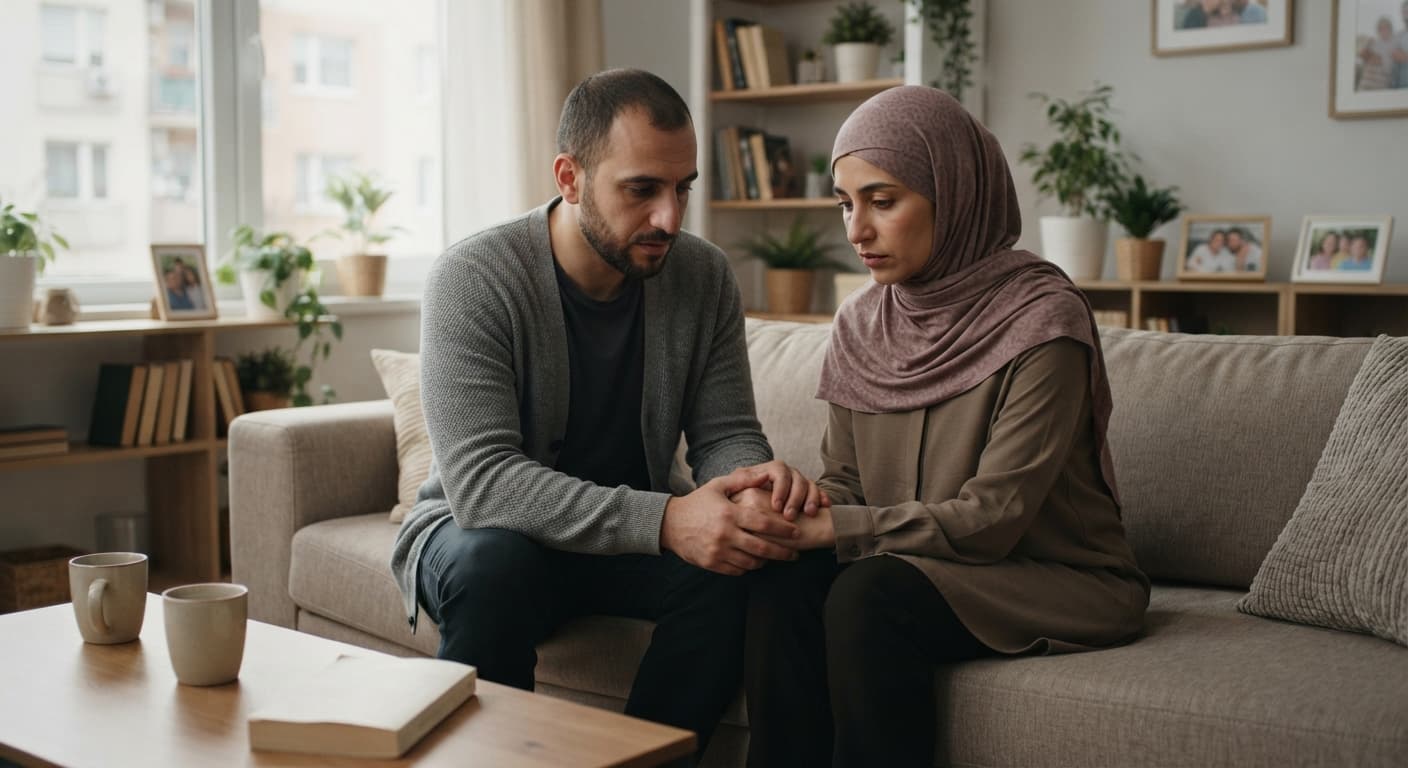
A couple who dated for three full years before marrying, described by nearly everyone around them as "made for each other": they laughed at the same jokes, shared the same interests, and their harmony was obvious at every family gathering. Just four years into the marriage, they divorce. The news shocks everyone around them, and the same puzzled question repeats in every phone call: "but they loved each other so much, what happened?" This question, common as it is, carries a mistaken assumption at its core: that genuine love alone is enough to protect any marriage from failing, and that the absence of a successful outcome must mean the love was never real to begin with.
The truth is far more complicated than that. Many marriages fail despite genuine love between both people, not because the feelings were an illusion, but because love alone can't solve problems of an different kind than the feelings themselves. So what are the real reasons that end marriages where the love was undeniably clear?
Love wasn't the lie — it just wasn't enough
The first necessary step to understanding this phenomenon is dropping a common, mistaken assumption: that a marriage's success or failure is direct proof of whether the love was real or fake. Love is a necessary condition for a successful marriage, but it isn't a sufficient one on its own; two people can love each other sincerely, and their marriage can still collapse because of different factors that have nothing to do with the size of their feelings. Treating a marriage's failure as definitive proof that the love was fake stops many people from understanding the real actual reasons behind the collapse, and pushes them toward a simple emotional explanation instead of facing more complicated practical causes.
When individual growth stops keeping pace with the relationship's growth
People naturally change over time: their priorities, ambitions, and even their personalities evolve in response to different life experiences. The problem appears when one person develops in a direction fundamentally different from the other, without both of them keeping pace with that change together through ongoing conversation. A couple who married in their twenties with nearly identical priorities and dreams might find themselves, ten years later, as two different people — not because one of them "changed for the worse," but because natural growth took them in different directions that were never consciously discussed as they gradually happened.
Unaddressed hurts piling up under the cover of "we love each other"
The presence of real love between two people can push them to downplay small recurring hurts, assuming the strength of their love is enough to get past them without addressing them. "We love each other, we'll get past this" is a sentence that can be repeated to justify ignoring a real problem that deserves serious attention, until these small unaddressed hurts pile up over years, reaching a point where love itself is no longer enough to carry their accumulated weight, even as the underlying feelings remain sincere the entire time.
A lack of practical skills despite the presence of real feelings
Love doesn't automatically teach anyone how to communicate effectively during a disagreement, how to manage shared finances, or how to deal wisely with the other person's family. These are learned skills that need conscious awareness and deliberate practice, with no direct connection to the size of the feelings between spouses. A couple who love each other sincerely, but both lack the basic communication skills needed to manage the inevitable disagreements in any marriage, find themselves colliding in the same destructive way over and over, with love itself, however genuine, unable to make up for this real skill gap.
Relying entirely on passion to get past a real compatibility flaw
Some couples rely on the strength of their attraction and passion to get past fundamental differences in values or lifestyle, believing that passion will stay strong enough to overcome any difference, no matter how deep. But passion, however intense at the start of a relationship, naturally fades over time in the face of everyday details, and when it fades, the fundamental differences it had been covering appear with a clarity that wasn't visible before, turning into a permanent source of friction that was never addressed at the right time.
When one person changes fundamentally and the other doesn't
Sometimes one person goes through a fundamental shift in their religious convictions, core values, or lifestyle, while the other stays fixed on who they used to be, and they find themselves, years later, at two very distant points, even though neither of them did anything "wrong" in the moral sense. This kind of gradual drift is especially difficult because it doesn't arise from bad intentions on either side, but from separate paths of personal growth that were never managed with enough shared awareness, and when this drift reaches an advanced stage, the bridge back to each other can become far harder than if it had been addressed in its early stages.
Love that turned into a habit with no continued action
Love isn't a fixed state acquired once and left without any further effort; it's a continuous act that needs conscious daily renewal. Some couples gradually stop this continuous act, without feeling their core feelings have changed at all, simply because daily routine replaced active, real attention with a quiet background feeling that never translates into tangible actions. This kind of dormant love, however sincere, isn't enough to build a vibrant, renewing relationship, and leaves an empty space where each person feels lonely despite the other being right beside them every day.
Why is it hard to see these causes from the inside?
The two people living inside this gradual collapse rarely see it clearly as it happens, because the change is so gradual and stretched across years, not one sharp event that can easily be pinpointed. The scale of the problem is often only realized after it's too late, when one of them looks back trying to identify the moment everything started changing, only to find they can't pinpoint a single moment — just a long path of small accumulated decisions that didn't seem, at the time, significant enough to make a real difference.
Gradual social isolation from surrounding support circles
Some couples, especially in the early years full of preoccupation with each other, gradually drift away from close friends and family members who used to form a real support network before marriage. This drift can seem natural and understandable at first, especially given both people's genuine desire to spend as much time together as possible. But over the years, the couple becomes dependent on each other alone to meet every emotional and social need, and that's an extremely heavy burden that no two people can carry alone, no matter how much they love each other. When a real crisis appears, they find themselves without an outside support network to help them get through it, so the marriage itself carries an extra weight it should never have had to bear alone in the first place.
Could these marriages have been saved?
The honest answer is that some of these marriages could have been saved, had the real problem been noticed early enough and dealt with seriously instead of relying on the strength of love alone. Others probably weren't salvageable at all, because the fundamental differences that later emerged were too deep for any possible repair, regardless of how much love remained. A situation illustrates this: a couple who clearly loved each other throughout years together, but one dealt with every disagreement through silent withdrawal, while the other needed to talk things through immediately; over time, love stopped being enough to bridge this gap in how they handled conflict, because each felt misunderstood by the other despite their feelings staying unchanged. This shows that some marriages fail not because love was absent, but because the practical skill of managing daily disagreement was missing — and it's worth noting these skills can be learned at any stage of a marriage, not limited to those who already have them from the start. It's also worth distinguishing between a marriage that ends because of this failure to grow together, and one that ends despite both people making a genuine effort to change; the second case doesn't necessarily mean love or effort failed — it may simply mean some gaps stay bigger than any possible effort, however sincere. Accepting this limit doesn't mean giving up quickly — it means directing effort toward what can actually be changed, instead of exhausting it trying to fix what genuinely can't be fixed.
In the end
A marriage failing despite real love isn't proof that the love was an illusion or a lie — it's often proof that love alone wasn't enough to face challenges of an different kind: diverging individual growth, missing communication skills, unaddressed accumulated hurts, or a gradual drift in values that was never dealt with at the right time. Understanding these real causes, instead of settling for a simple emotional explanation, helps anyone going through a similar experience avoid blaming themselves by assuming their love wasn't enough or wasn't genuine, and gain a deeper understanding of what a marriage needs to hold up — alongside love, not instead of it. Anyone entering marriage while grasping this truth from the start treats love as a strong starting point worth celebrating, not as a final guarantee that excuses them from the ongoing work every other part of a marriage needs to stay alive and renewed across the years.
Put your standards in a real profile
Create your free account in the browser and let matching work on your criteria, not on photos.