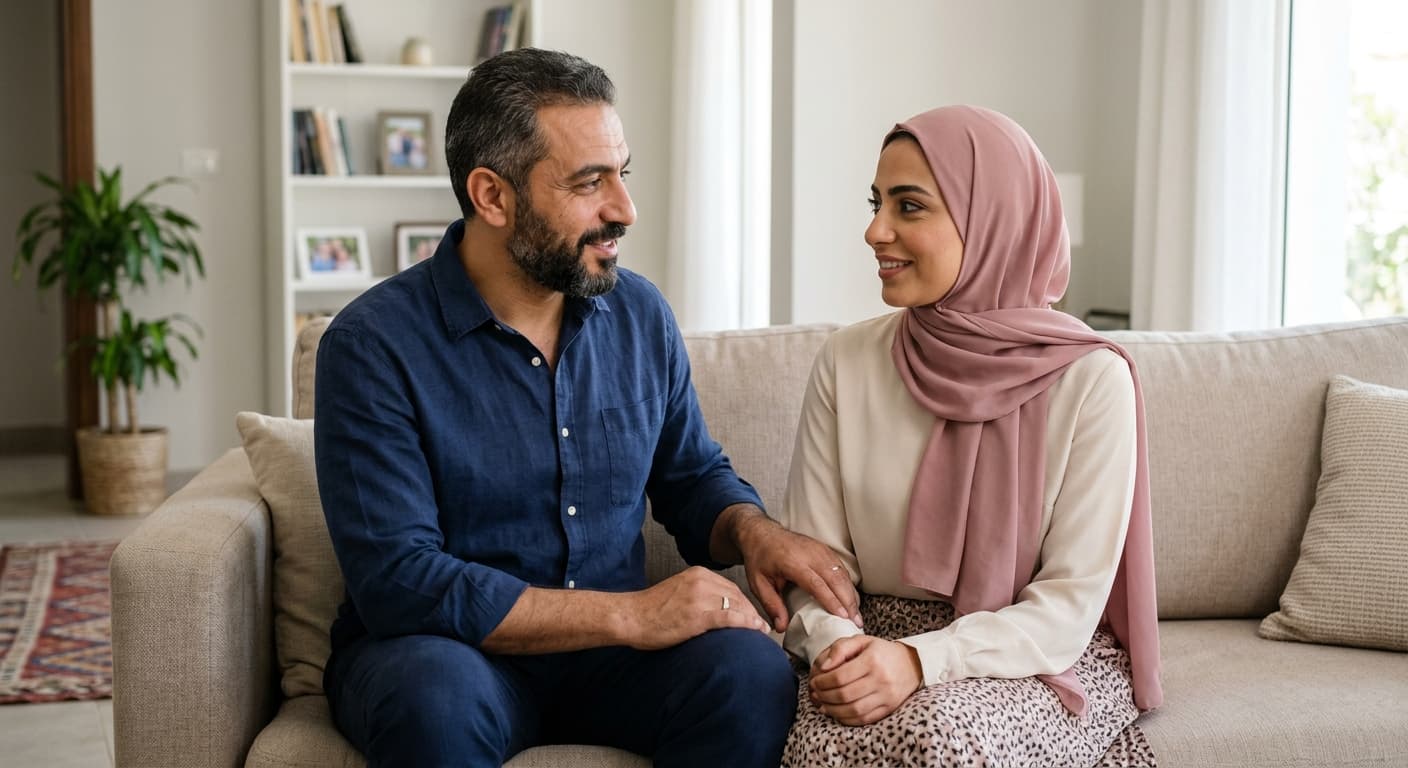
You tell him every day how proud you are of him, ask genuinely about his day, and make sure to say something appreciative on every occasion. Yet he still sometimes feels like something's missing in the relationship, without quite being able to name it. Meanwhile, he helps with every exhausting task, and takes care of things without you even asking, believing this is the clearest possible way to show his love. But you still feel like he doesn't express his feelings enough.
You both genuinely love each other, and you're both expressing that love in your own way. The only problem is each of you is speaking a language the other doesn't fully understand — and that's exactly what the idea of "the five love languages" explains.
So what makes someone feel loved more than something else does?
The basic idea is simple: everyone has a primary way they feel loved more than any other, and another way they naturally express love themselves — and the two are often similar. The problem arises when one partner's language is completely different from the other's, so each expresses love sincerely, but it never actually lands as felt love for the other person.
Words of affirmation: when just "knowing" you're loved isn't enough
For some people, hearing direct appreciation — "I'm proud of you," "I appreciate what you do" — is the clearest way they feel loved. The absence of these words, even alongside plenty of caring actions, can leave this person feeling an unintended coldness from their partner, because what they specifically needed never actually reached them.
Quality time: the difference between being present and just being there
Simply being physically there isn't enough here — what matters is full presence: attention, conversation, real interest without distraction. For people with this love language, a phone left on during conversation can read as disinterest, even when that's not the intent at all, because what matters to them isn't just sharing a space, but the quality of attention within it.
Meaningful gifts: it was never about the price
This isn't about the monetary value of a gift — it's about what it represents: that you were thinking of them. A very small, unexpected gift can mean far more to this kind of person than an expensive one given only on an expected formal occasion.
Acts of service: when action speaks louder than words
For this group, your partner helping with an exhausting task, or handling something for you without being asked, reads as a deeper expression of love than any beautiful sentence — exactly what the husband did in the scene we opened with.
Physical touch: closeness that needs no words
This means the small, everyday physical gestures — a hand on the shoulder, a passing hug — as a primary way of feeling close, not a secondary one that comes after conversation or compensates for its absence.
So how do you put this understanding to use right now?
The first step is each of you recognizing your own love language, then your partner's — they may not match, just as they didn't in our opening scene. The second, more important step, is starting to express love in your partner's language, not only your own — that's exactly what makes them actually feel what you're trying to say, instead of your sincere effort leaving no felt trace at all.
In the end
When one of you feels love is "missing" despite real effort, remember this scene: you might both be expressing yourselves with complete sincerity, just in a language the other doesn't fully understand. Learning your partner's language isn't extra effort in the relationship — it's a direct investment that finally lets every effort you're already making actually land where it needs to.
Put your standards in a real profile
Create your free account in the browser and let matching work on your criteria, not on photos.