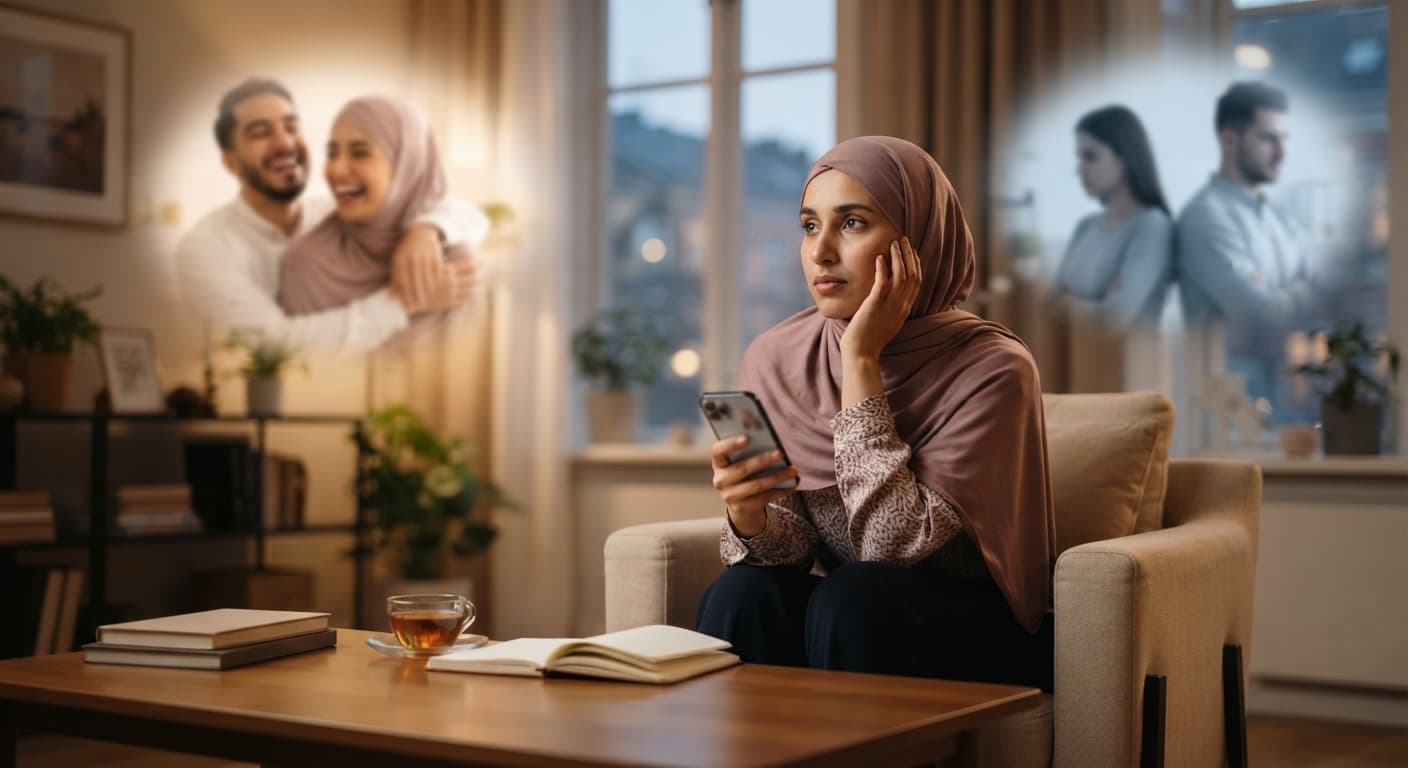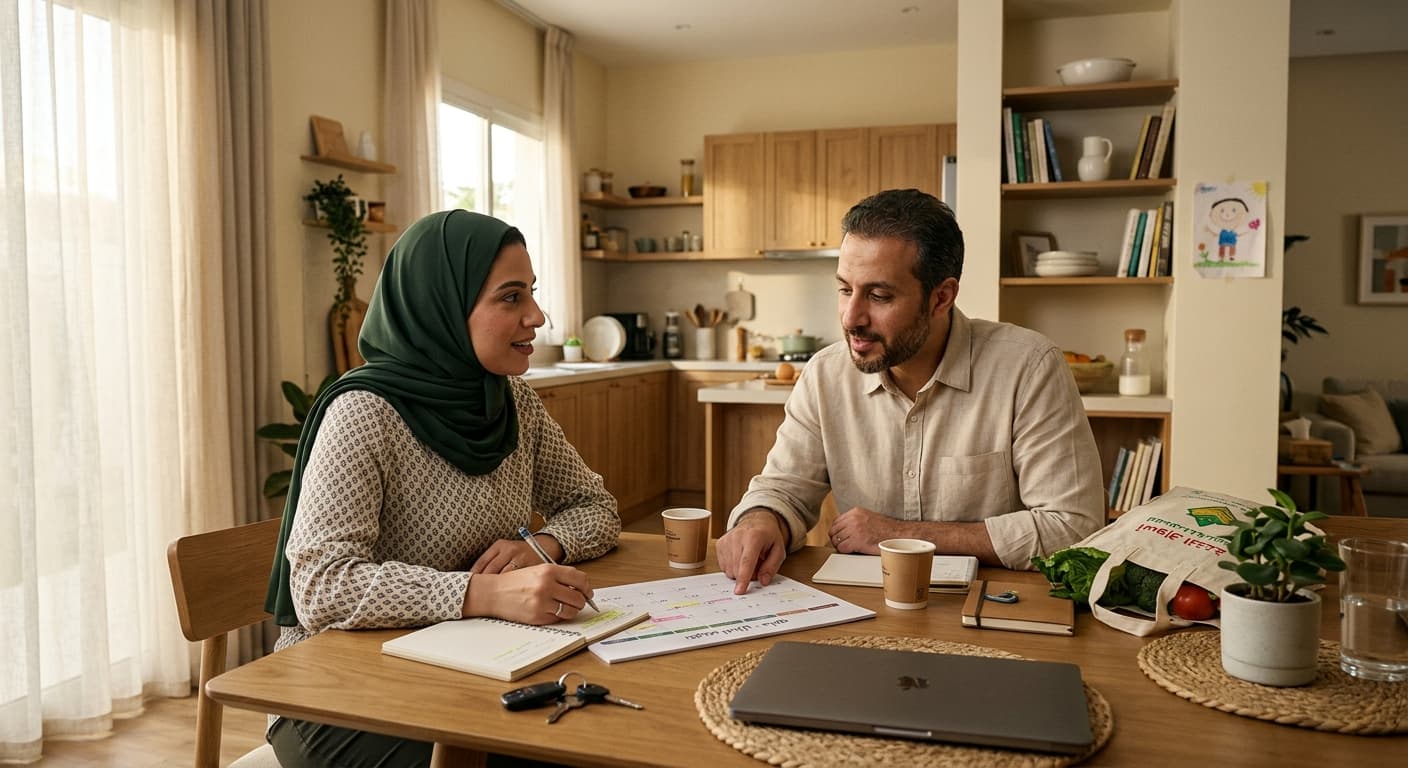
Just three months after her wedding, a wife opens a joint bank statement and finds a fixed monthly deduction she doesn't understand at first. She asks her husband, and he admits he's been paying installments on an old debt he took years ago to help a relative, and he's still paying it off. When she finally learns the actual amount, it isn't nearly as large as she'd feared while holding her breath waiting for his answer. But the real shock wasn't the size of the debt — it was one question that kept echoing in her mind for the entire week that followed: why didn't he tell me this before we got married? Why did I have to find out now, by accident, instead of hearing it directly from him while I could still decide with full knowledge?
This situation repeats in many different forms: an unmentioned health condition, a past emotional experience that left a deep mark, a financial situation different from what it appeared to be, or even an old family conflict that could affect the relationship later. The problem is rarely the information itself so much as the decision to hide it. So when is withholding information acceptable as part of legitimate personal privacy, and when does it cross into concealment that deserves to be called dishonesty?
The difference between legitimate privacy and deliberate concealment
Not everything in a person's life before marriage needs full disclosure. Everyone has personal details they have every right to keep to themselves, not because they're shameful, but simply because they belong to that person alone and don't directly affect the other party. The real difference between legitimate privacy and deliberate concealment comes down to a simple question: does this information affect the other person's decision, or their shared life with you going forward? If the answer is yes, then withholding it is no longer privacy — it becomes concealment that denies the other person information they deserved to know in order to base their decision on a complete, accurate picture. Details like your personal taste in old clothes or a minor falling-out with a friend years ago don't need disclosing; but an ongoing financial debt, a chronic health condition, or a standing family obligation that affects your time and money are an different matter, in both nature and impact.
Why do people hide important information about themselves before marriage?
The motive is rarely malicious in the sense of wanting to deliberately deceive. Usually the motive is fear: fear that the information will ruin the marriage opportunity itself, fear of judgment and comparison against people without the same circumstance, or even an unrealistic hope that the problem will resolve itself before anyone finds out. A young man hiding a debt fears being seen as financially unfit, so he postpones disclosure hoping to pay it off before anyone asks. A woman hiding a health detail fears it'll be used against her in the decision, so she hopes time will pass without the subject ever coming up. The irony is that this very fear, once it comes true and the truth is discovered later, causes far more damage than early disclosure ever would have, because the original issue now comes bundled with a deeper problem: loss of trust in the person themselves, not just in the circumstance they hid.
Which pieces of information genuinely deserve disclosure?
As a practical rule, any piece of information that directly affects the marriage decision itself, or the shape of shared life afterward, deserves disclosure before the contract is finalized, not after. This includes health conditions that might affect having children or daily lifestyle, ongoing financial obligations like debts or supporting other family members, any previous marriage or obligations resulting from it such as children from an earlier relationship, and family circumstances that impose ongoing commitments, like caring for a sick parent or permanently supporting a sibling financially. Even some details that seem small, like a job that requires frequent travel, or a daily habit that could sharply clash with the other person's expectations, deserve to be mentioned early rather than left to be discovered gradually after marriage, where they can turn into a recurring source of resentment that was avoidable had the subject simply been raised clearly and simply from the start. This doesn't mean listing every detail from the past at the first meeting — some of this information needs time and mutual trust before it can be raised comfortably — but it needs to arrive before the contract is signed, not weeks or months after, when backing out becomes far harder for both sides, psychologically and socially.
Honesty about past emotional experiences: how much is enough?
This is a sensitive point people judge differently. No one needs to recount every detail of every past relationship — that usually doesn't serve the new relationship and adds unnecessary tension without any real benefit. But there's a difference between reciting details and disclosing the existence of a formative experience that might be reflected in your current behavior: having gone through a betrayal that affected your ability to trust, or a previous engagement that ended for a reason your new partner deserves to know about if the same situation were to recur. The rule here isn't "tell them everything" — it's "tell them what might explain your current behavior or fears," because this kind of honesty builds genuine understanding instead of opening the door to pointless comparisons.
Honesty about health matters
Health conditions are among the things people fear disclosing most, worried they'll be used as grounds for rejection. But hiding a significant health condition, especially anything related to having children or a chronic illness requiring ongoing treatment, isn't just dishonest — it denies the other person their own right to make an informed decision about their own life too. The right approach is to raise it honestly at the appropriate point in getting to know each other, accompanied by clear information about the condition's nature and actual impact, rather than letting the other person discover it later in a far more painful and less clear way.
Honesty about financial matters
One's real financial situation, whether it's better or worse than it appears on the surface, deserves clarity before marriage. Someone who exaggerates an unreal financial standing out of fear of rejection builds their relationship on a fragile foundation that quickly cracks after marriage, when the other person collides with a reality different from what they'd imagined. Conversely, someone who hides a good financial situation out of fear of being exploited misses the chance to build early trust based on transparency instead of constant caution. Financial honesty doesn't mean disclosing every exact number in detail at the first meeting, but it does mean not deliberately presenting a false picture of one's actual financial capacity.
How do you raise sensitive information without fearing it'll ruin your chance?
The fear of disclosure is usually bigger than its actual impact. Someone who rejects you over honest information you disclosed clearly and respectfully would most likely have rejected you later anyway, after discovering it some other way — probably after you'd both invested far more time and feeling. Early disclosure, despite how psychologically difficult it is, spares you a potentially bigger loss later. The better approach is choosing the right timing — not necessarily the very first meeting, but before both people take serious steps toward a final decision — and raising the information directly and clearly, without excessive minimizing or unnecessary exaggeration, while leaving real space for the other person to ask questions, absorb it, and decide for themselves without pressure.
What if you discover the other person hid something important?
If this happens, it's worth distinguishing between two types: was what got hidden a sensitive detail the other person feared being judged for, or was it a deliberate attempt at deception for some specific purpose? The first type, while still a mistake, can be understood and discussed honestly without necessarily meaning the end of the relationship, especially if the other person shows genuine regret and a willingness to make up for it with clarity going forward. The second type, when concealment is part of a repeated pattern of manipulation or intentional deception, is a far bigger red flag that deserves a serious re-evaluation, because the problem here isn't a single piece of information — it's a behavioral pattern that could repeat itself. What if the information kept back concerns a painful experience that's hard to talk about, not bad intent? That's an important distinction; the honesty required here doesn't mean disclosing every detail in the first meeting, but committing to not hiding what will genuinely affect the other person's decision once the right moment comes. The difference between good-faith delay and deliberate concealment shows up in intent and consistency: is the person gradually moving toward honesty, or avoiding it entirely every time the moment gets closer?
In the end
Honesty before marriage isn't about revealing every detail of the past indiscriminately — it's about a simple principle: any information that affects the other person's decision, or the shape of your shared life together, deserves to be said clearly, at the right time, before the final decision gets built on an incomplete picture. Whoever starts their marriage on this principle gives themselves and their partner a real chance to build trust that holds up under any future test, while whoever postpones the truth out of fear of losing the opportunity usually ends up losing something far bigger once the truth finally comes out: not just the information, but trust in the person who chose to hide it. And the question every person considering marriage should be asking isn't "what if I get rejected because of this information?" but "do I want to build my home on a foundation my partner fully knows, or on an incomplete picture that could collapse at any moment?"
Put your standards in a real profile
Create your free account in the browser and let matching work on your criteria, not on photos.