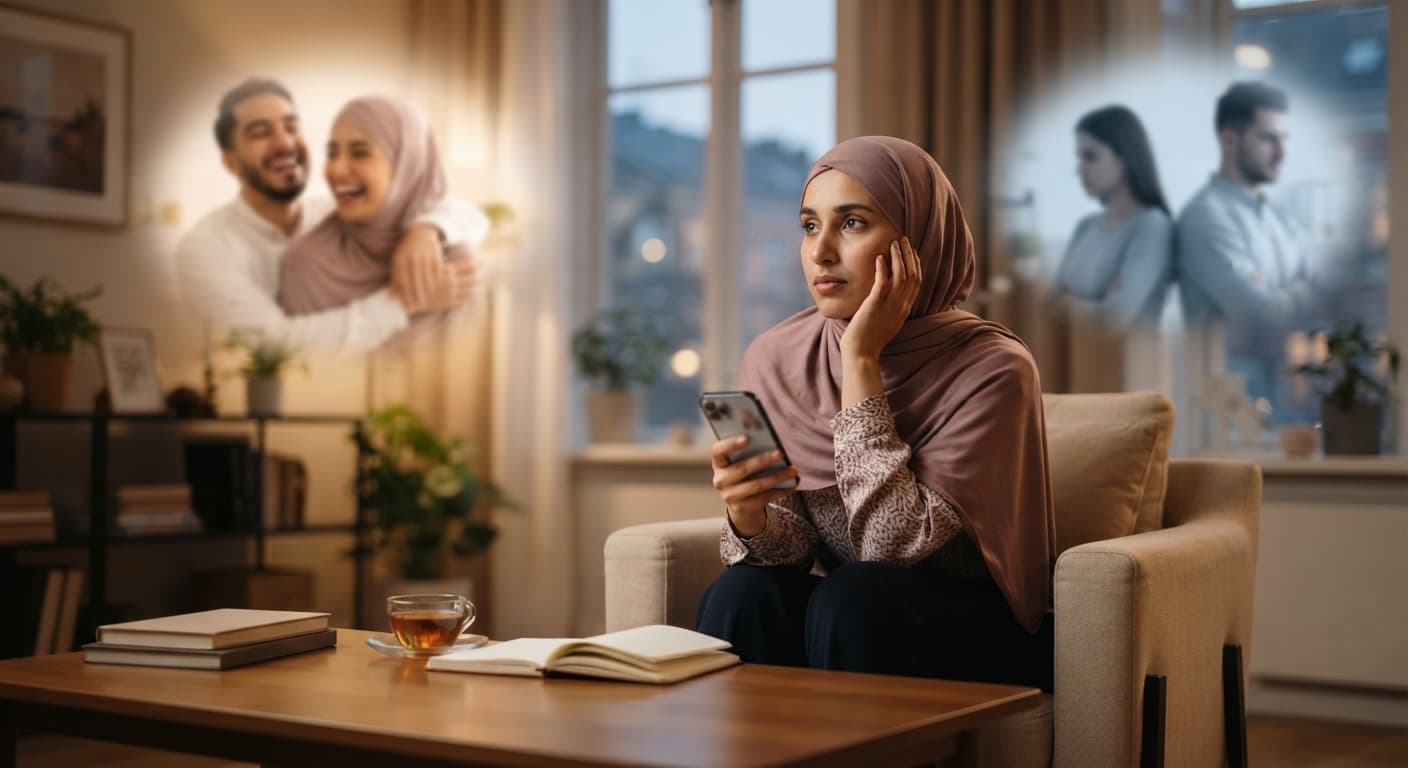
A woman in her mid-thirties, tired of coming home every evening to a empty, silent apartment, of eating dinner alone in front of the TV almost every night, starts seriously considering accepting a marriage proposal from someone she recently met, someone she feels no real attraction or deep compatibility toward, but who's "a kind, stable person," as she describes him to herself every time she tries to talk herself into saying yes. She calls her older sister for advice, and her sister asks her one direct question that stops her in her tracks: "are you thinking of marrying him because you love him, or because you don't want to come home to an empty house after today?" The long silence that followed that question was answer enough on its own.
Loneliness is a real, very powerful human motivator, and understandable, but it isn't necessarily the same thing as a genuine desire for a real partnership with a specific person. So what's the fundamental difference between the two, and why does this difference deserve honest reflection before making a decision as significant as marriage?
Loneliness is an understandable motivator, but it isn't the same as wanting partnership
Feeling lonely, especially when it stretches over a long period, is a real, painful human feeling that deserves acknowledgment without shame or denial. But the desire to escape this specific painful feeling is fundamentally different from a genuine desire to build a real partnership with a specific person, because the first is primarily driven by getting rid of current pain, while the second is primarily driven by a positive desire for a specific person to be in your life — not just anyone who fills the current painful void.
The difference between marrying "out of" loneliness and marrying "to fill" loneliness
Marriage built on a genuine desire for real partnership with a specific person, even if loneliness is one of the accompanying motivators, is fundamentally different from marriage taken as a quick fix just to fill the void of daily loneliness, regardless of who this specific person happens to be. A useful practical standard here: if the feeling of loneliness disappeared tomorrow, would you still want to marry this specific person because of who they are, or would the desire to marry immediately fade along with the original motivation behind it?
Why doesn't marriage necessarily solve the real problem of loneliness?
One very common psychological surprise is that many people discover, after marrying out of a motivation to escape loneliness, that the feeling of loneliness itself didn't disappear as they expected — it continued in a different form, sometimes even more intensely, because real emotional loneliness within a marriage lacking compatibility or genuine communication is far harder than physical loneliness outside marriage. The physical presence of another person at home doesn't automatically solve the deep feeling of not being understood or connected, if this specific person isn't who you want to build a life with.
Loneliness within marriage: worse than loneliness outside it
Many who married to escape loneliness describe the experience of loneliness within marriage as far worse than the loneliness they were originally escaping, because it carries an extra layer of disappointment: you expected marriage to solve this feeling, then discovered it didn't — it might have even doubled it by adding a feeling of being trapped within a commitment where you don't feel the genuine connection you were searching for from the start.
When is loneliness a healthy sign that deserves addressing first?
Chronic loneliness that continues for a very long time, especially when tied to broader social isolation from friends and family, not just the absence of a life partner, might be a sign that deserves independent addressing first, even before seriously considering marriage as a solution to it. Building a wider social support network, addressing any accompanying anxiety or depression, and reconnecting with personal activities and interests are important steps that deserve attention on their own, not just waiting for marriage to solve all these dimensions at once.
The difference between temporary loneliness and deep, chronic loneliness
Temporary loneliness, resulting for example from recently moving to a new city or a certain transitional life phase, is fundamentally different from deep, chronic loneliness that persists for years and ties to a deeper feeling of not belonging or not being understood by anyone around you. The first type might improve with building a new social network over natural time, while the second deserves deeper attention and exploring its real roots before automatically linking it to the mere absence of a life partner.
How do you know if you're choosing a partner or just filling a void?
A useful practical question: do you feel genuine attraction and respect toward this specific person, or would any "socially acceptable" person have seemed equally acceptable at this specific moment? Are you excited to know the details of their day or their thoughts, or does interacting with them feel like just a necessary procedure for achieving the goal of marriage itself? Some platforms dedicated to serious marriage, like Wanees, encourage setting clear, real standards before starting any getting-to-know process, and that's exactly a useful exercise for checking your real motivations: if loneliness weren't there at all, would these exact same standards have led you to this specific person?
Addressing loneliness through other means first, before making a major decision
Before making a decision as significant as marriage primarily driven by loneliness, it's worth trying to address this feeling through other means first: deepening existing friendships, joining new social activities, or even seeking specialized support if the loneliness is accompanied by real symptoms of depression. If the feeling of loneliness persists despite all these attempts, seriously considering marriage becomes a clearer, more mature decision, built on a deeper conviction than just a momentary desire to escape one difficult evening's emptiness.
Does this mean loneliness doesn't deserve to be a motivator at all?
No; wanting a partnership that eases loneliness is a legitimate human motivator, and doesn't deserve denial or shame. What matters is distinguishing between this legitimate motivator as part of a bigger picture that includes a genuine desire for a specific person, and letting it be the sole, decisive motivator that pushes you to accept whoever's available just to escape a temporary feeling, regardless of how compatible you are with them in the long run.
Social pressure that amplifies the inner voice of loneliness
Recurring social pressure, from repeated questions from family to implicit comparisons with friends who've already married, sometimes amplifies the inner voice of loneliness in an unobjective way, until marrying whoever's available starts to seem like an urgent solution to outside social pressure more than a response to a genuine inner desire. It's very useful to consciously separate these two different voices: the voice of a genuine personal desire for partnership with a specific person, and the voice of outside social pressure that just wants to see you "married," regardless of the quality of that marriage or how compatible you are within it.
When loneliness results from unclear selection standards to begin with
Sometimes ongoing loneliness results not from an absence of real opportunities, but from selection standards that aren't clear or precisely defined enough in the person's own mind, causing them to reject good opportunities for no clear reason, or to stay in unsuitable relationships longer than necessary without knowing the real reason for their dissatisfaction. In this specific case, addressing the real loneliness starts with honestly clarifying these standards with yourself first, not with rushing to accept any available opportunity just to escape the temporary feeling of loneliness and emptiness.
When someone honestly admits their main motivation was loneliness
If, after honest reflection, you discover your main motivation was loneliness more than a real desire for this specific person, that discovery itself isn't a failure deserving guilt — it's a healthy step toward a more conscious decision; it might mean giving yourself extra time to explore whether real attraction could grow, or that honesty with yourself requires stopping. How does someone tell real loneliness apart from temporary loneliness from a passing circumstance? The difference shows up in how long the feeling lasts: passing loneliness gradually eases with new connections, while deep loneliness persists despite having friends and family, since it isn't really the absence of people so much as the absence of real, deep connection with any of them; someone who marries to escape the first kind often discovers the problem was never the absence of a person, but the absence of a skill for building deep connection, one marriage doesn't automatically grant. Someone who lives alone for years but keeps deep friendships is very different from someone constantly surrounded by people yet feeling persistent emptiness, and it helps to develop this skill independently of the marriage decision, since it benefits every relationship in your life, not just marriage. Honestly admitting this doesn't necessarily mean ending the relationship immediately — it might mean giving yourself extra time to explore whether real attraction could grow with deeper getting-to-know, or that honesty with yourself requires stopping before continuing in a relationship built primarily on a motivation that won't stay sufficient in the long run. In the end, a decision built on honest awareness of its real motivation is far stronger than one that avoids asking the question out of fear of the answer. A marriage built on genuine partnership starts from a far more stable place than one meant primarily to fill an inner void whose real cause hasn't been understood yet.
In the end
Loneliness is a real human feeling that deserves acknowledgment and serious attention, but on its own, without a genuine desire for a specific person and real compatibility with them, it isn't sufficient grounds for a decision as significant as marriage. Whoever honestly distinguishes between the desire to escape emptiness and a genuine desire for partnership with a specific person protects themselves from a marriage that might double their feeling of loneliness instead of easing it, and gives themselves a genuine chance at a relationship built on a foundation far more solid and sustainable than just escaping one more silent evening.
Put your standards in a real profile
Create your free account in the browser and let matching work on your criteria, not on photos.