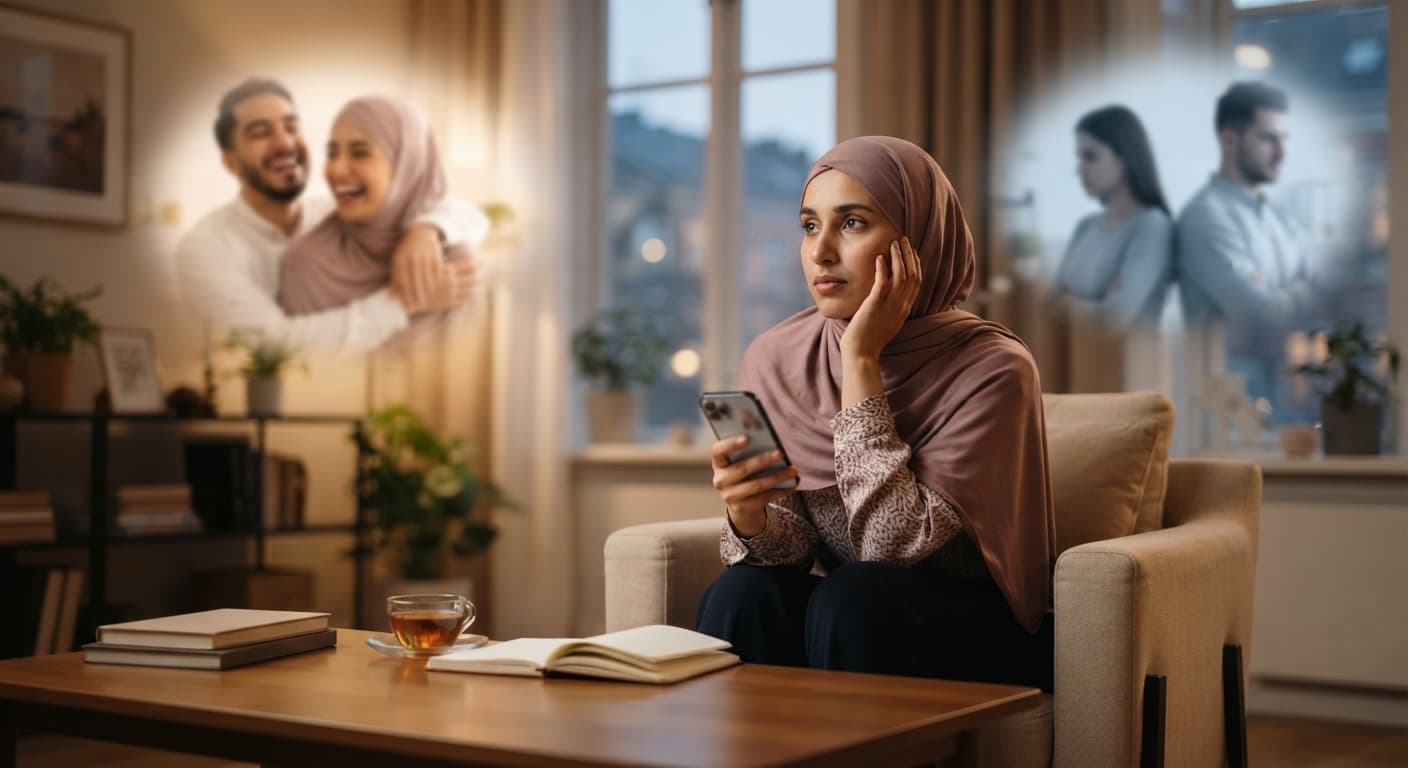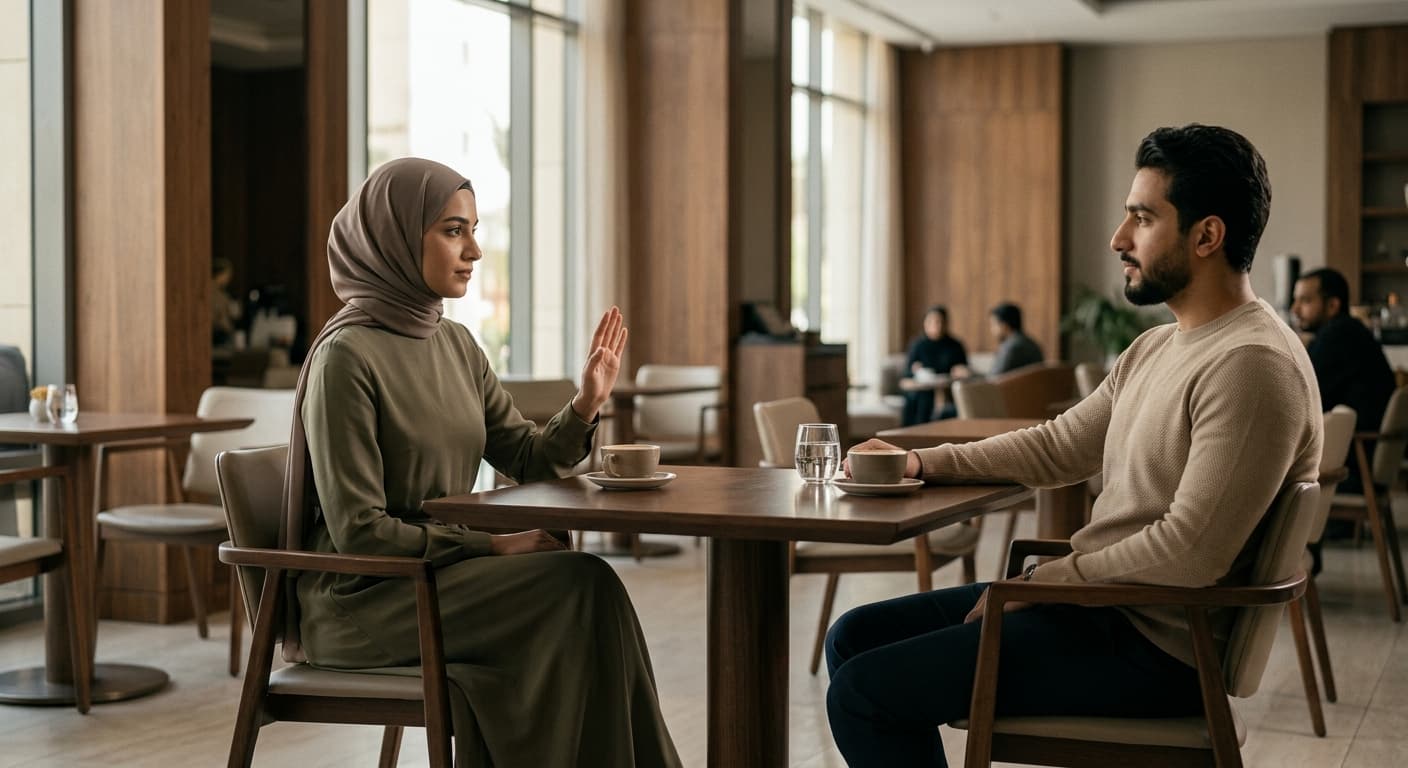
You may feel comfortable around someone, enjoy talking to them, and find many things you like about them. But does that necessarily mean they're the right person to marry?
Not always.
Choosing a life partner is different from choosing someone whose company you enjoy. Marriage is a long-term partnership that includes decisions, responsibilities, disagreements, and hard circumstances, so knowing whether someone is right for marriage requires looking beyond feelings and first impressions.
There's no method that guarantees you'll know the future, but there are a number of things that can help you make a more informed decision.
1. Do You Feel Comfortable Being Yourself Around Them?
One important sign is being able to be around this person without needing to put on a different personality just to keep them impressed.
Can you express your opinion?
Can you say you disagree with them?
Do you feel you always have to choose your words carefully out of fear of how they'll react?
A healthy relationship doesn't mean the absence of disagreement — it means feeling that you can be yourself while mutual respect is still there.
2. Are You Aligned on the Essentials?
You don't need to be alike in everything.
You may differ in hobbies, taste, how you spend free time, and even some personality traits.
But there are things where alignment matters more, such as:
- Values and principles.
- The concept of marriage.
- Religion and what it means in life.
- Responsibility.
- Family.
- Money.
- Children.
- The future.
If your differences on these matters are fundamental, they shouldn't be ignored just because strong feelings exist.
3. How Do They Handle Disagreement?
You can learn a lot about someone from watching them when they don't get what they want.
Watch how they handle a differing opinion, a decision they don't like, or a situation that puts them under pressure.
Do they listen and try to understand?
Can they discuss the problem calmly?
Do they admit it when they're wrong?
Do they respect the other person even during a disagreement?
These things can matter more than someone simply being pleasant when everything is going well.
4. Do Their Actions Match Their Words?
It's easy for someone to talk about honesty, respect, and responsibility.
But knowing someone's real character requires watching their behavior.
If they say they respect punctuality, do they actually keep to it?
If they talk about responsibility, do they own the consequences of their decisions?
If they make a mistake, do they apologize and try to fix it?
Over time, the gap between words and actions becomes clear.
5. Do They Respect Your Boundaries?
Respect doesn't only show in words — it shows in someone's ability to respect what you decline and what makes you uncomfortable.
The right person doesn't need to pressure you into doing something you don't want to do.
Nor do they try to control your decisions, your relationships, or your privacy under the guise of love or concern.
Having healthy space for each person is an important part of a stable relationship.
6. Can You Talk About Difficult Things?
A relationship built only on pleasant conversation may look successful at first, but married life will put you both in front of far more complicated topics.
Ask yourself:
Can we talk about money?
Can we discuss work and the future?
Can we talk about family and children?
Can we discuss the things we don't agree on?
If bringing up any difficult topic leads to avoidance, anger, or shutting the conversation down, that's a point worth paying attention to.
7. Are Your Expectations of Marriage Close to Each Other?
Two people can be compatible in personality yet hold completely different pictures of marriage.
One might expect a busy social life, while the other prefers a quiet one.
One might see responsibilities as fully shared, while the other expects a different division.
One might want children soon, while the other doesn't.
So it isn't enough to ask, "Do we love each other?"
Ask instead:
"Do we want a similar kind of life?"
8. How Do They Treat Other People?
How someone treats people they don't need anything from can reveal a lot about their character.
Notice how they treat their family, friends, colleagues, and people they disagree with.
Respect shouldn't be reserved only for the person they're trying to win over.
Likewise, how they treat people who are weaker or less able to offer them anything can reveal an important side of their character.
9. Do They Take Responsibility?
Marriage needs someone who can take responsibility for their decisions and commitments.
Notice whether they admit their mistakes, or always look for someone else to blame.
Do they keep their promises?
Can they deal with problems instead of running from them?
A responsible person isn't someone who never makes mistakes — it's someone who knows how to deal with their mistakes and fix what they can.
10. Do You Feel Safe and Trusting?
A stable relationship needs a measure of psychological safety and trust.
If you constantly feel doubt, fear, or a need to monitor the other person, it's important to understand why.
Trust doesn't mean knowing every detail of someone's life at every moment — it means there's clarity, honesty, and mutual respect.
11. Can You Accept Their Real Flaws?
Don't marry the image you've imagined of the person.
Get to know their personality as it is, not as you hope it will become.
Every person has weaknesses and traits that can be difficult at times. The question isn't:
"Do they have flaws?"
It's:
"Can I accept these flaws and deal with them, without spending all my time hoping they'll change?"
You shouldn't enter marriage with the goal of fixing the other person's character.
12. Does the Relationship Make You Better?
A good relationship doesn't mean being happy all the time, but it should give you room to grow and feel stable.
Ask yourself:
Do I feel respected?
Can I express myself?
Do I feel the other person supports me?
Does this relationship help us make better decisions?
Or have I become more anxious, more doubtful, and less trusting since the relationship began?
These questions can help you see the picture more clearly.
13. Are There Signs You Shouldn't Ignore?
In some cases, the question isn't only about compatibility — it's about behaviors that deserve you to stop and pay attention.
Such as:
- Repeated lying.
- Disrespecting boundaries.
- Excessive control.
- Constantly putting you down.
- Emotional manipulation.
- Refusing to take responsibility.
- Anger that is frightening or harmful.
- A constant contradiction between words and actions.
- Pressuring you into decisions you don't feel ready for.
These behaviors shouldn't be excused just because feelings exist, or out of fear of losing the relationship.
Don't Judge From a Single Situation
It's a mistake to judge someone entirely based on one good or one bad situation.
Character shows through a repeated pattern of behavior, and over time the picture becomes clearer.
Watch how they act in different situations, and how they handle pressure, disagreement, responsibility, and other people.
Ask Yourself These Questions Honestly
Before deciding on marriage, pause for a moment and ask yourself:
Do I love them as they are, or do I love the image I wish they would become?
Do I trust them?
Do I respect them, and do they respect me?
Can we resolve conflicts together?
Are our core values close to each other?
Are our expectations of marriage aligned?
Do I feel safe and comfortable with them?
Can I imagine sharing responsibilities and decisions with them?
Do I see differences I can work with, or fundamental differences that will become an ongoing problem?
If your answers are clear, you'll have a far better picture than relying on attraction alone.
The Right Person Isn't the Perfect Person
No person is perfect, and no relationship is free of disagreement.
The right person for you isn't necessarily someone who resembles you in everything, meets every one of your expectations, or gives you a life with no problems.
It's the person you share common ground with on the essentials, whose differences with you can be respected, who takes responsibility, speaks honestly, and works with you when problems arise.
In the end, don't just ask:
"Do I like this person?"
Ask the more important question:
"Can we build a life together based on respect, trust, compatibility, and responsibility?"
If the answer is based on genuinely knowing the person, not just impressions or feelings alone, you're closer to making an informed decision about your future.
Put your standards in a real profile
Create your free account in the browser and let matching work on your criteria, not on photos.